Selling 3D Printed Cosplay Props: Market Demand and Pricing Strategy
Unlock the secrets to successfully selling 3D printed cosplay props. This guide covers understanding market demand and crafting an effective pricing strategy to maximize your profits.
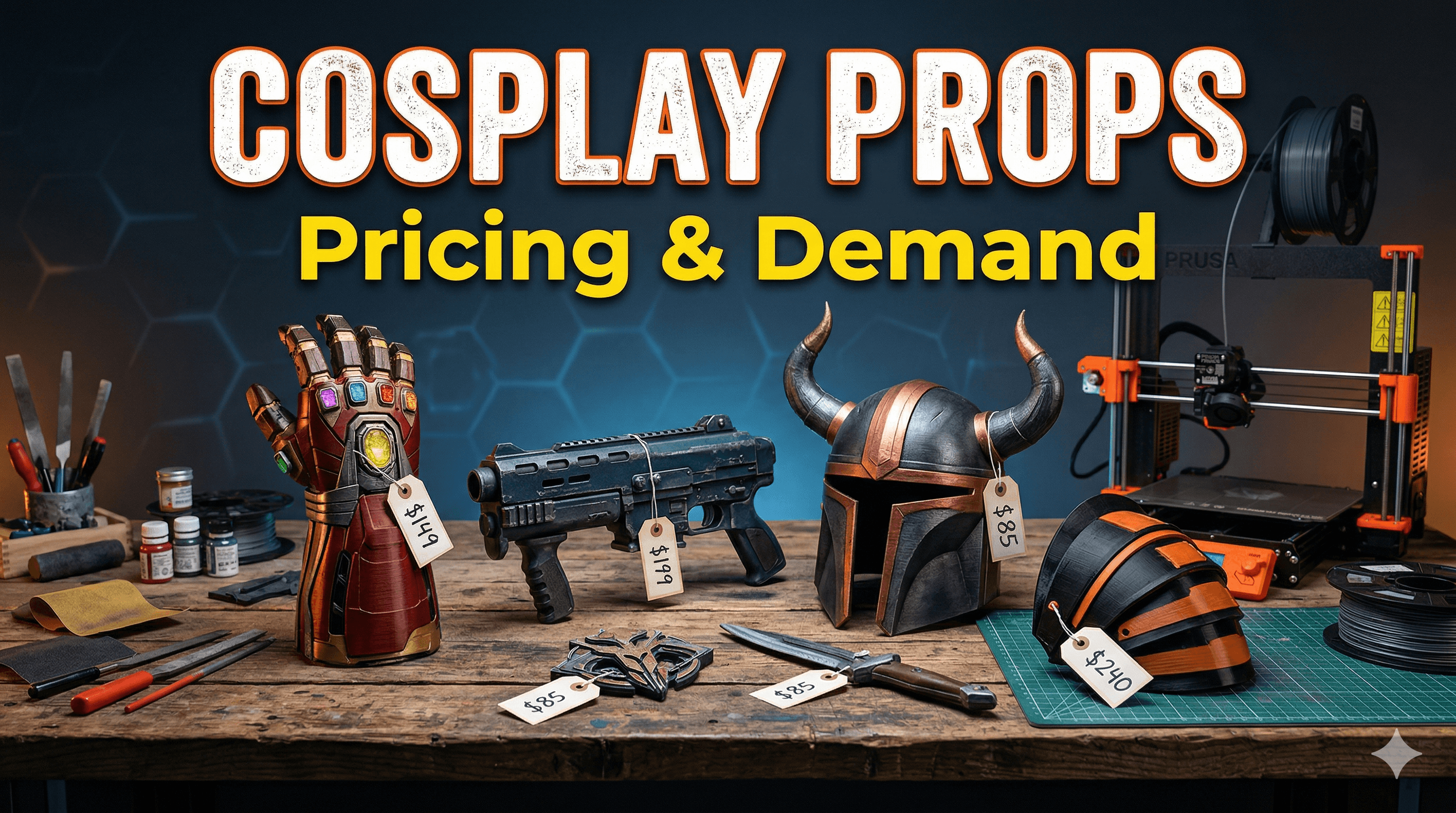
Man, sometimes I look at my workshop, overflowing with spools of filament, half-finished prints, and the faint, unmistakable smell of ABS or freshly cured resin, and I just think, "How did I even get here?" It feels like just yesterday I was tinkering with my first Creality Ender 3 V2, printing little calibration cubes and worrying about bed adhesion. Now? Now we’re talking full-blown cosplay props, intricate designs, and making actual money from this crazy hobby. And honestly, it’s one of the most satisfying things I’ve ever done.
If you're anything like me – someone who loves the hum of a 3D printer, the magic of watching an object materialize layer by layer, and has maybe dreamt of turning that passion into a little something more – then you’ve probably wondered about selling your prints. Specifically, if you’ve got an eye for detail and a love for pop culture, cosplay props are a *goldmine*. Seriously. I'm not even kidding. Let's dive into why, and more importantly, how you can actually make a decent living from it, especially here in India.
The Undeniable Boom of Cosplay in India: Your Market Awaits!
First off, let’s talk market demand. The thing is, for a long time, cosplay in India was a niche within a niche. You'd see a few dedicated folks at Comic Con, maybe some anime meetups, but it wasn't mainstream. Oh, how times have changed! With the explosion of streaming services, easily accessible anime, blockbuster superhero movies, and the gaming scene just blowing up, everyone – and I mean *everyone* – knows about characters from Marvel, DC, Star Wars, Genshin Impact, Valorant, you name it. And the urge to embody those characters? It's stronger than ever.
Local Comic Cons in cities like Bengaluru, Delhi, Mumbai, Hyderabad, they’re not just growing; they’re *thriving*. People are spending serious cash on tickets, on travel, and yes, on their costumes. But here's the kicker: while tailoring and fabric work for costumes has a decent artisan base, creating accurate, intricate props is a whole different ballgame. Most cosplayers here don’t have access to workshops, specialized tools, or, crucially, 3D printers and the skills to use them effectively for large, complex builds. This is where *we* come in.
Think about it. A cosplayer wants an accurate Iron Man helmet, or a detailed sword from Elden Ring, or maybe a cool blaster from Star Wars. They can try to make it from EVA foam, which is great for some things, but it’s incredibly time-consuming, requires a lot of skill, and often can't capture the fine details or rigidity that a 3D print can. They can try to import it, which means astronomical shipping costs, customs hassles, and often, a long wait. Or, they can find someone *locally* who understands their needs, can produce a high-quality, durable prop, and deliver it relatively quickly. That’s you, my friend. That’s me. That’s us.
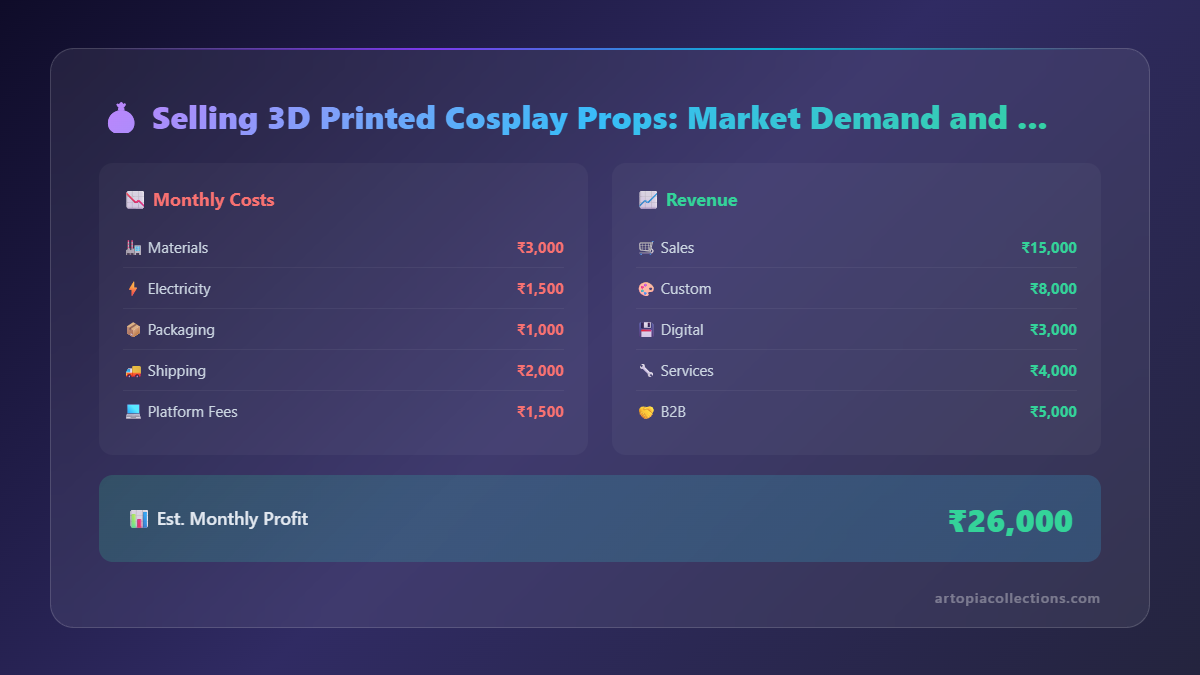
I've personally seen the demand grow year after year. From small accessory pieces like intricate belt buckles or shoulder pauldrons, to full-blown helmets and weapons, the inquiries just keep coming. People are willing to pay a premium for accuracy, durability, and convenience. I've had clients who started out trying to DIY a prop, only to come to me halfway through, frustrated and willing to pay whatever it takes to get it done right. That's your market validation right there.
My Journey: From Hobbyist to Prop Artisan
My own journey into this prop-selling world started pretty organically. I was just printing stuff for myself, mostly action figures and busts, on my trusty Ender 3. Then a friend, who was really into Attack on Titan, saw some of my prints and jokingly asked if I could print the ODM gear blades. I laughed, but then I thought, "Why not?" It was a challenge. And, you know, a few failed prints, a lot of sanding, and more primer than I care to admit later, I had a decent looking blade. My friend was ecstatic. She showed it off, and suddenly, I had two more people asking for similar props. That's how it started. No grand business plan, just solving a problem for someone.
It slowly grew. I invested in another printer, an Anycubic Kobra Go, for faster prints and a slightly larger build volume. I started learning more about post-processing – that’s the real secret sauce, by the way. Anyone can print something, but turning that raw print into a smooth, painted, realistic prop? That’s where the art and the value come in. I spent countless hours watching YouTube tutorials, experimenting with different sanding grits, fillers like automotive body filler (Bondo is amazing, seriously), primers, and paint types. It’s a messy process, trust me. You’ll have paint on your hands, in your hair, probably even on your cat if you’re not careful. But the transformation, from rough plastic to a movie-quality replica, is incredibly rewarding.
What I learned quickly is that cosplayers aren't just looking for a piece of plastic. They're looking for an *experience*. They want to feel like their character, and a well-made prop is absolutely essential for that immersion. It's not just about printing; it's about bringing a fantasy to life. And that's what we sell.
Pricing Your Masterpieces: Beyond Just Plastic
Okay, so you know there’s demand. Now, how do you price your awesome creations without feeling like you’re either ripping someone off or, more commonly, severely undercharging for your hard work? This is where many hobbyists stumble. They just look at the filament cost and maybe a tiny bit extra, and that’s it. Big mistake, my friend. HUGE mistake.
Here’s the deal: you are not selling plastic. You are selling a finished product that requires skill, time, and specialized equipment. Your pricing needs to reflect all of that.
Breaking Down the Costs (The Nitty-Gritty):
- Filament Cost: This is the most obvious one. A kilo of good quality PLA like eSUN PLA+ will set you back anywhere from ₹1200-₹1800, sometimes more for specialty filaments. You need to calculate how much actual filament (in grams) your print consumes. Your slicer software (Cura, PrusaSlicer) will tell you this.
- Electricity: Don’t underestimate this! A 3D printer running for 20-30 hours can rack up some decent electricity charges, especially if you have an enclosed printer with heated beds. In my experience, for longer prints, it can easily add ₹50-₹150 to the cost of a single print, maybe more for a huge one.
- Printer Wear & Tear: Nozzles wear out, build plates need replacing eventually, stepper motors work hard. These are small, incremental costs per print, but they add up. Factor in a small amount – say, 5-10% of the filament cost – for this.
- Post-Processing Materials: This is where a lot of the magic happens and also a lot of the cost.
- Sanding paper: Various grits, from 80 all the way to 2000.
- Fillers: Automotive body filler (Bondo), wood filler, 3D print specific fillers.
- Primers: Sandable primers are a must.
- Paints: Acrylics, spray paints, metallic paints. High-quality paints aren't cheap.
- Clear Coats/Sealants: For protection and finish.
- Glues: Cyanoacrylate (super glue), epoxy, plastic welders.
- Masking tape, brushes, safety gear: Gloves, masks.
- Labor (The Most Important Part!): This is your time, your skill, your expertise. Don't sell yourself short here.
- Design/File Acquisition: Did you find a free STL? Did you buy a premium one (usually $10-$30 USD, so ₹800-₹2500 for a good model)? Did you spend hours modifying one or even designing it yourself? Your time here is valuable.
- Print Time: This is the time the machine is running, but also the time you spend prepping the printer, loading filament, checking on prints, clearing failed prints.
- Post-Processing Time: This is often the longest and most labor-intensive part. Sanding, filling, more sanding, priming, more sanding, painting, detailing, sealing. This can take anywhere from a few hours for a small piece to literally *days* for a large, complex helmet or weapon.
- Overhead & Profit Margin: You're running a business, however small. You need to account for your internet, marketing efforts, website costs, software licenses, etc. And you need to make a profit to grow and sustain yourself! Aim for a decent profit margin on top of all your costs.
Putting it Together with Examples (INR Specifics):
Let’s say you’re making a medium-sized prop, like a detailed sci-fi blaster.
Filament used: 300g PLA @ ₹1500/kg = ₹450
Electricity: ₹80
Printer wear & tear: ₹50
Post-processing materials (fillers, sandpaper, primer, paints): ₹600
Bought STL file: ₹1500 (approx. $18)
Labor:
- Print setup/monitoring: 2 hours @ ₹300/hr = ₹600
- Post-processing (sanding, filling, priming, painting): 10 hours @ ₹300/hr = ₹3000
Total Direct Costs: ₹450 + ₹80 + ₹50 + ₹600 + ₹1500 + ₹600 + ₹3000 = ₹6380
Now, add your profit margin. If you want a 30% profit, you'd add another ₹1914.
Final Selling Price: Approximately ₹8300.
See? It’s not just ₹450 for the plastic! A detailed helmet, which uses maybe 800g-1.2kg of filament and requires 30-50 hours of post-processing, can easily fetch ₹12,000 to ₹25,000, depending on the complexity of the paint job and finish. Small accessories might be ₹800-₹2000. It all depends on the time and materials involved. Never be afraid to charge what your work is truly worth. You are providing a specialized service and a high-quality product that very few others can.
Beyond the Print Bed: Marketing Your Talent
So you’ve got your pricing sorted. How do you find those eager cosplayers?
1. Social Media is Your Best Friend: Instagram, Facebook, and even Pinterest are visual platforms, perfect for showcasing your work. High-quality photos and videos of your finished props are non-negotiable. Show off your process sometimes too – people love seeing the transformation. Use relevant hashtags like #cosplayindia #indiancosplay #3dprintedprops #comicconindia #[charactername]cosplay. Build a community, engage with other cosplayers and creators.
2. Local Events: If you can, get a stall at local Comic Cons or anime conventions. There's nothing like showing off your actual props in person. People can touch them, feel the quality, and see the detail. It builds trust instantly. Even if you don’t sell a ton at the event, it's amazing for networking and getting your name out there.
3. Portfolio, Portfolio, Portfolio: You need a dedicated space to showcase your work. A simple website, a well-maintained Instagram profile, or even an Etsy shop works. I use my own site, Artoppia Collections, to display my finished pieces and take custom orders. It lends professionalism and makes it easy for potential clients to browse your creations and understand your capabilities.
4. Word-of-Mouth: This is huge in the cosplay community. If you do good work, deliver on time, and communicate effectively, cosplayers will recommend you to their friends. A happy customer is your best advertiser.
A Few Final Thoughts from a Fellow Enthusiast
Look, running a small business, especially one as niche as 3D printed cosplay props, isn’t always easy. You’ll have failed prints (oh, so many failed prints!). You’ll have clients who don’t quite understand the process. You’ll have late nights sanding away to meet a deadline. But here’s the thing: it’s incredibly fulfilling. You’re turning plastic into dreams, bringing beloved characters to life for people who are truly passionate.
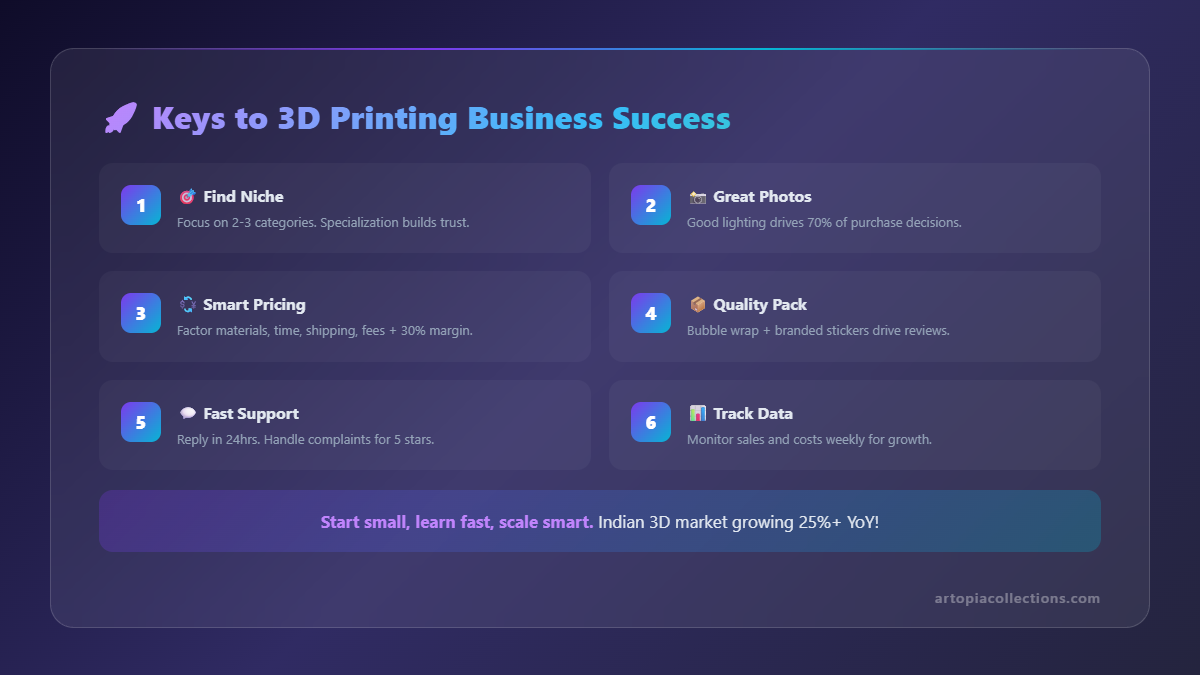
My advice? Start small. Perfect your post-processing skills on smaller items. Don't be afraid to experiment with new filaments, new paints. Always, always, *always* charge what your time and skill are worth. And most importantly, never lose that initial spark of excitement you felt when your first perfect print came off the build plate. That passion is what sets you apart. Happy printing, my friend!