Best 3D Printed Products to Sell at Local Markets and Exhibitions
Looking to monetize your 3D printer? This guide reveals the most popular and profitable 3D printed products perfect for local markets and exhibitions, helping you turn your hobby into a successful venture.

Hey everyone, Vidyut here, from ArtOpia Collections! You know that feeling, right? That hum of the printer, the smell of fresh PLA in the air, the satisfaction of pulling a perfectly printed object off the build plate. Itâs pure magic. But then, youâve got a stack of awesome prints, and youâre thinking, "Okay, these are cool, but how do I turn this passion into, you know, some actual rupees?" Thatâs where local markets and exhibitions come in, my friends. They're a goldmine, a real playground for us makers, but the trick is knowing what actually flies off the shelves.
Iâve been doing this for a few years now, hustling at various flea markets, local craft fairs, and even some bigger exhibitions here in India. And let me tell you, it's been a journey of trial and error. So many late nights, so much filament, and honestly, a good chunk of prints that ended up just sitting in a box at home. But through all that, Iâve learned a thing or two about what really resonates with people, what makes them stop, stare, and most importantly, open their wallets. Because at the end of the day, while we love the art, we also gotta make that business viable, right?
The thing is, selling at a local market is a completely different ball game than selling online. Online, people are searching for something specific. At a market, you've got maybe five seconds to grab their attention as they stroll past your stall. You need visual appeal, functionality, and that "aha!" moment. And it's not always about the most complex print; sometimes, it's the simplest, most charming little thing that makes someone smile and say, "I need that!"
Why Local Markets are a Game Changer for 3D Printing
Before we dive into the products, let's quickly talk about *why* these markets are so crucial. First off, itâs direct feedback. You get to talk to your customers face-to-face, understand what they like, what they donât, and what theyâd pay for. This is invaluable data for any small business. Secondly, no shipping hassles! You print, you sell, they walk away with it. Done. And honestly, for a lot of folks in India, a physical product they can see and touch before buying is still preferred. Plus, the cash in hand? So satisfying, especially with UPI now making transactions lightning-fast. I've even got a QR code laminated on my table for easy payments; it's a lifesaver!
Your Stall Setup Matters, Seriously!
Look, even if you have the coolest 3D prints, if your stall looks like a disaster, people won't stop. Invest a little in a good display. Simple shelves, some fairy lights (always a winner for ambience!), clear pricing, and maybe even a small screen showing your printer in action can make a huge difference. I personally use a simple white tablecloth and some risers to create different levels. It makes everything look more appealing. And don't forget good lighting â makes those colours pop!
The Best 3D Printed Products That Actually Sell (From My Experience!)
Alright, let's get down to the nitty-gritty. Based on my numerous market adventures, hereâs what consistently gets people excited and converts into sales. We'll break it down by price point, because impulse buys are different from considered purchases, you know?
1. The "Impulse Buy" Brigade (â¹50 - â¹250)
These are your bread-and-butter items. They're small, relatively quick to print, and low-risk for the customer. People grab these without much thought, often as a little treat for themselves or a small gift.
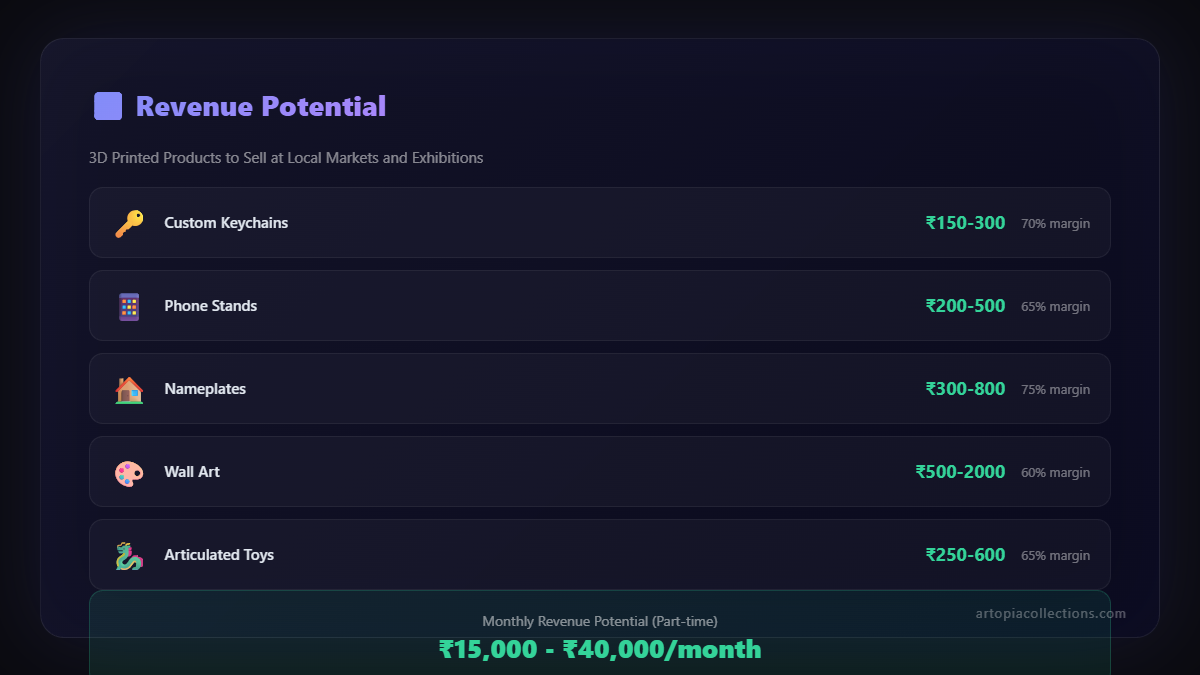
- Keychains: Oh, keychains! My absolute favourite. Think pop culture icons (anime characters, superhero logos, movie references), cute animals, or even custom text. I've had huge success with 'Groot' keychains, 'Pikachu' ones, and custom name tags. They cost maybe â¹5-â¹10 in filament and can sell for â¹50-â¹150 easily. Offer to print a name on the spot (if your printer is there, or for pickup later) and watch the magic happen!
- Cable Organizers/Winders: Everyone has cables. Everyone hates tangled cables. Simple, functional clips or winders for earphones, USB cables â these are practical and appeal to almost everyone. I print mine in bright, fun colours using PLA.
- Cute Desk Figurines/Mini Planters: Small, adorable characters or tiny planters for succulents (even fake ones!). Think of those low-poly designs, tiny Pokemon, or geometric critters. These are fantastic conversation starters. Iâve sold these for around â¹100-â¹200.
- Cookie Cutters: Especially around festivals! Simple shapes, themed designs (Diwali lamps, Ganpati idols, Christmas trees, stars) â people love unique cookie cutters. And they're super quick to design if you know a little CAD.
- Earring/Jewellery Stands (Small): Small, aesthetic stands for earrings or rings. I focus on intricate, delicate designs printed with a 0.2mm nozzle for finer detail. They add a touch of elegance to any dresser and are surprisingly popular.
2. The "Thoughtful Treat" Treasures (â¹250 - â¹750)
These items require a bit more material and print time, but they offer more value and functionality. People will spend a little more on these for themselves or as a slightly more substantial gift.
- Lithophanes (Personalized Gifts): This is a HUGE one for markets. People are blown away when they see a 3D print transform a photo into a stunning illuminated piece. I bring a few examples (maybe of famous landmarks or even my family) and offer custom ones. They place an order, send me the photo, and I print it and either ship it or they pick it up. Prices range from â¹400-â¹1000 depending on size and complexity (curved vs. flat). The emotional connection makes them irresistible.
- Vases & Planters (Unique Designs): Forget boring terracotta! Low-poly geometric vases, intricate lattice designs, self-watering planters â these are eye-catching. Print them in silk PLA or matte PLA for a premium feel. I sell these for â¹300-â¹700. My ArtOpia Collections store has some examples of unique planter designs that do well.
- Gaming Accessories: Controller stands (PS5, Xbox, Nintendo Switch), headphone stands, dice towers for D&D enthusiasts. The gaming community is huge, and they love cool, custom gear. Print these in robust PETG if possible for durability, or strong PLA. Prices around â¹400-â¹800.
- Desk Organizers/Pen Holders: More elaborate than the small impulse buys. Think multi-compartment organizers, holders for sticky notes, pens, and even phone stands with charging cable cutouts. These are super practical, especially for students and office workers.
- Coasters: While simple, unique coasters can be a hit. Geometric patterns, mandala designs, or even themed sets (think coffee beans for a coffee lover). Use PLA or cork-backed PLA for better grip.
3. The "Statement Piece" & Custom Orders (â¹750+)
These are higher-value items or custom order bookings. They require more effort, material, and printer time, but the profit margins can be excellent. These are about capturing attention and booking future work.
- Custom Architectural Models: If you have good CAD skills, display a small, intricate architectural model. People renovating their homes or interior designers might be interested in getting models of their projects. This is mostly about taking orders, with prices ranging from a few thousands to much, much more depending on scale.
- Unique Lampshades/Light Fixtures: Geometric lampshades that create interesting light patterns are fantastic. People are always looking for unique home decor. You can sell the shade itself, or a complete unit with basic wiring. Just make sure to use a material like PETG or even some fire-retardant PLA for safety if itâs close to a bulb, and definitely ensure proper ventilation. Prices can start from â¹1500 and go upwards.
- Cosplay Props/Helmets (Order Basis): Display a cool helmet or a sword prop. Cosplay culture is growing in India, and 3D printing is *perfect* for it. Take orders for specific props. This is high-value, but also high-effort. You won't sell a full helmet on the spot, but you'll get inquiries.
- Art Sculptures/Busts: If you have a knack for artistic design, print some abstract or geometric sculptures, or even famous busts. These are niche, but the right buyer will pay a premium for unique art.
Filament Talk: My Go-To Choices
When it comes to materials, for market products, PLA (Polylactic Acid) is your best friend. Itâs easy to print, comes in a million colours (silk, matte, metallic â all great for eye-catching prints!), and itâs affordable. Brands like eSun, Overture, and even some local Indian brands offer great PLA. I typically buy my PLA filament on Amazon.in, sometimes in bulk when thereâs a good deal. For items needing a bit more durability (like gaming accessories or anything that might be handled roughly), I sometimes use PETG, but it's a bit trickier to print with.
I personally think avoiding exotic or super expensive filaments for market stalls, especially when starting out, is smart. Keep your material costs low to maximize profit margins. And always, always have a variety of vibrant colours. People are drawn to colour!
Printer Power: What Machines I Rely On
My workhorse for years has been an upgraded Creality Ender 3 V2. Itâs a fantastic entry-level printer, and with a few mods, it can churn out really consistent prints. For higher volume or faster prints, I recently invested in a Creality K1. That thing is a speed demon, let me tell you! Having a small "print farm" (even if it's just two or three printers) really helps with production for market days. You want to have a good stock of popular items ready to go.
My Honest Learnings & Tips
Honestly, the biggest lesson I've learned is to just start. Don't wait for perfection. My first market stall was tiny, my prints weren't perfect, but I learned SO much. Here are a few quick tips:
- Talk to Everyone: Engage with passersby! Tell them about 3D printing, show them how it works. It's fascinating for most people.
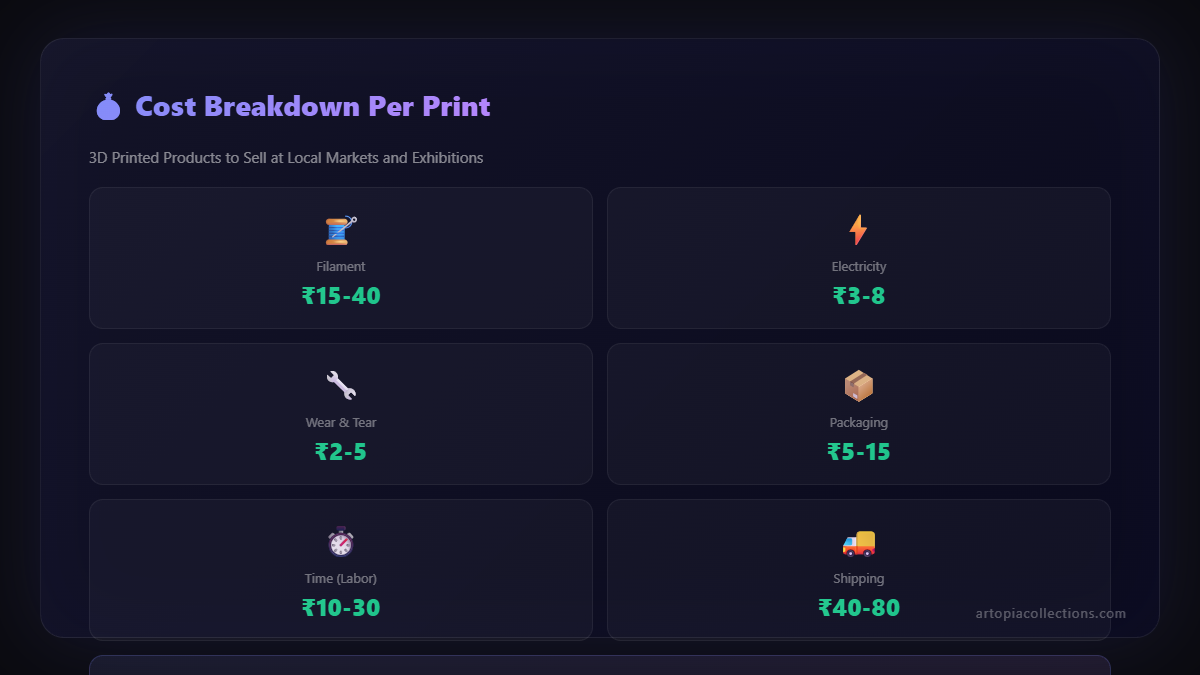
- Price Smartly: Don't just calculate filament cost. Add in your printer's depreciation, electricity, your time, and the market stall fees. Then add a healthy profit margin. You're selling skill and creativity, not just plastic.
- Offer Customization: This is a huge selling point. Even if it's just different colours or adding a name, it makes people feel special.
- Have a Business Card/Flyer: For those custom orders and bigger ticket items, make sure people can find you later. Include your social media handles and website.
- Don't Be Afraid of "Failures": Some prints won't sell. That's okay! Analyze why, adjust, and try something new next time. I still have a box of things that looked great on my screen but just never clicked with customers.
So, there you have it, folks! My two cents on making a splash with your 3D prints at local markets and exhibitions here in India. It's hard work, no doubt, but the joy of seeing someone light up when they buy something you created with your own hands (and printers!) is just unbeatable. Go out there, experiment, and have fun! The world needs more cool 3D printed stuff, and youâre just the person to make it happen. Happy printing, everyone!


