Best 3D Printers Under Rs 30000 in India 2026 Buyers Guide
Looking for an affordable 3D printer in India for 2026? This comprehensive buyer's guide reviews the best models under Rs 30,000, helping you make the perfect choice for your needs.
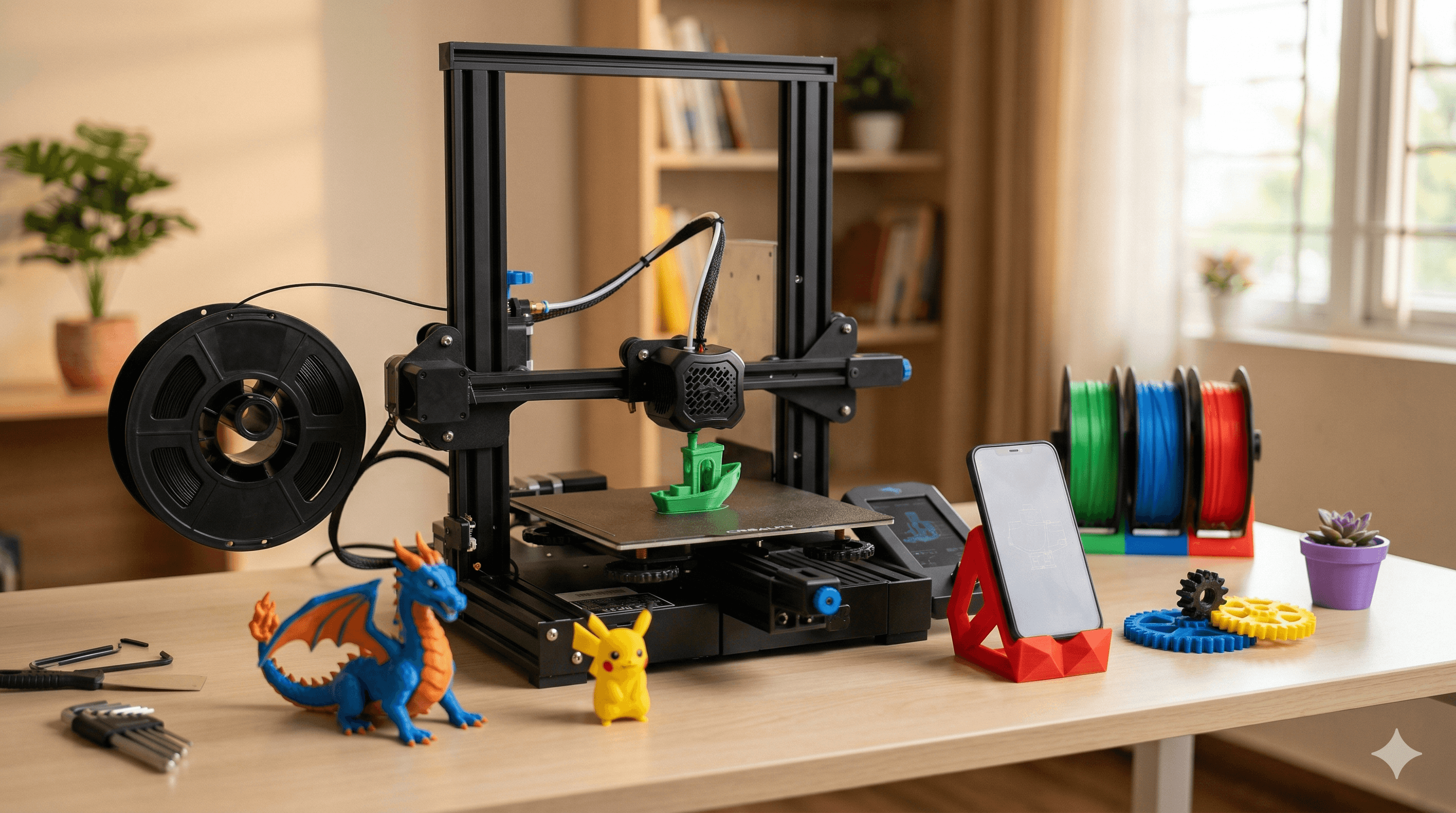
Chalo, mere bhaiyon aur behnon, let's get real for a minute. Remember that feeling, standing in front of a shiny new gadget, heart pounding, wallet quivering? That's me, every single time I think about 3D printing. It’s not just a hobby; for me, it’s literally how I put food on the table – well, alongside countless failed prints and a mountain of filament, of course! From my little workshop here in India, churning out custom designs and prototypes for Artopia Collections, I've seen the 3D printing world explode. And honestly, it's never been a better time to jump in, especially when you're looking for a machine that won't make your bank account cry a river. We're talking about 2026 now, and the landscape for budget printers? It’s absolutely bonkers good!
So, you’re here because you’ve got that itch, that burning desire to bring your digital dreams into the physical world, right? And you've set yourself a pretty sweet budget: under ₹30,000. Trust me, that's a fantastic sweet spot for 2026. A few years back, this budget meant compromising on so much – slow speeds, manual bed levelling that would test the patience of a saint, and print quality that looked like it was rendered on a potato. But oh, how times have changed! Manufacturers have really stepped up their game, pushing features that were once high-end down into the affordable segment. It's like magic, I tell you!
Why 2026 is THE Year for Budget 3D Printers in India
The thing is, the pace of innovation in 3D printing is just insane. Every year, we see improvements. By 2026, many features that were considered premium just a couple of years ago – like auto-bed levelling, direct drive extruders, Klipper firmware integration for insane speeds, and even touch screens – are pretty much standard on machines under thirty thousand rupees. India’s market for 3D printers has also matured a lot. We've got better local support, easier access to spare parts, and a booming community. And let’s not forget the sheer variety of filament brands, both international and local, readily available now. It’s a good time to be a maker, a true golden age for us.
But, and there's always a "but," isn't there? With so many options, how do you even begin to choose? It can be overwhelming, especially if you’re new to this world. That’s why I've put together this guide, based on my own trials, errors, and countless hours spent watching filament extrude. I’ve done the legwork so you don't have to make the same mistakes I did – like buying a printer just because it looked cool, only to discover it had the build quality of a cardboard box. Lesson learned, believe me!
What Should You Look For in a Printer Under ₹30,000 in 2026?
Alright, before we dive into specific models, let's talk about the absolute non-negotiables. These are the things that, in my humble opinion, every good budget 3D printer in 2026 absolutely must have:
- Auto-Bed Levelling: Seriously, if a printer doesn't have this by now, just walk away. Manual bed levelling is a rite of passage, sure, but it's also a pain. A good ABL system saves you hours of frustration and ensures your first layer sticks like glue.
- Direct Drive Extruder: This is a game-changer. It means the motor that pushes the filament is right on top of the hotend. Better control, less stringing, and crucially, you can print a wider range of filaments like TPU (flexibles) without much hassle. Bowden systems are okay, but direct drive is superior, especially now that it's affordable.
- Decent Build Volume: For under ₹30K, you should expect at least a 220x220x250mm build area. This is ample for most common prints, from miniatures to functional prototypes. Don't go for anything significantly smaller unless you have a very specific, tiny use case.
- Good Speed & Reliability: Thanks to better motherboards and often integrated Klipper firmware (or at least compatibility), printers are getting seriously fast without sacrificing quality. Look for print speeds upwards of 200mm/s as a standard. And reliability? That comes from a sturdy frame and quality components.
- Strong Community Support: This one is HUGE. When things go wrong (and they will, it’s 3D printing!), you'll want a thriving community online to help you troubleshoot.
My Top Picks: Best 3D Printers Under ₹30,000 in India 2026
Now, let's get to the juicy part! Based on what's available and what I anticipate will be leading the pack by 2026, here are some models or types of printers you absolutely should keep an eye on. I'm going to lean towards models that have proven track records and are known to continually iterate and improve.
1. The Evolution of the Creality Ender Series (Think Ender-3 V3, V4, or something similar)
Honestly, you can't talk about budget 3D printing without mentioning Creality. They are the kings of accessibility. By 2026, I fully expect their Ender-3 line to have evolved significantly, making features like robust auto-levelling (CR-Touch or similar), a high-speed direct drive extruder (think Sprinter or whatever fancy name they come up with), and a Klipper-enabled motherboard standard, all within our budget. You'll likely see machines like the current Creality Ender-3 V3 KE or SE's successors offering incredibly fast print speeds (300-500mm/s easily), fantastic print quality right out of the box, and a build volume of 220x220x250mm or even slightly larger. The Ender series is a workhorse; it's what many of us started with, and it's what I still recommend to new enthusiasts for its sheer moddability and the gargantuan online community. If you ever have a problem, someone, somewhere, has already had it and posted a solution. That’s invaluable, especially for beginners.
2. The Anycubic Kobra Series (Looking at Kobra 2 Neo/Pro successors)
Anycubic has really carved out a niche for itself by focusing on ease of use and impressive speeds, often at competitive prices. By 2026, their Kobra series, specifically the successors to models like the Kobra 2 Neo or Kobra 2 Pro, will be serious contenders. I'm talking about fully integrated auto-levelling (their LeviQ system is usually pretty solid), direct drive extruders, and probably even faster stock speeds than Creality, pushing towards 400-600mm/s without custom firmware. They often come with slightly more polished user interfaces and quicker assembly times. In my experience, Anycubic machines tend to be a little less 'tinkerer-friendly' than Ender, meaning they work great out of the box, but modifications might be slightly less straightforward. But if you want a machine that just works, and works fast, Anycubic is a solid bet. You might find a Kobra 3 Neo or something similar, landing squarely in the ₹22,000 - ₹28,000 range, offering a superb balance of speed and quality.
3. The Unexpected Dark Horse / Upgraded Entry-Level King
Okay, this is where it gets interesting. The 3D printing market is always surprising us. By 2026, there will likely be another contender, either an existing brand upping its game dramatically or a new player emerging with an incredibly feature-packed printer at an unheard-of price. Think about the brands like Elegoo (who started strong in resin printing) or even some of the local Indian assemblers who are now putting together really competent FDM machines. Keep an eye out for models that push the envelope on features like silent stepper drivers (a blessing!), magnetic PEI build plates (seriously, print removal is a dream), and even basic Wi-Fi connectivity for remote monitoring. Sometimes these lesser-known models offer incredible value, especially if they have good community traction on Reddit or YouTube. But always, always check reviews and community feedback before diving into a brand you're not familiar with. It's an adventure, but a calculated one!
Beyond the Printer: What Else Do You Need?
So, you’ve picked your warrior, the printer that’s going to bring your ideas to life. Awesome! But here’s the deal: a 3D printer is just the first step. You'll need a few other things to get started and to keep the creative juices flowing. Don't worry, these usually don't break the bank.
Filament – The Lifeblood of Your Prints
This is obvious, right? Without filament, your printer is just a fancy paperweight. For beginners, I always recommend PLA (Polylactic Acid). It’s easy to print, smells vaguely like popcorn when heated, and is pretty forgiving. By 2026, we have a fantastic array of PLA brands in India – eSun, Overture, Eryone are big international players readily available, but also check out local brands that offer great quality at competitive prices. You can grab a decent 1kg spool of PLA for anywhere from ₹800 to ₹1,500. Don't cheap out too much on filament; bad filament can cause endless headaches. For a little more strength and temperature resistance, PETG is your next step, and it’s almost as easy to print as PLA now. For example, check out some good quality PLA filaments on Amazon.in.
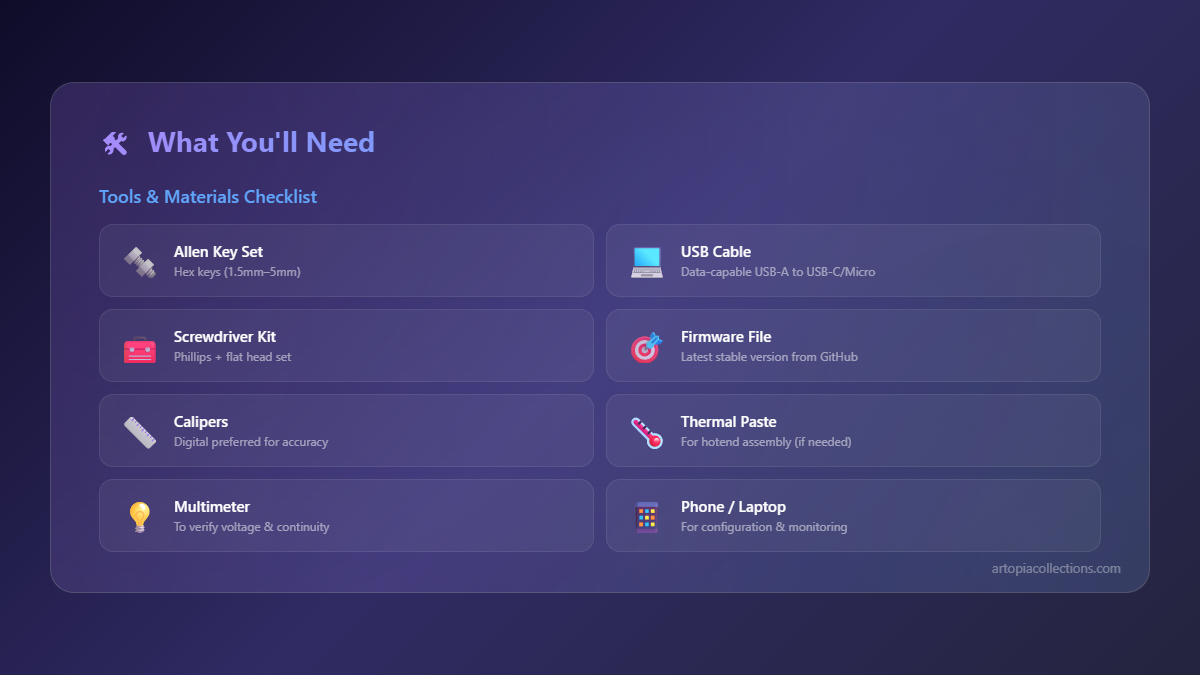
Essential Tools & Accessories
- Spacers/Scraper: To get your prints off the build plate without damaging anything.
- Snips: For trimming filament, cleaning up supports, and generally being useful.
- Calipers: Digital calipers are super useful for measuring dimensions and ensuring your designs fit perfectly.
- Isopropyl Alcohol: To clean your build plate and ensure good adhesion.
- Storage for Filament: Filament absorbs moisture, which can ruin prints. Airtight containers with desiccant are your best friends.
- Slicer Software: This is what turns your 3D models into instructions for your printer. Cura and PrusaSlicer are free, powerful, and have huge communities.
My Journey & A Few Tips for Beginners
When I started Artopia Collections, I literally began with one of these sub-₹30,000 machines (a much older, simpler version, mind you!). I made everything – custom keychains, quirky home decor, replacement parts for broken appliances, even prototypes for local businesses. These budget printers are incredibly capable. They're not just for toys; they can be legitimate tools for innovation and entrepreneurship right here in India.
Here are a few nuggets of wisdom from my printing journey:
- Start Simple: Don’t try to print a highly complex, multi-material masterpiece on day one. Print a calibration cube, a benchy (the famous 3D printing boat), and then move onto simpler models. Learn your machine first.
- Calibrate, Calibrate, Calibrate: Spend time dialling in your settings. Extruder E-steps, retraction, temperature towers – these might sound like jargon now, but they're crucial for perfect prints.
- Join Communities: Seriously, find Facebook groups, Reddit forums (r/3Dprinting, r/ender3, etc.), and local Indian 3D printing communities. The support and knowledge sharing are priceless.
- Don't Get Discouraged: You will have failed prints. Filament will jam. Prints will warp. It's all part of the learning curve. Every failed print is a lesson learned, and it makes the successful ones even more satisfying.
Final Thoughts From Your Friendly Neighbourhood Maker
By 2026, the dream of affordable, high-quality 3D printing is not just alive; it's thriving, especially here in India. With a budget of under ₹30,000, you're looking at machines that are faster, more reliable, and far easier to use than ever before. Whether you're a hobbyist, an aspiring entrepreneur, or just someone curious about making things, there’s never been a better time to dive in.
So, do your research, pick a printer that excites you, and most importantly, start printing! The possibilities are literally endless. And hey, maybe one day your small business will be making waves like Artopia Collections, all thanks to that initial leap of faith with a budget-friendly 3D printer. Happy printing, doston!