Selling Custom 3D Printed Phone Cases: Market Analysis and Profit Margins
This post offers a deep dive into the market for custom 3D printed phone cases, providing essential market analysis and competitive insights. Learn how to calculate and maximize your profit margins to build a successful 3D printing business.
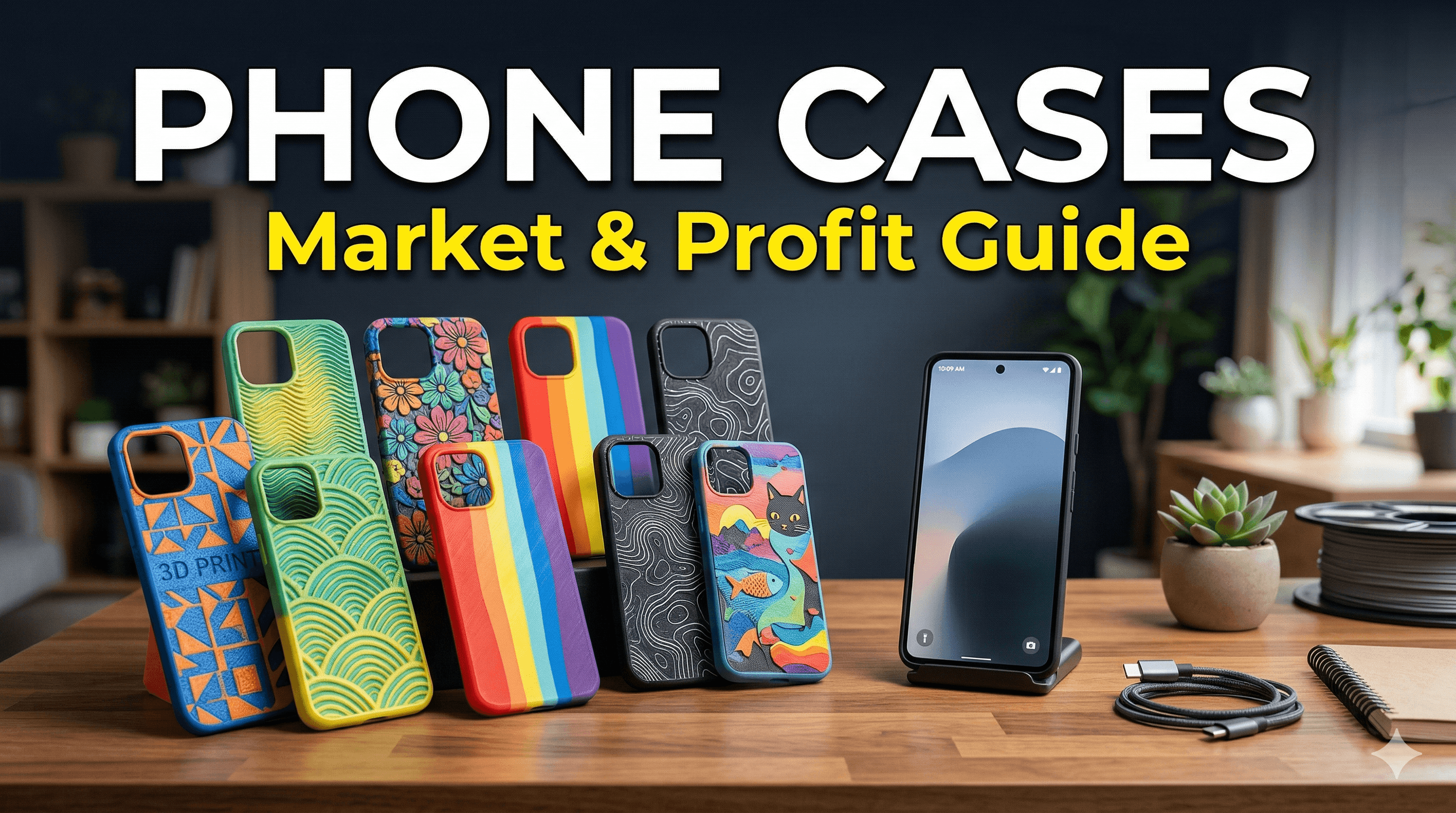
Honestly, who doesn't have a phone these days? And, let's be real, who wants their shiny new smartphone to look exactly like everyone else's? That's the thought that hit me like a bolt of lightning one sweltering afternoon here in Pune, right as I was fiddling with a new spool of vibrant orange PETG. I was looking for a fresh challenge, something beyond just printing cool figurines and functional prototypes for myself. Something that could actually bring in some rupees and leverage the growing demand for customization in India. And then it clicked: custom 3D printed phone cases. Yeah, phone cases! It seems so obvious now, but at the time, it felt like a revelation, a tiny, colourful piece of plastic revolution just waiting to happen from my little print farm.
Why Phone Cases, You Ask? The Ubiquity Factor!
Look, the smartphone penetration in India is just insane. Everyone, from college students in Mumbai to shopkeepers in smaller towns, has one. And what do all these phones need? Protection, sure, but also a splash of personality. Most people settle for those generic silicone cases you find everywhere for ₹100-₹200, or maybe a slightly fancier one for ₹500-₹800. But what if you could offer something truly unique? Something that nobody else has? That's where 3D printing swoops in like a superhero with a nozzle!
I mean, think about it. The mass-produced stuff is, well, mass-produced. It lacks soul. But with 3D printing, you can literally print someone's name, a custom logo, their favourite gaming character, or even a texture they've always wanted. It's a blank canvas, and the possibilities are endless. And that, my friends, is where the market opportunity lies. It's not just about protection; it's about expression. And in a country as diverse and expressive as India, that's a goldmine waiting to be tapped.
Deciphering the Indian Market: Who's Buying These Things?
Alright, so I had the idea. But was there actually a demand beyond my own imagination? That's the crucial question, isn't it? My initial market analysis (which, let's be honest, started with me just asking all my friends and family if they'd buy one) pointed towards a few key demographics:
- The Youth/Students: These guys and girls are always looking for cool, unique stuff to stand out. They're on Instagram, they follow trends, and they appreciate personalization. Plus, they often have a tighter budget than older folks, so a custom case that's not astronomically priced is appealing.
- Tech Enthusiasts/Gamers: They love anything tech-related and often have specific aesthetics they want to showcase. Think intricate designs from their favourite games, custom controller-style cases, or even cases designed to improve ergonomics for long gaming sessions.
- Gift Givers: A custom phone case with someone's initial, a special date, or an inside joke? That's a thoughtful, unique gift that beats a generic wallet any day. I've sold quite a few cases for birthdays and anniversaries, actually.
- Niche Interest Groups: Anime fans, car enthusiasts, fitness buffs – everyone wants to show off their passions. A case tailored to their specific interest really hits the mark.
Where do I find these people? Initially, I started with local college fests and small artisan markets in Pune. I'd set up a tiny stall with some samples, talk to people, and show them how the whole customization process worked. That personal interaction was super valuable. But the real game-changer was online. Instagram, Facebook Marketplace, and even WhatsApp groups have been great. I tried Etsy briefly, but honestly, for the Indian market, direct messaging and local payment options often work better. Plus, you avoid those international shipping hassles and fees, which can really eat into your profits.
My competition isn't just other 3D printers, mind you. There are companies doing UV printing on generic cases, laser engraving, and even just selling a wider variety of mass-produced cases. But the thing is, they can't offer the same level of tactile uniqueness and structural customization that 3D printing can. You can't laser engrave a texture, right? And that's our edge!
The Design Game: More Than Just a Pretty Face
This is where the magic really happens. Designing a good phone case isn't just about making it look cool; it has to be functional. It needs to fit snugly, offer decent protection, and not obstruct any ports or buttons. My go-to tools are a mix. For quick edits and basic text integration, Tinkercad is surprisingly powerful and free. But for more intricate designs, precise fits, and complex geometries, I rely on Fusion 360. It has a bit of a learning curve, but it's worth every bit of effort.
I've experimented with different styles:
- Slim Back Cases: Just a simple back cover, mainly for aesthetics. Easy to print.
- Bumper Cases: Protecting the sides and corners. A good balance of protection and slimness.
- Rugged Cases: Thicker, more substantial, often with textured grips. These take longer to print and use more filament, but they command a higher price.
- Two-Part Cases: Sometimes I'll design a flexible inner layer and a rigid outer shell for maximum protection. This is tricky but super satisfying when done right.
The key to customization? Having a good library of phone models. I usually search for existing CAD models or STL files of popular phone brands – Samsung, Xiaomi, OnePlus, iPhone, of course. Then I adapt them. Sometimes I have to measure a physical phone myself (a pain, I tell you, especially with all the new models launching every other month!). But getting those dimensions spot-on is critical. A case that doesn't fit is basically a wasted print.
And then there's the truly bespoke stuff. I once designed a case for a cricket fan that looked like a miniature stadium on the back, complete with tiny stands! That one took a good few hours of design, but the customer was thrilled, and I charged a premium for it. It's these kinds of projects that really make this business exciting.
Printer, Filament, Action! The Production Side
So, what's my workhorse? My trusty Creality Ender 3 Pro. Yeah, I know, it's not the fanciest machine out there, but it's reliable, easy to maintain, and affordable. I've upgraded it over time – a better hotend, quieter stepper drivers, a BLTouch for auto-bed leveling – and it prints like a dream. For batch production, I've got a couple of them running, sometimes 24/7 during peak demand. I also have an Anycubic Kobra Go, which is a bit faster and equally reliable for the price.
Now, let's talk about filament, because this is probably the most crucial factor for phone cases. You can't just use any old plastic:
- PLA (Polylactic Acid): Great for prototypes, easy to print, looks good. But for a phone case? Nah. It's too brittle. Drop your phone once, and the case will likely crack. I only use PLA for display pieces or very specific, non-protective designs.
- PETG (Polyethylene Terephthalate Glycol): This is my daily driver for most cases. It's stronger than PLA, has a bit of flexibility, and can withstand higher temperatures without warping (important when your phone gets warm). It's a bit trickier to print than PLA, but with the right settings, it's fantastic. I usually go for brands like eSun, Overture, or even some good Indian brands like 3D Printz or MakeFil, which are becoming quite good and often more affordable.
- TPU (Thermoplastic Polyurethane): The holy grail for flexible, shock-absorbing cases. This stuff is amazing. It's practically indestructible and feels great in hand. But, and it's a big BUT, it's an absolute nightmare to print reliably, especially on a Bowden setup like the stock Ender 3. You need a direct drive extruder, slower speeds, and a lot of patience. When I get a good TPU print, it's glorious, but the failure rate can be frustratingly high. I usually reserve TPU for customers who specifically request (and pay a premium for) the ultimate flexible case.
A typical PETG case for a mid-range phone model (say, a Redmi Note 12) uses about 25-40 grams of filament, depending on the thickness and design. A 1kg spool of good quality PETG typically costs between ₹1000-₹2000 in India. Let's say ₹1500 for a spool. That means one gram costs ₹1.5. So, a case uses ₹37.5 to ₹60 worth of filament. Electricity cost per print is almost negligible, maybe ₹5-₹10 per print, unless it's a super long one. So, raw material cost is pretty low per unit, which is fantastic for profit margins!
The Money Talk: Pricing and Profit Margins
Alright, let's get down to the brass tacks – how much do you charge, and how much do you actually make? This is crucial for any business, no matter how small.
Calculating My Costs (Per Case):
- Filament: As discussed, roughly ₹40-₹60 for a PETG case. For TPU, it might be ₹80-₹120 because TPU spools are generally more expensive per kg.
- Electricity: I factor in about ₹10-₹15 per print for a typical 4-6 hour print on my Ender 3. This covers the printer's power consumption.
- Design Time: This is the tricky one. For a standard template with just a name added, it's quick, maybe 15-20 minutes. For a completely custom design (like that cricket stadium case), it could be hours. I usually charge a separate design fee for truly unique concepts.
- Post-processing: Some light sanding, maybe cleaning up some stringing. This is usually quick, say 5-10 minutes.
- Failed Prints: This is a hidden cost. Not every print comes out perfect. I factor in a 10-15% buffer for filament and electricity lost to failed prints across my operations.
- Packaging/Shipping: ₹50-₹100 for a decent bubble mailer and local shipping (if applicable).
So, a basic PETG case might cost me around ₹80-₹150 in direct materials and utilities, before factoring in my time, design, and overheads.
Setting the Price:
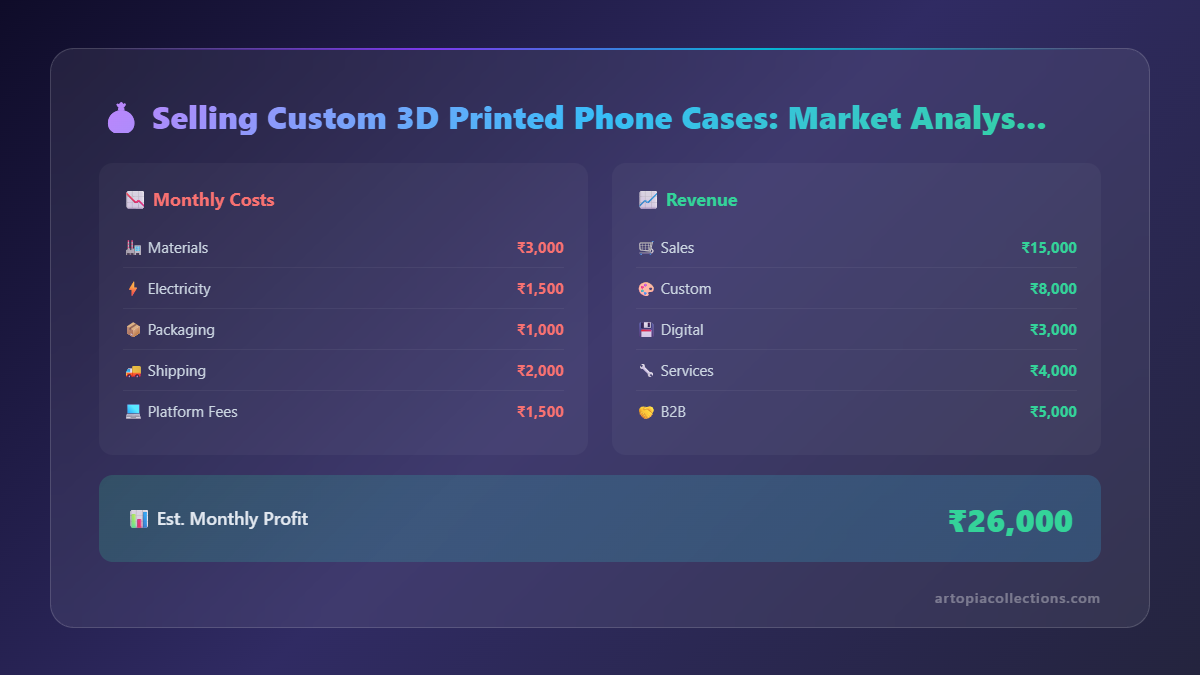 This is where market research comes in. You can't just pull numbers out of a hat. I looked at what similar custom products were selling for, and what people were willing to pay for unique phone accessories. Here's my general pricing structure:
- Basic Solid Color PETG Case (with simple text/logo): ₹399 - ₹599. This is my bread and butter. It's competitive with good quality off-the-shelf cases, but it offers customization.
- Multi-Color PETG Case (using filament changes or multi-material prints if I had a Prusa MMU2S, which I don't yet, but one can dream!): ₹699 - ₹899. The complexity and aesthetic appeal justify the higher price.
- TPU Flexible Case (Solid Color): ₹799 - ₹999. Given the difficulty in printing and the superior shock absorption, this commands a premium.
- Highly Customized/Intricate Designs (any material): This can go anywhere from ₹999 to ₹1500+, depending on the design time involved and the complexity of the print. I always give a custom quote for these.
The Profit Margins:
 Let's take a common scenario: a basic PETG case selling for ₹499. My direct cost (filament + electricity + minor post-processing + packaging) is, say, ₹150. That leaves a gross profit of ₹349. Now, from this, I need to account for my time, the printer's depreciation, marketing costs, and unforeseen expenses. Even if I conservatively estimate my time and overheads to be ₹150 per case, I'm still left with a net profit of around ₹200. That's a roughly 40% net profit margin on a basic case, which is pretty darn good for a physical product!
For the higher-end custom cases, the profit margins can be even better, sometimes upwards of 60-70%, because the perceived value is much higher, and customers are willing to pay for true uniqueness.
Challenges and My Two Cents for You!
It hasn't all been smooth sailing, of course. I've had my fair share of:
- Warped Prints: Oh, the frustration of a print lifting off the bed halfway through!
- Clogged Nozzles: Usually at 2 AM, just when I thought I could sneak in another print.
- Customer Expectations: Explaining that "royal blue" in their head might look slightly different in PETG.
- Getting Accurate CAD Models: Sometimes, the publicly available models aren't quite right, and then it's back to measuring with calipers.
But every challenge has been a learning experience. And that's the thing about 3D printing – it's a constant journey of learning and improvement.
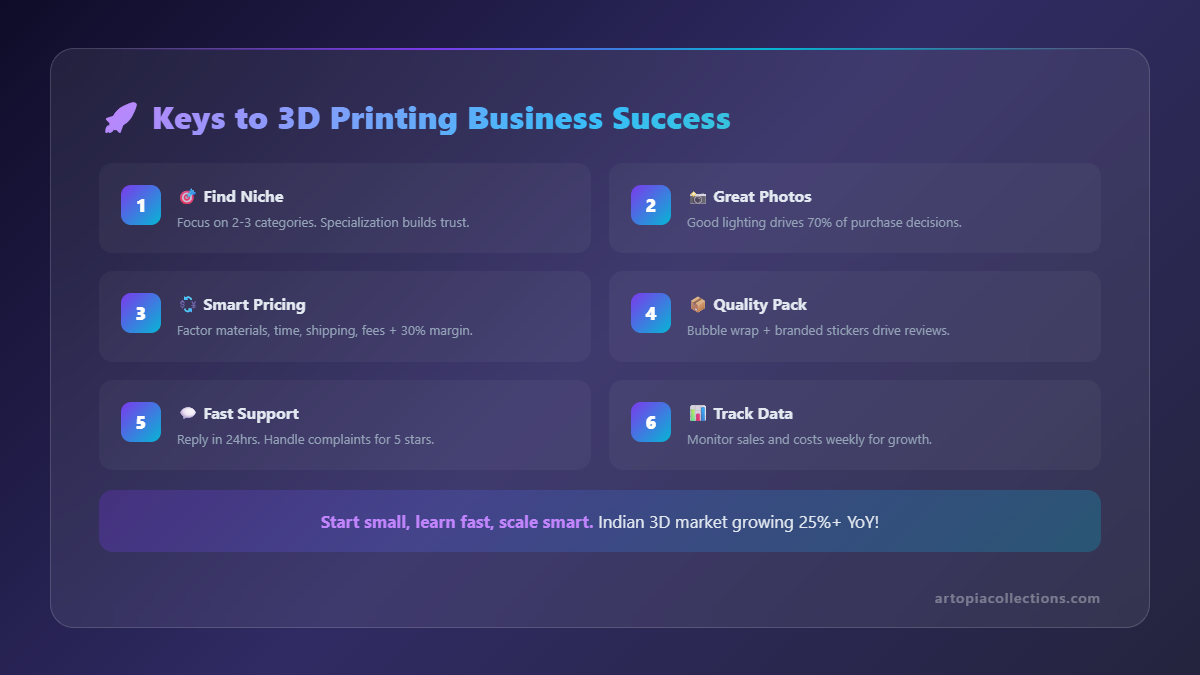
So, if you're a fellow 3D printing enthusiast in India, sitting there wondering if you can turn your hobby into a hustle, I say go for it! Start small, print some samples, and show them off. Focus on quality, because a poorly fitting or flimsy case will quickly ruin your reputation. Experiment with different materials and designs. And most importantly, talk to your potential customers. Find out what they want, what they'd pay for, and what makes them tick.
This business isn't going to make you a millionaire overnight, but it's incredibly rewarding to create something unique with your own hands (and printers!), and see someone genuinely excited about it. It’s a great way to earn a decent side income, or even build it into a full-fledged small business like mine is becoming.
If you're curious about the kind of stuff I print, not just phone cases, definitely check out some of my other creations over at Artopia Collections. We've got all sorts of cool things bubbling up from the print beds!
And hey, if you're thinking of diving into 3D printing for business or just for fun, a good, reliable filament is your best friend. I often buy my PETG from Amazon, like these eSun PETG filaments. They're usually consistent and good quality for the price. Happy printing, folks!