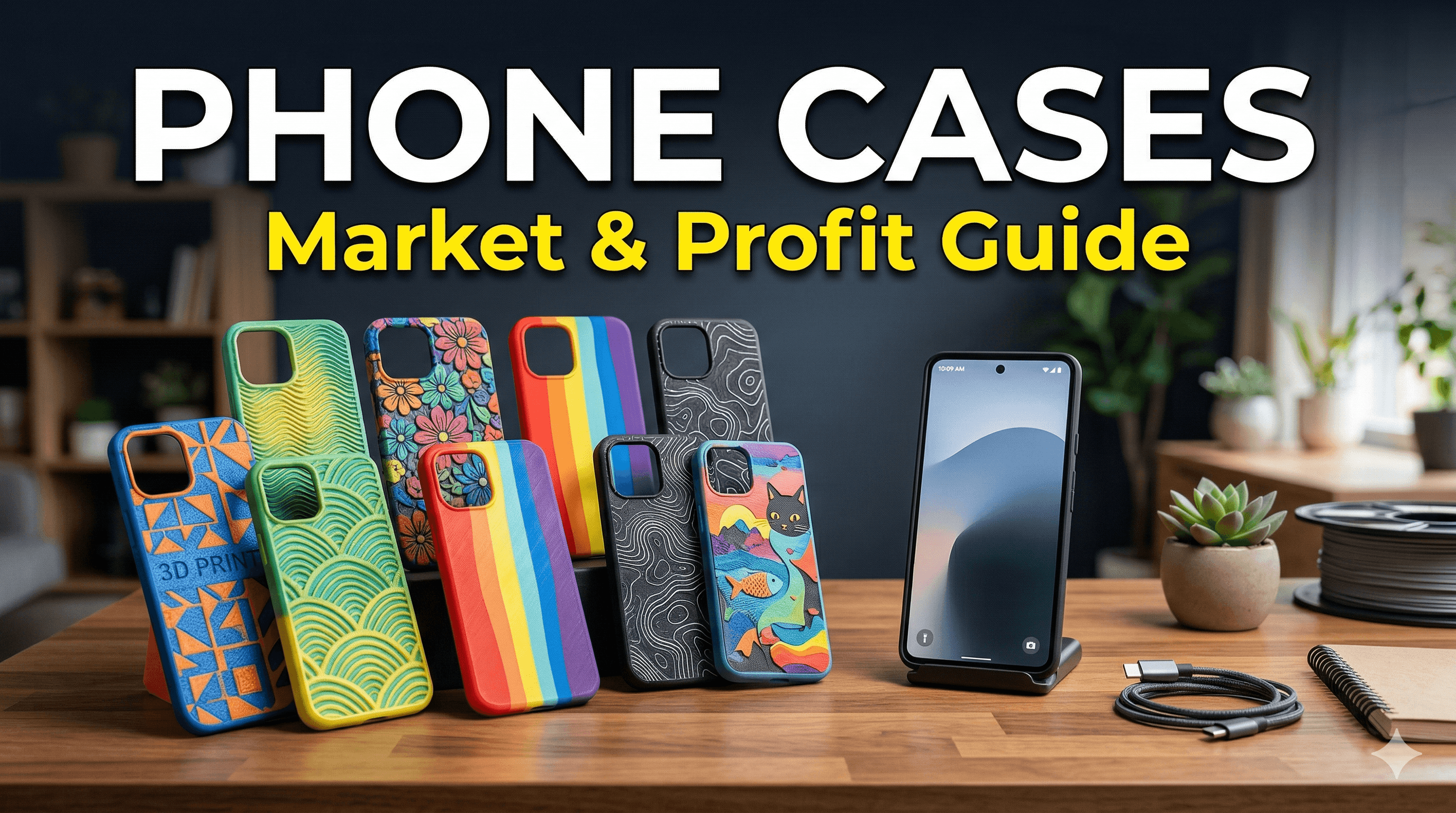
Most Profitable 3D Printed Products to Sell Online in India
Unlock the potential of 3D printing entrepreneurship in India. This guide reveals the most profitable products you can create and sell online for a thriving business.
So, You Want to Turn Plastic into Profit? Let's Talk Profitable 3D Prints in India!
Alright guys, let's be real for a sec. You've got that shiny new (or maybe not-so-new, like my trusty old Ender 3 V2 that's seen more filament than I have hot meals) 3D printer humming in the corner. You're printing cool stuff, maybe a Creality Ender 3 V3 SE, maybe an Anycubic Kobra, or even something a bit more professional. And that little voice in your head, the one that whispers "Psst... you could actually *make money* with this," well, it's probably getting louder, right?
I hear you. I've been there. My name's Vidyut, and just a few years ago, I was exactly where you are. Passionate about pushing plastic, but also wondering how to turn that passion into something more than just a hobby. How to make it pay for itself, and maybe even, you know, my next cup of chai. That's why I started Artopia Collections, my little slice of the 3D printing world here in India. And let me tell you, it's been a journey. Lots of failed prints, late nights, figuring out what works, and honestly, what really doesn't in our unique Indian market.
See, the thing is, while 3D printing is global, selling 3D printed products effectively in India has its own quirks, its own challenges, and its own incredible opportunities. It's not just about what's cool, it's about what people *value* enough to pay for. What solves a problem, or brings joy, or just looks awesome enough to stand out. So, if you're looking to dive into the exciting (and sometimes maddening) world of selling your 3D prints online in India, pull up a chair. I'm going to share some of my hard-won insights on what I’ve found to be the most profitable products, and how you can approach it.
The Indian Market: More Than Just 'Cheap'
First off, let's address the elephant in the room: pricing. A lot of people assume that in India, everything has to be dirt cheap. And yes, cost sensitivity is real, absolutely. But here's the deal: value perception is even bigger. People are willing to pay a fair price for something unique, well-made, and especially something personalized. We love our customization, don't we? So don't undersell yourself thinking you need to compete with mass-produced stuff from China. You're offering something different.
Another thing: the rise of online shopping here has been phenomenal. Platforms like Amazon.in, Etsy, and even local social media groups are buzzing. If you can get your products in front of the right eyes, you're golden. And the sheer diversity of our culture, our festivals, our regional tastes – man, that's a goldmine for unique product ideas. You just need to know where to dig.
My Top Picks: Profitable 3D Printed Products for India
Okay, enough preamble. Let's get down to brass tacks. Based on my experience and what I see moving on various platforms, here are some product categories that consistently bring in good returns and have strong demand:
1. Personalized Gifts & Nameplates: The Undisputed King
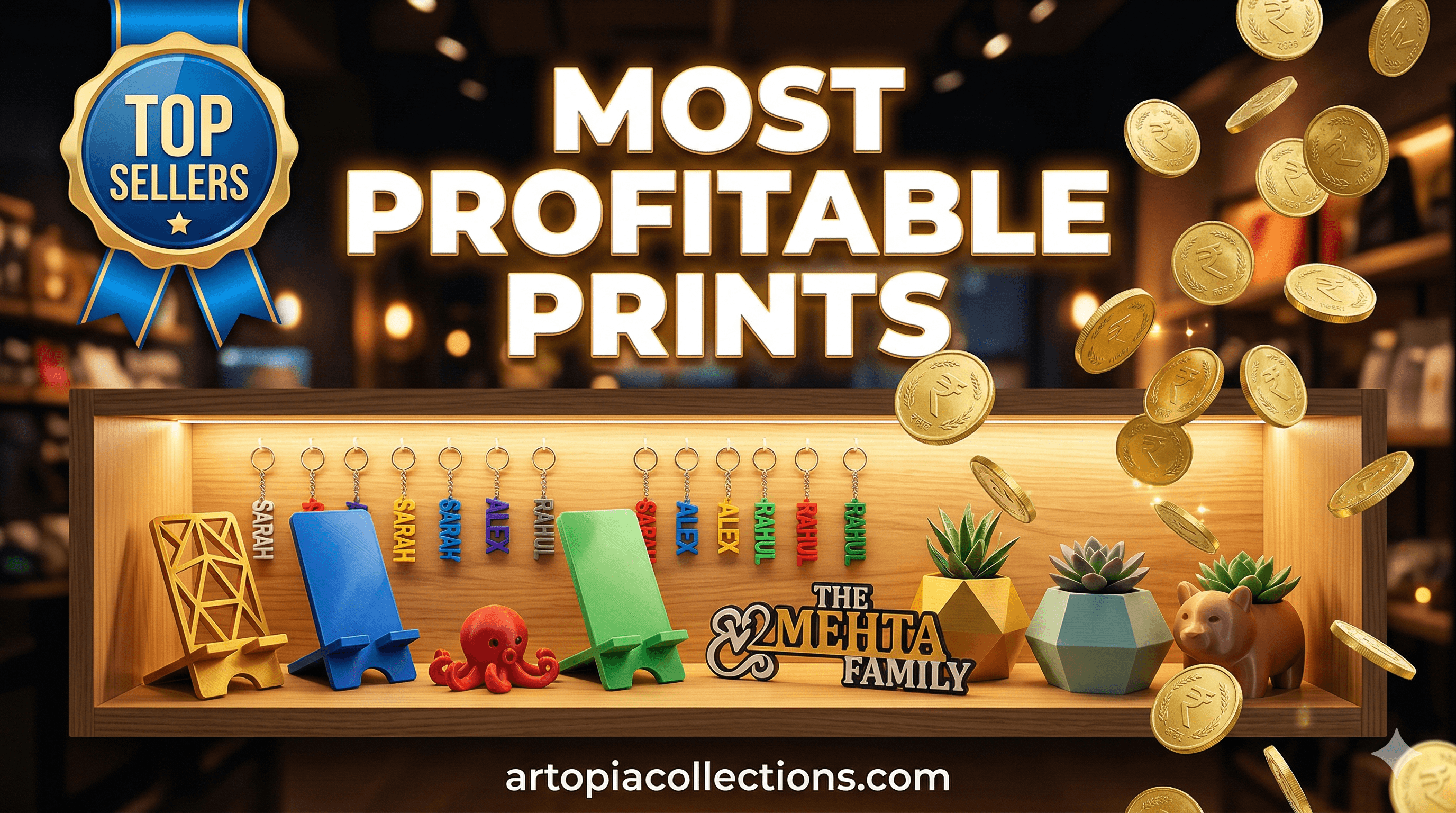
Honestly, if you're starting out and want almost guaranteed sales, this is it. Personalized items have a huge markup potential because they’re unique to the buyer. Think about it: a custom nameplate for a desk, a personalized keychain with someone's name, a unique phone stand with initials. These are gifts that truly resonate.
- Desk Nameplates: People love these for their home offices or even as gifts for colleagues. Simple designs, maybe two-tone filament. Material cost? Like ₹20-30. Selling price? ₹250-500, easily.
- Keychains: A quick print, low material cost (₹5-10 per piece), and you can sell them for ₹80-150. Great for impulse buys or bulk orders for events.
- Lithophanes: Oh, man, these are magic! A printed photo that comes to life when backlit. Requires a bit more skill and print time, but the "wow" factor is huge. People pay good money for these – ₹400-₹1000 depending on size and complexity. They make fantastic personalized gifts for birthdays, anniversaries, you name it.
The beauty of personalization is that you're not just selling plastic; you're selling sentiment. And sentiment sells. For these, you'll mostly be using good old PLA filament – easy to print, available everywhere, and comes in a zillion colours. I usually stick with eSun or some other reliable good quality PLA filament. Consistency is key.
2. Home Decor & Utility Items: Practicality Meets Style
Everyone wants their home to look good, right? And everyone has little annoyances that could be solved by a simple, well-designed 3D print. This category is massive because it caters to everyday needs and aesthetics.
- Planters/Vases: Small, decorative planters are always a hit. People love unique designs that aren't available in every other store. Geometric designs, minimalistic styles, even designs that mimic traditional Indian pottery can do well. Prices range from ₹300 for small ones to ₹1000+ for larger, intricate pieces.
- Desk Organizers: We all have messy desks. Pen holders, cable organizers, remote stands – functional prints that solve a common problem are highly valued. I've sold quite a few custom-fit organizers for specific devices, and those fetch a premium.
- Wall Art/Shelves: Simple, elegant wall mounts for small showpieces or decorative shelves. Think minimalistic designs.
- Coasters: Easy to print, can be customized, and always useful. Material cost is minimal, selling price can be ₹50-100 per piece, or more for a set.
For home decor, aesthetics are paramount. Smooth finishes, good colour choices, and sturdy designs are crucial. People are paying for something that adds to their living space, so quality really shines here. Sometimes, even simple vase mode prints can look stunning and sell for a decent price!
3. Gaming & Tech Accessories: Tapping into a Growing Niche
India's gaming and tech scene is booming! And gamers, bless their hearts, love their accessories. If you're a gamer yourself, you'll know exactly what problems need solving.
- Headphone Stands: A must-have for any serious gamer or audiophile. You can design cool, thematic stands (like a specific character or logo). Prices can be ₹400-₹1000.
- Controller Holders: Keep those expensive controllers safe and tidy. Again, customization opportunities are huge here.
- Cable Management: Charging dock organizers, cable clips, desk grommets. These are small, functional, and solve real pain points.
- Raspberry Pi/Arduino Cases: For the tech tinkerers, custom enclosures are always in demand.
This niche is fantastic because the target audience is often willing to pay for quality and functionality. Plus, the designs can be really creative and fun. My own store, Artopia Collections, has seen some good traction with custom tech stands and quirky desk buddies.
4. Figurines & Collectibles: Passion Projects for Profit
This one is a bit more niche, but if you hit the right chord, the sales can be incredibly rewarding. Think pop culture, anime, movie characters, or even traditional Indian deities and mythological figures.
- Pop Culture Statues: From Baby Yoda to Iron Man busts, if it's popular, people want to collect it. Just be mindful of copyright if you're selling popular characters; sometimes it's safer to go with "inspired by" or original designs.
- Indian Deities/Mythological Figures: This is a massive market during festivals. Small, intricately designed statues of Ganesh, Lakshmi, Krishna, or even just symbols like Om or Swastika (in its traditional auspicious context) are highly sought after. I personally think this area has untapped potential for unique, tasteful designs that bridge tradition with modern manufacturing.
- Miniatures for Tabletop Gaming: While not as huge as in the West, there's a growing community of Dungeons & Dragons and other tabletop game enthusiasts who need cool miniatures.
For figurines, detail is EVERYTHING. You'll need fine-tuned print settings, maybe even resin printers for super-detailed pieces, and definitely good post-processing (sanding, priming, painting). The profit margins can be excellent, though, especially for unique or limited-run pieces. A well-painted figurine can fetch ₹1000 to ₹5000 or even more, but remember the time investment for painting is significant.
5. Functional Prints & Replacement Parts: The Problem Solvers
This is where 3D printing truly shines: solving real-world problems. Someone broke a knob on their washing machine, can't find a specific adapter for their camera, or needs a unique bracket for mounting something. These aren't flashy, but they're incredibly valuable.
- Appliance Knobs/Handles: Surprisingly common requests!
- Custom Brackets/Mounts: For specific cameras, sensors, IoT devices, or even just holding up a curtain rod in a weird corner.
- Tool Organizers/Jigs: Custom inserts for toolboxes, specific jigs for woodworking or crafting.
The key here is to identify common pain points or niche needs. You might not sell hundreds of these, but each sale has a very high perceived value because you're providing a solution that isn't readily available otherwise. These often require PETG or ABS for durability, which means a slightly higher material cost and printing complexity, but it’s worth it.
My Two Cents on Making It Work
Okay, so you have some product ideas. But ideas are just the beginning, right? To actually make a profit, you need to execute well. Here are a few things I've learned the hard way:
Quality is Non-Negotiable: Look, you're competing with mass production. Your advantage is customization and quality. Don't send out prints with stringing, layer shifts, or ugly seams. Invest in good filament (seriously, a few extra rupees for better filament saves you headaches and failed prints) and dial in your settings. Post-processing, even just a bit of sanding or deburring, makes a huge difference in perceived value.
Niche Down, Then Expand: Don't try to sell everything under the sun from day one. Pick one or two categories you're passionate about and excel in them. Build a reputation. Once you have a customer base and understanding of the market, then slowly expand your offerings. For me, I started with personalized desk items and slowly added more utility prints.
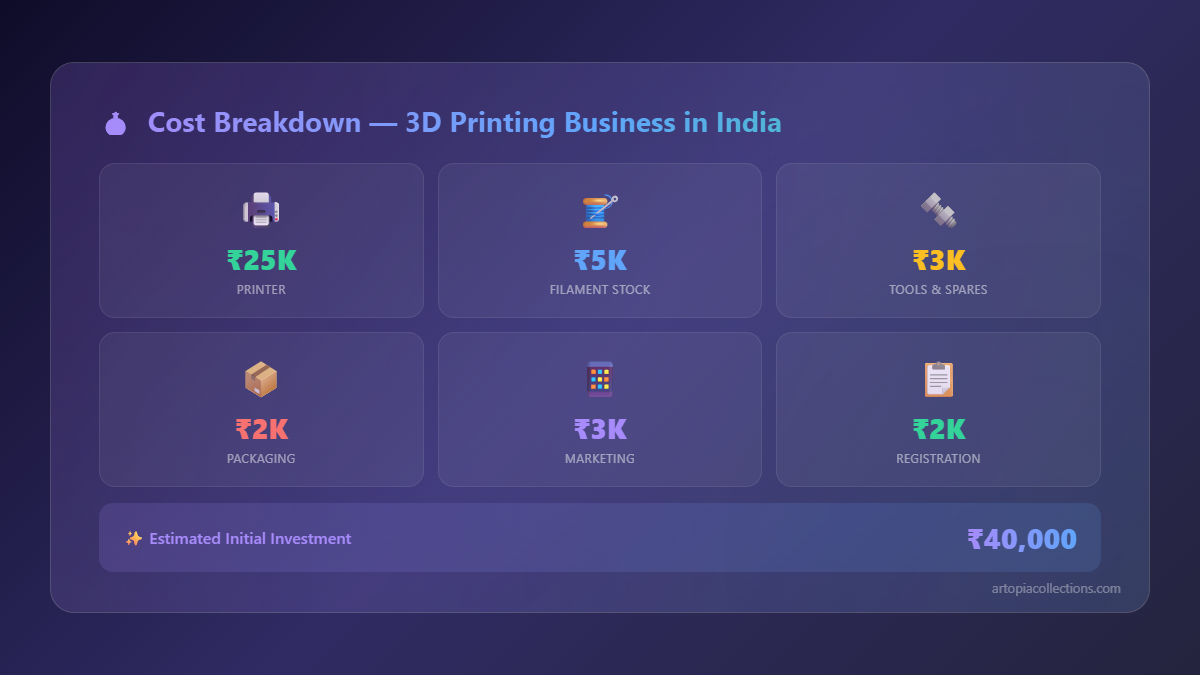
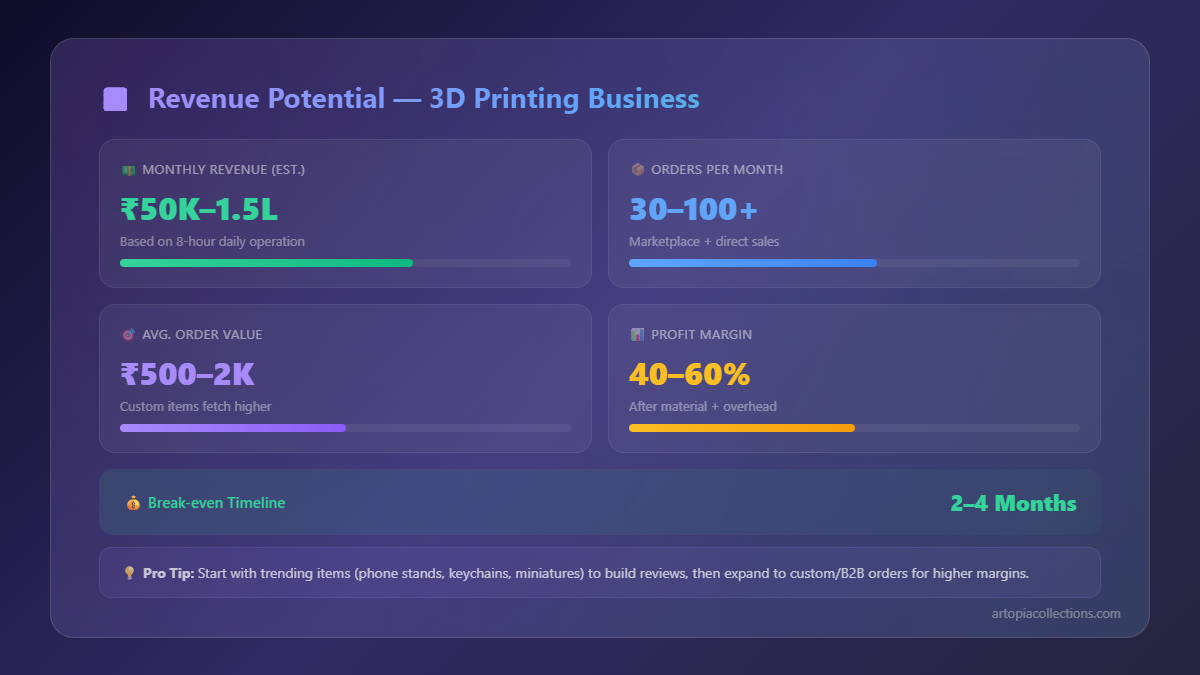
Pricing Strategically: This is where many beginners stumble. Don't just calculate material cost + electricity. Factor in your design time, print time, post-processing time, packaging, and marketing. Then, add a healthy profit margin. Research what similar items (even non-3D printed ones) sell for. People pay for uniqueness and convenience. Don't be afraid to charge what your work is worth. My rule of thumb is usually 5-10x material cost for simpler prints, much more for complex, high-effort designs.
Showcase Your Work: High-quality photos are crucial for online sales. Invest in a good phone camera (most modern smartphones are great) and good lighting. Show your prints from multiple angles, in context. Instagram, Facebook, and WhatsApp Status are your best friends here. Write compelling descriptions that highlight the benefits and uniqueness of your product.
Customer Service: This is huge. Respond quickly, be polite, and resolve issues promptly. A happy customer is a repeat customer, and they'll also spread the word. Word-of-mouth is still king in India, even online.
Keep Learning: The 3D printing world is always evolving. New filaments, new printers, new techniques. Stay updated, experiment, and don't be afraid to try new things. Some of my best-selling products came from me just messing around with new ideas.
Final Thoughts from Your Fellow Print-Head
Starting a 3D printing business in India is exciting. It's challenging, yes, and there will be moments you want to throw your printer out the window (I've been there, trust me!), but it's also incredibly rewarding. Seeing someone genuinely happy with something you created, a physical object born from your imagination and your machine – there's nothing quite like it. It's not just about turning plastic into profit; it's about turning an idea into reality, one layer at a time.
So, get printing, get designing, and get selling! The market is waiting for your unique creations. And who knows, maybe one day we'll be discussing our biggest orders over a cup of chai. Happy printing, my friends!