Voron 2.4 Build Guide: Is Building Your Own Printer Worth It in India?
Building a high-performance 3D printer like the Voron 2.4 can be a rewarding experience, especially for makers in India. This guide explores the financial implications, sourcing challenges, and overall value of a DIY Voron 2.4 build for Indian enthusiasts.
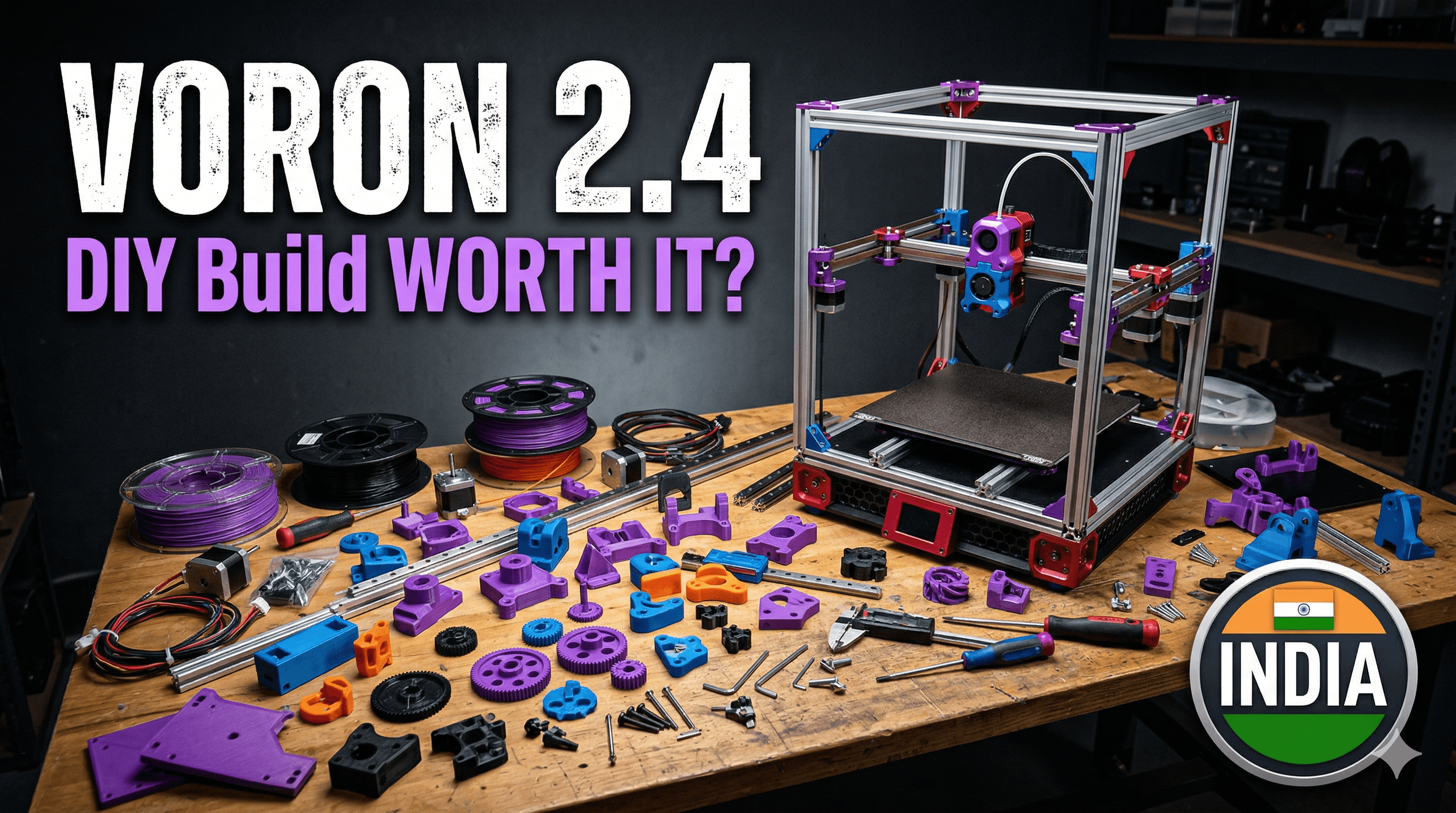
Voron 2.4 Build Guide: Is Building Your Own Printer Worth It in India?
Ever scrolled through those mesmerizing time-lapses of ridiculously fast 3D printers spitting out perfect parts and thought, "Man, I need one of those"? Yeah, me too. All the time. But then you look at the price tag, especially when you're here in India, and your heart just sinks a little, right? Because let's be real, a top-tier, high-performance 3D printer isn't just an investment; it's practically a luxury car payment for most of us. And that’s exactly where the legendary Voron 2.4 entered my life, or at least, my dreams.
For years, I'd been happily chugging along with my modified Creality CR-10S Pro and a trusty Ender 3 V2 (both workhorses, don't get me wrong). They served my small 3D printing business, ArtOpia, pretty well, churning out custom lithophanes, prototypes, and a gazillion functional prints for clients. But there was always this underlying yearning for more speed, more precision, and less tinkering – basically, the kind of "set it and forget it" reliability you see from the big boys, but without having to sell a kidney. I mean, my printers were good, they really were, but sometimes, when a big order came in, I'd just wish they could print twice as fast without sacrificing an ounce of quality. And that's where the Voron 2.4, with its CoreXY kinematics, enclosed build volume, and insane print speeds, seemed like the ultimate answer.
The thing is, buying a fully assembled, high-end CoreXY printer like a Bambu Lab P1P or an X1C, or even a Prusa MK4 (which is a different beast but equally coveted), especially with all the import duties, shipping costs, and GST here in India, makes the final price astronomical. We're talking well over ₹80,000, sometimes even crossing the ₹1.5 lakh mark for some professional setups. My initial thought was, "No way can I justify that." But then I started seeing posts in various Indian 3D printing communities about people sourcing parts and building their own Vorons. And my mind went, "Hold on a minute... is this actually a viable option for us in India?"
Why Even Consider a DIY Voron 2.4 in India?
Honestly, the biggest driver for me, and I think for many of you reading this, is the cost. An official Voron kit from the likes of LDO or Fysetc is fantastic, but by the time it lands on your doorstep in Bangalore or Mumbai, you're paying a hefty premium. Customs duties alone can add 20-40% to the cost, not to mention international shipping which isn't exactly cheap. So, immediately, the appeal of sourcing components locally or from more accessible international vendors (even if it means a bit of waiting) becomes very strong.
But it's not just about the money, though that's a huge part. For an enthusiast like me, someone who genuinely enjoys understanding how things work, building a Voron is like building your own supercar from scratch. You get to know every nut, every bolt, every wire. When something eventually goes wrong (and trust me, it will at some point, that's just the nature of 3D printing), you'll know exactly how to fix it because you put it together. It’s an unparalleled learning experience, a deep dive into engineering, electronics, and precision mechanics. Plus, the sense of accomplishment when you finally see that first perfect print pop off your self-built machine? Unbeatable, my friend, absolutely unbeatable.
The Voron 2.4: A Quick Overview of What Makes it Special
For those not fully initiated into the Voron cult – and yes, it’s a cult, a good one though – the Voron 2.4 is a CoreXY, fully enclosed 3D printer. This means incredible speeds and acceleration because the print head moves only in X and Y, with the print bed moving only in Z. The enclosure is crucial for printing high-temperature filaments like ABS, ASA, and even polycarbonate, which are notoriously tricky on open-frame printers due to warping. It's designed for reliability, precision, and sustained high-speed printing. Plus, it's fully open-source, meaning a massive, active community supports it, constantly improving designs and offering help. It's not just a printer; it's a platform for continuous improvement.
The Voron Build Journey: The Good, The Bad, and The Absolutely Frustrating (Especially in India)
Alright, let's get down to the nitty-gritty. Building a Voron 2.4 in India isn't for the faint of heart. It's a marathon, not a sprint, and it requires planning, patience, and a healthy dose of problem-solving.
1. The Bill of Materials (BOM) and Sourcing Nightmare (or Adventure!)
The official Voron BOM is extensive. Like, really extensive. It lists everything from specific motor models to individual screw sizes. Your first task is to go through this list with a fine-tooth comb and figure out what you can get where. This is where the "India tax" really comes into play.
- Aluminium Extrusions: Thankfully, these are relatively easy to find. Local aluminium fabricators or online stores catering to automation projects often carry 2020 and 2040 extrusions. Expect to pay anywhere from ₹8,000 to ₹12,000 for a quality cut-to-size set. Make sure they're accurate!
- Printed Parts (ABS/ASA): This is one of the coolest parts. If you already have a printer, you can print most of the structural parts yourself. You'll need about 1.5-2kg of good quality ABS or ASA filament. I personally prefer eSUN ABS+; it's pretty reliable. If you don't have a printer capable of ABS, you can outsource this to someone in the community who runs a print farm or has a Voron already. Expect to pay ₹3,000-₹6,000 for a full set of quality parts, which is a steal compared to buying them abroad.
- Electronics (Controller Board, Drivers, Raspberry Pi): This is where things get interesting. SKR 1.4 Turbo, BTT Octopus, or more recently, the Manta series boards are popular choices. You can often find these on Indian electronics e-commerce sites or through local distributors. Raspberry Pis? Forget about it, they're unicorns right now and ridiculously overpriced if you find one. I ended up using an old Orange Pi I had lying around – it works, but the setup wasn't as straightforward. For a good board and drivers, you're looking at ₹10,000-₹20,000.
- Motors: LDO motors are the gold standard for Vorons. Getting them in India can be tricky. Some hobby stores might stock them, but often you'll need to order from international vendors and brave customs. NEMA17 steppers from brands like StepperOnline are a decent, more accessible alternative. Budget ₹6,000-₹10,000 for a full set.
- Hotend: Ah, the heart of the beast! E3D V6, Dragon HF, Rapido, Phaetus Dragonfly – tons of options. A genuine E3D V6 can be found, but clones are everywhere. For performance, something like a Phaetus Rapido or Dragon HF clone (if you're brave) or even a genuine E3D Revo can set you back ₹5,000 to ₹15,000, depending on the brand and model. Don't cheap out too much here, it's crucial for print quality.
- Heated Bed and PEI Sheet: Good quality silicone heaters and aluminium plates can be sourced from local fabricators or specialist suppliers. For the PEI sheet, you might have to import a good magnetic flexible one. Budget ₹5,000-₹10,000.
- Wires, Fasteners, Belts, Bearings, Lead Screws: This is a massive category. Wires are easy to find, but sourcing good quality silicone wire can be a hunt. Fasteners (nuts, bolts, inserts) are best bought in bulk from a reputable hardware store or online supplier; it’s usually cheaper. Gates belts are critical for accuracy, and some stores do stock genuine ones, otherwise, a good clone will do. Bearings are everywhere, but pay attention to quality. All of this can easily add another ₹5,000-₹10,000.
So, what's the grand total looking like? In my experience, building a decent Voron 2.4 from scratch, sourcing mostly within India or through budget-friendly international options (and a lot of patience), you're looking at a total cost of approximately ₹40,000 to ₹80,000. This is a wide range, I know, because it heavily depends on your choices of parts and how good you are at haggling or finding deals. But compare that to a Prusa MK4 kit in India which usually goes for well over ₹1 lakh, or a Bambu Lab X1C touching ₹1.2-1.5 lakhs. Suddenly, the Voron looks like a serious contender on value.
2. Time Commitment: This Ain't No Weekend Project!
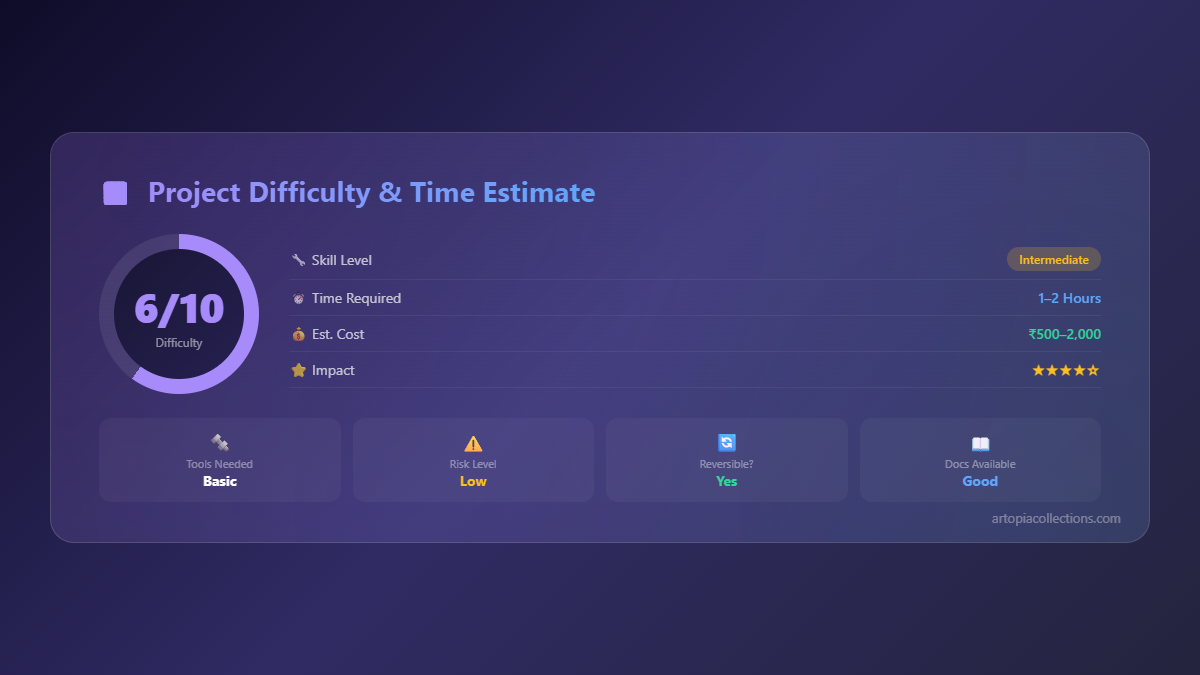
My friend, if you think you'll knock this out in a week, you're in for a rude awakening. Sourcing alone can take weeks, sometimes months, waiting for parts to arrive from different corners of the country or the world. The actual assembly process is meticulous. The Voron manual is fantastic, but it's hundreds of pages long. Wiring, tuning, troubleshooting – it all takes time. I personally spent about 3-4 months from the day I decided to build it to the day I got my first decent print. And even after that, there's always tweaking and improving. This is a journey, not a destination.
3. Skills Required: Get Ready to Learn!
You don't need to be an engineer, but a basic understanding of electronics (soldering, wiring), mechanical assembly, and a strong will to learn are essential. You'll be dealing with everything from crimping JST connectors to flashing firmware, calibrating stepper motors, and PID tuning your hotend. The Voron community is incredibly helpful, but you need to be willing to read, research, and ask intelligent questions. It’s like a crash course in 3D printer design and operation.
Is Building Your Own Voron 2.4 Worth It in India? My Verdict.
This is the million-dollar question, isn't it?
The Pros:
- Cost Savings: As discussed, you can significantly save money compared to importing a full kit or buying a comparable pre-assembled printer.
- Deep Understanding: You'll know your printer inside and out. This makes troubleshooting and future upgrades a breeze.
- Customization: It's YOUR printer. You can choose every component, tailor it to your needs, and implement community mods easily.
- Performance: Once tuned, a Voron 2.4 performs on par with (or even better than) many commercial printers costing double or triple its price. The print quality and speed are simply phenomenal. I've been able to take on more complex, larger orders at ArtOpia with confidence, knowing my Voron can handle the workload and deliver pristine results. You can see some of the products it helps create over at Artopia Collections.
- Sense of Accomplishment: Seriously, there's nothing quite like it.
The Cons:
- Time & Patience: This is a huge investment of your personal time.
- Sourcing Headaches: Finding quality parts at reasonable prices in India can be a proper treasure hunt. You'll spend a lot of time on e-commerce sites, local hardware stores, and community forums. (I mean, seriously, try finding a specific brand of linear rail bearings sometimes, it's enough to make you pull your hair out!)
- No Warranty/Support: You're your own tech support. If a part fails, you replace it. There's no single company to call.
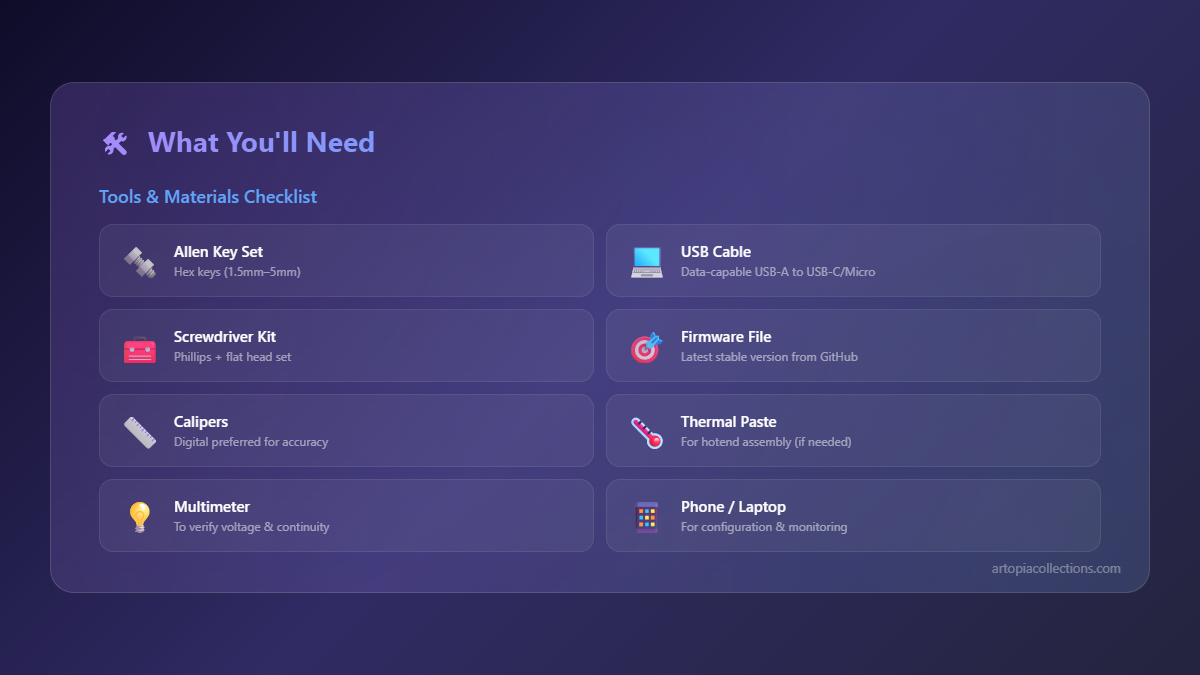
- Hidden Costs: Factor in tools you might need (crimpers, good multimeters, soldering iron), filament for printed parts, and maybe even a few replacement parts due to initial mistakes. These can add up.
- Potential for Project Abandonment: It's a real risk. If you get stuck, frustrated, or run out of steam, your investment could turn into a very expensive paperweight.
So, is it worth it? For me, absolutely. For someone running a small business like mine, where reliability and high performance are crucial for customer satisfaction and scaling operations, the Voron 2.4 has been a game-changer. It prints faster, more reliably, and with better quality than my older machines, allowing me to take on more challenging projects and fulfill orders quicker. It’s an invaluable tool.
But here's the deal: it's not for everyone. If you're looking for an "out of the box" experience, or if your budget is extremely tight and you can't afford any mistakes, then honestly, a well-regarded budget printer like an Ender 3 V3 KE or a K1 (though still pricier) might be a better starting point. They offer much of the speed and ease of use without the build hassle. However, if you're a tinkerer, someone who enjoys a challenge, wants to deeply understand their machine, and aims for professional-grade results without the professional-grade price tag, then building a Voron 2.4 in India is an incredibly rewarding endeavor. It's a journey, a learning curve, but the destination, that perfectly printed part coming off your self-built marvel, is truly spectacular.
Look, I highly recommend diving into the Voron community forums and Discord before you start. Gather as much info as you can. And if you’re seriously considering it, start with some of the more readily available components like a generic 3D printer parts kit for small things, or just a really good batch of filament, and slowly build your collection. It’s an adventure, but one that will teach you more than any pre-built printer ever could.
Have any of you tried building a Voron here in India? Or are you dreaming about it? Share your thoughts, your struggles, and your triumphs in the comments below! I'd love to hear about your experiences.