3D Printed Wall Art for Indian Homes: Geometric, Maps, and Modern Decor Ideas
Transform your walls with unique 3D printed art. Explore creative ideas for geometric panels, personalized maps, and stylish decor to elevate your home's aesthetic.
Ever walked into a room and just felt... meh? Like, the walls are bare, or worse, they're plastered with some generic, mass-produced print that you've seen a hundred times? Yeah, I get that feeling. It's a bummer, right? Your home should reflect you, your stories, your quirks. And honestly, for the longest time, I struggled to find truly unique wall art that didn't cost an arm and a leg, or just scream "I bought this from a big-box store."
That's where my love affair with 3D printing really kicked into high gear, and eventually, how ArtOpia Collections was born. See, the thing about 3D printing is it's not just about making functional parts or cute little trinkets. It's about bringing imagination to life, literally layer by layer. And when it comes to wall decor? Oh man, the possibilities are just mind-boggling. We're talking about taking your empty wall space and transforming it into something deeply personal, visually stunning, and totally bespoke. No more generic prints, I promise you. We're going to dive into some killer 3D printed wall art ideas today: from mind-bending geometric panels to topographical maps of your favorite places, and even custom decor that tells your unique story.
Geometric Wall Panels: The Modern Vibe You Didn't Know You Needed
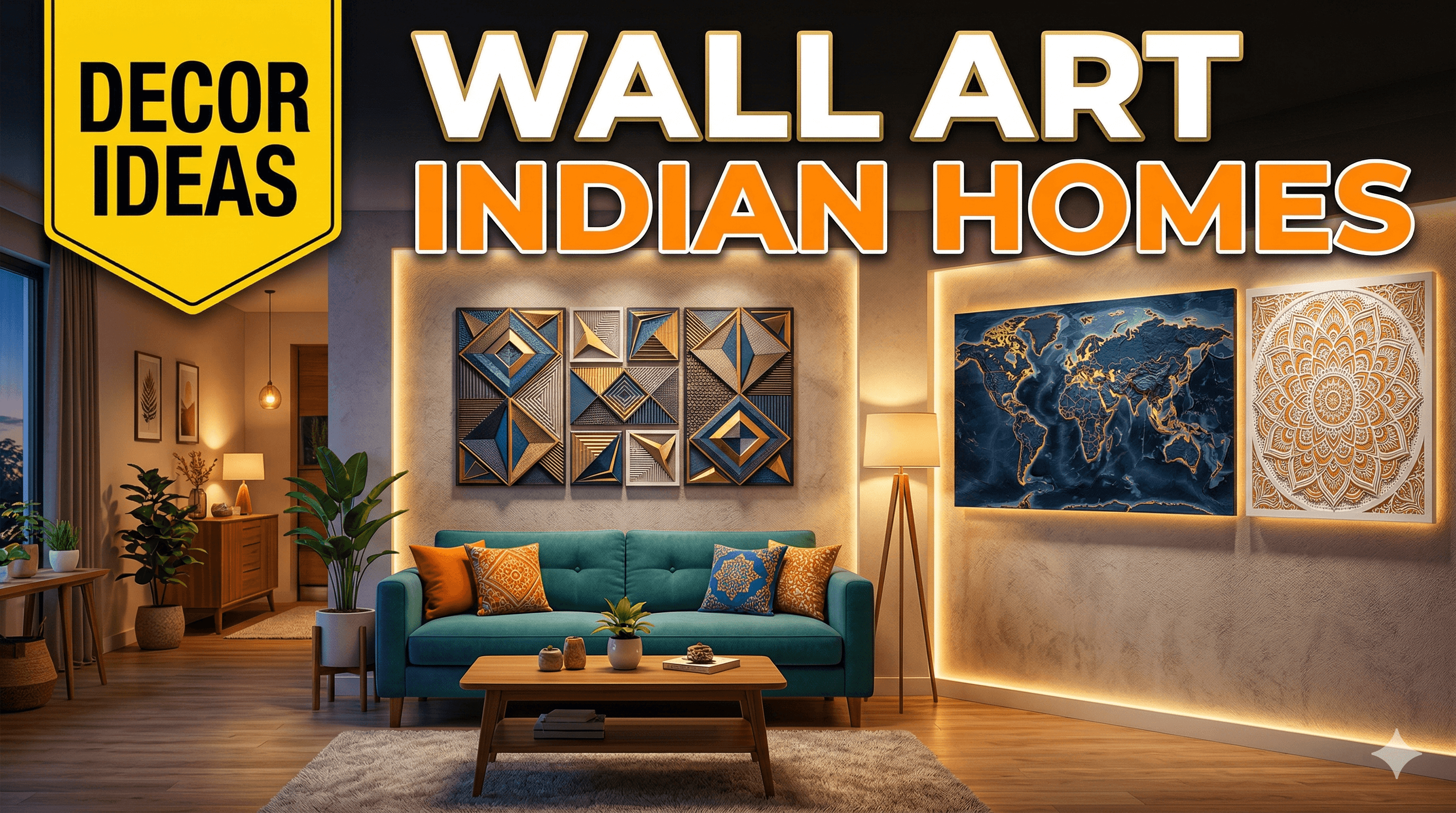
Let's kick things off with geometric panels. If you're into that clean, modern, minimalist aesthetic, but still want something that pops, these are your jam. I've personally done so many of these for clients, and every single time, the reaction is just pure awe. They're basically modular pieces â imagine hexagons, triangles, squares, or even more intricate tessellations â that interlock or connect to form a larger, cohesive design on your wall. And the beauty is, you can arrange them in any pattern you like! Want a sprawling, organic flow across one wall? Go for it. A tight, symmetrical grid above your sofa? Absolutely. The design possibilities are endless, truly.
The magic often lies in the texture and depth that 3D printing provides. Unlike a flat painting, these panels literally stand out from your wall. You can get super creative with the designs too â some have intricate patterns etched onto their surface, others have a beautiful wave or ripple effect that catches the light in such a mesmerizing way. Think about a set of twelve hexagonal panels, each with a slightly different abstract pattern, printed in a matte white PLA. When the light hits them just right, the shadows play, and it creates this incredible dynamic look. It's not just art; it's an experience.
Designing and Printing Your Geometric Masterpiece
For something like this, I usually recommend going with a filament that has a nice finish. Matte PLA, for instance, looks incredibly premium and helps to hide layer lines, giving it a very sculptural feel. Brands like eSun or Overture offer some fantastic matte options that are readily available here in India. You can find them on Amazon too, by the way â I often buy my stock there: Check out eSun Matte PLA on Amazon.in!
And then there's silk PLA! Oh my goodness, silk PLA. If you want a bit of shine, a luxurious sheen, that's the way to go. Imagine a set of geometric panels in silk gold or silver â they look like they're made of metal, but they're surprisingly lightweight and affordable. The cost? A typical 15x15 cm geometric panel might use about 50-70 grams of filament. At roughly â¹1000-1200 per kg for good quality PLA (sometimes less if you catch a sale!), that's maybe â¹50-â¹80 in raw material cost per panel. Add in design time, electricity (which can be a killer with longer prints, honestly), and my own expertise, a single panel might retail for anywhere from â¹350 to â¹700, depending on complexity and size. A full set of, say, nine panels? You're looking at â¹3000-â¹6000, which is still incredibly reasonable for custom, unique art.
Printing these isn't too challenging for most FDM printers. Even a trusty Creality Ender 3 or an Anycubic Kobra can handle them beautifully. The key is ensuring your bed is perfectly leveled for that first layer adhesion, especially on larger pieces. I usually print them with a 0.2mm layer height for a good balance of detail and speed, and maybe 10-15% infill since they don't need to be structural. Sometimes, for a really striking effect, I'll print a multi-color design using a printer with AMS capabilities (like some of the Bambu Lab machines) or simply by pausing the print and swapping filaments at specific layers. It adds a whole new dimension.
Maps That Matter: From Topography to Star Charts
Next up, maps! But not just any maps, my friends. We're talking about maps that literally pop off the wall. This is one of my absolute favorite types of 3D printed wall art because it's so deeply personal. Think about it: a topographical map of your hometown, showing all the hills and valleys in glorious 3D relief. Or perhaps the exact star map of the night sky on the day your child was born. How cool is that?
I've made elevation maps for clients showing their favorite trekking routes in the Himalayas, or a detailed cityscape of Mumbai or Delhi, complete with miniature buildings. The sense of scale and detail you can achieve is just incredible. You can even combine them! Imagine a large panel with the outline of India, and within it, individual states or regions rendered in their topographical glory. So meaningful.
Bringing Your World to Your Wall
Generating the 3D models for these maps is surprisingly accessible now. For topographical maps, tools like TouchTerrain are fantastic â you can select an area on a map, and it'll generate an STL file based on elevation data. For cityscapes, you might pull data from OpenStreetMap and process it. Star maps often come from specific generators where you input a date and location. It's truly taking data and turning it into art.
For these pieces, filament choice can be crucial. Monochromatic prints in a subtle grey, beige, or white often work best for topographical maps, allowing the shadows to define the contours. But you can also get adventurous! I once did a topographical map of a coastal area using a gradient filament â blues for the ocean, greens for the lowlands, and browns for the mountains. It looked absolutely stunning. For star maps, a dark blue or black background with glow-in-the-dark or white filament for the stars can create a truly magical effect, especially at night.
These can be more challenging to print due to the fine details. You'll often need a finer nozzle (like a 0.2mm or 0.3mm) and slower print speeds to capture all those intricate elevation changes or tiny stars. And here's the deal, they can take a loooong time. A detailed map of a significant area, say 30x40 cm, could easily be a 24-48 hour print, sometimes more. That's a lot of electricity, and a lot of printer wear and tear. So, naturally, the cost will be higher than simple geometric panels. You could be looking at â¹4000 to â¹10,000 or even more for a truly large, custom, highly detailed topographical map. But for something so unique and personal? Totally worth it, in my opinion.
If you're looking for a good, reliable printer to start your own journey, or just curious about what machines I use in my shop, the Creality Ender 3 series is a fantastic entry point for hobbyists. I've got a few modified ones that still churn out amazing prints. You can check them out on Amazon: Explore Creality Ender 3 printers on Amazon.in!
Custom Decor & Niche Art: Beyond the Expected
Okay, so we've talked about structured geometric designs and data-driven maps. But what about just pure, unadulterated creativity? This is where 3D printing truly shines as a medium for wall art â creating something totally unique, something that exists nowhere else. This category is basically "anything goes," and it's where my business, ArtOpia Collections, really thrives in making clients' wild ideas a reality.
I'm talking about things like 3D printed wall quotes, where each letter has a beautiful texture or a unique font that you just can't get with vinyl decals. Or abstract art pieces, where the form, shadow, and light become the main focus. Think about panels with flowing, organic textures reminiscent of sand dunes or ocean waves, printed in different shades of blue or green. We can even integrate small, functional elements, like tiny hooks for keys or lightweight items, subtly hidden within an artistic design.
Your Imagination, Printed
One of my favorite types of niche art is the 3D printed lithophane. Now, if you haven't seen one of these, you're missing out. It's a 3D print that looks like a translucent, often off-white, slab. But when you hold it up to a light source, a detailed, grayscale image magically appears! The thinner parts allow more light through, creating lighter tones, and thicker parts appear darker. Imagine your favorite family photo, a breathtaking landscape, or a beloved pet, transformed into a lithophane and mounted on your wall with a backlight. Itâs absolutely captivating. And the best part? It looks like a plain, abstract sculpture when the light's off, and a stunning photo when it's on. Talk about a conversation starter!
For these kinds of custom pieces, the choice of material can be even more varied. While PLA is still king due to its ease of use and wide color range, you can experiment with wood-filled filaments for a rustic look, or glitter-infused filaments for extra sparkle. There are even temperature-sensitive color-changing filaments, though they're probably more for novelty than permanent art. The point is, if you can imagine it, there's likely a way to print it.
The pricing for custom decor is always a bit more fluid, you know? It depends so heavily on the design complexity, the print time, and the post-processing (though often minimal with 3D prints, which is great!). A simple custom word or small abstract piece might start from â¹800-â¹1500, while a large, intricate lithophane or a complex multi-panel abstract artwork could easily go for â¹5000-â¹15000 or more. But again, you're not just buying a print; you're commissioning a unique piece of art that truly belongs to your space. You can check out some examples of what's possible and get inspired right here on our website: Explore unique 3D printed art at ArtOpia Collections.
Tips & Tricks for Mounting Your 3D Printed Masterpieces
So, you've got these awesome 3D printed pieces, but how do you get them on the wall without making a mess or damaging your carefully crafted art? Good question!
- Command Strips: My absolute go-to for most lightweight 3D prints. They hold surprisingly well, don't damage your walls, and are easy to remove or reposition. Just make sure the back of your print is relatively flat for good adhesion.
- Double-Sided Tape: For very small, very light pieces, a good quality double-sided foam tape can work. But be careful â it can sometimes pull paint off if left too long.
- Small Nails/Push Pins: If your prints have small holes or designated hanging points (which I often design into my pieces), small finishing nails or even sturdy push pins can be perfect. They leave minimal marks.
- Picture Hanging Wire: For larger, heavier pieces, I might design in a channel or loops for traditional picture hanging wire and a hook. It's more secure.
- Magnetic Mounts: For modular panels, I sometimes embed small neodymium magnets during the print, or glue them on after, which allows for really easy rearrangement without constant re-sticking. It's super satisfying, trust me!
The beauty of 3D prints is that they're often quite lightweight, so you usually don't need heavy-duty anchors or screws. Just make sure whatever method you choose is appropriate for the weight and size of your specific piece.
A Little Bit About My Journey and ArtOpia Collections
Honestly, when I first got into 3D printing, it was just a hobby. Tinkering in my small workspace here in India, constantly learning, tweaking, failing, and then finally succeeding. It was (and still is!) thrilling. But over time, friends and family started asking me to print things for them, then friends of friends, and before I knew it, people were reaching out to me with ideas for custom gifts, prototypes, and eventually, unique home decor. That's how ArtOpia Collections really came to life â out of a passion for creation and a desire to bring truly personal, unique items into people's lives.
It's not always easy, you know? Running a small business, especially in a niche like this, has its challenges. From ensuring consistent filament supply (sometimes specific colors are just impossible to find for a while!) to dealing with power fluctuations that can ruin a 30-hour print right near the end (ugh, been there!), it's a constant learning curve. But the look on a client's face when they see their idea transformed into a tangible, beautiful piece of art? That's what keeps me going. That's the real magic.
So, whether you're a fellow 3D printing enthusiast looking for inspiration, or someone just tired of generic wall art and dreaming of something more, I hope this has sparked some ideas. Your walls are a canvas, just waiting for your personal touch. And with 3D printing, that touch can be as imaginative and unique as you are. Don't be shy; let's make your space truly yours.
If you have any questions, or if you're thinking about a custom 3D printed wall art piece for your home or office, please feel free to reach out. I'd love to chat about your ideas. And hey, keep those printers humming!
For Indian Homes: 3D printed wall art is trending on Indian e-commerce platforms. Geometric mandala patterns, Om symbols, and city skyline art (Mumbai, Delhi, Bangalore) are top sellers. Prices range from INR 499-1,999 on Amazon India. Material costs: INR 50-200.