Bambu Lab X1 Carbon Hardened Nozzle Guide: When and Why to Upgrade
Unlock the full potential of your Bambu Lab X1 Carbon by understanding the benefits of a hardened nozzle. This guide details when and why to make the upgrade, ensuring superior prints and longevity for your printer.
Chalo, doston, let’s be real for a second. When the Bambu Lab X1 Carbon dropped, it wasn't just another printer; it was a game-changer, right? I mean, for someone like me, running a small 3D printing business here in India, the speed, the quality, the AMS – it all felt like a dream come true. Suddenly, clients were getting their prototypes faster, my custom orders were flying off the build plate, and honestly, the sheer joy of watching that thing go was something else. But like with any high-performance machine, especially one that's pushing boundaries, there comes a point where you start thinking, "How can I make this even better? How can I unlock its full potential, especially for those trickier materials?" And for many of us, that thought eventually leads to one crucial question: when and why should you upgrade to a hardened nozzle?
I remember when I first got my X1C, it was a beast straight out of the box. I was churning out parts in PLA, PETG, ABS like there was no tomorrow. The stock stainless steel nozzle handled everything I threw at it with grace. But then, as my business grew, clients started asking for tougher stuff. They needed parts with more strength, more heat resistance, things that standard plastics just couldn't deliver. That's when I started dabbling in engineering filaments – you know, the ones infused with carbon fiber or glass fiber. And boy, oh boy, that’s where the stainless steel nozzle started showing its limits. It wasn’t a dramatic failure, not at all, but the signs were subtle at first, and then, slowly but surely, they became undeniable. If you've been wondering if you need to make the switch, or if you're just curious about what a hardened nozzle actually does, pull up a chair. We need to talk.
What Even IS a Hardened Nozzle, Anyway?
Okay, so let's cut to the chase. Your Bambu Lab X1 Carbon, like most consumer-grade 3D printers, comes with a standard brass nozzle, or in the X1C’s case, a nice stainless steel one. Brass is great for most common filaments because it conducts heat beautifully and it’s relatively cheap. Stainless steel is a step up, offering better wear resistance against slightly more abrasive filaments and also preventing lead contamination if you're doing something like food-safe prints, though that's less common for most of us. But here's the deal: these materials are still relatively soft.
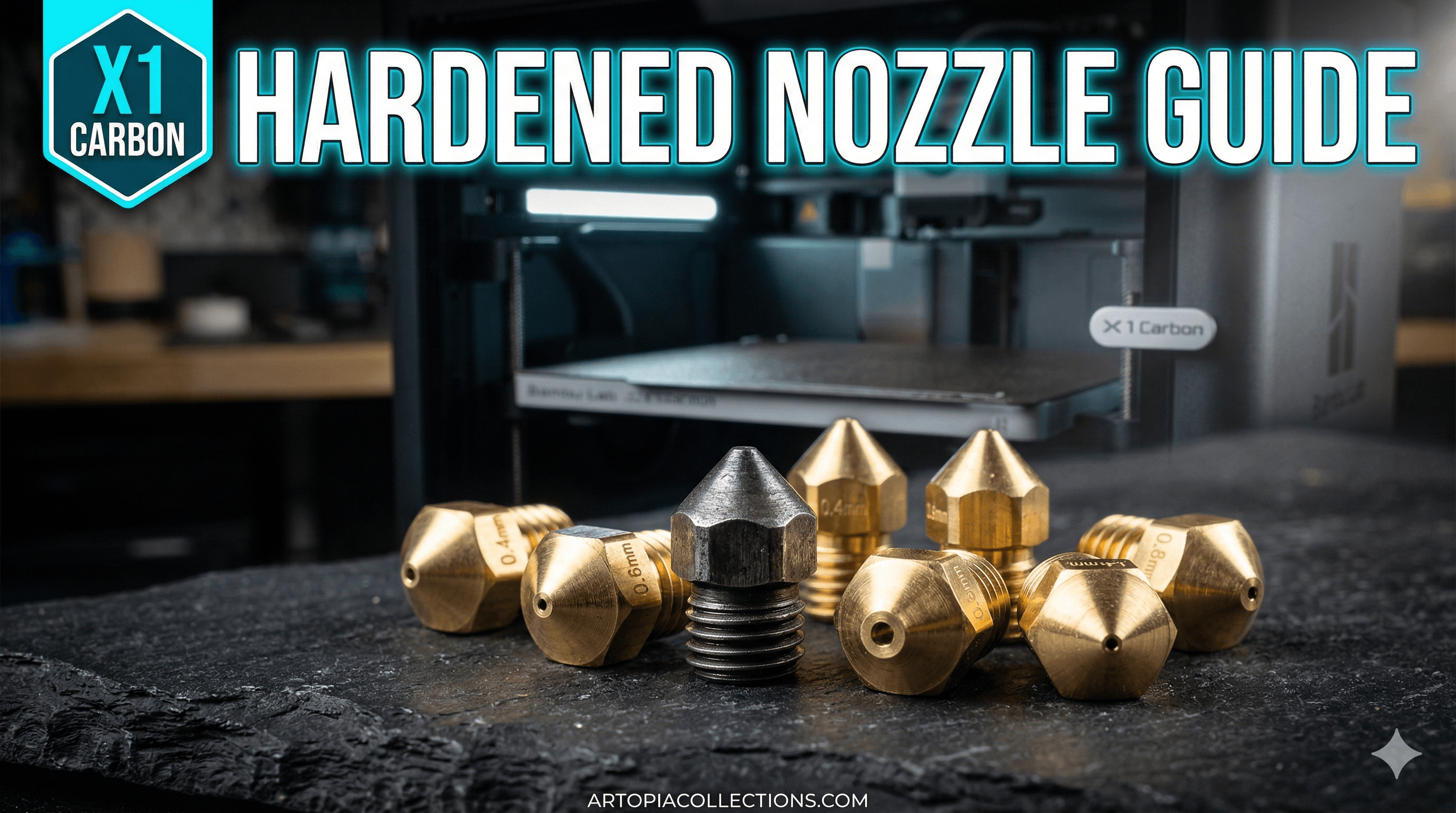
Enter the hardened nozzle. As the name suggests, these are nozzles made from much tougher materials – typically hardened tool steel, or sometimes even with a ruby tip. The main goal? Extreme wear resistance. Think about it: when you're printing with filaments that have tiny, abrasive particles embedded in them, like chopped carbon fibers, glass fibers, or even glow-in-the-dark pigments (which have phosphorescent powder), those particles act like sandpaper inside your nozzle. They slowly but surely grind away at the soft metal, enlarging the hole over time and changing its geometry. A hardened nozzle is designed to resist this grinding action, keeping your nozzle's crucial dimensions consistent for much, much longer.
I personally think it’s one of the most cost-effective upgrades you can make if you’re serious about printing with advanced materials. It’s not just about durability; it’s about maintaining print quality and consistency, which, let’s be honest, directly impacts my bottom line here at ArtOPIA Collections.
When Should You Consider the Upgrade? The "When"
This is probably the most common question I get asked, and it's a good one. You don't just upgrade for the sake of it, especially when the X1C's stock nozzle performs so well for 90% of what most people print. But there are very specific scenarios where a hardened nozzle becomes not just a "nice-to-have" but an absolute necessity.
1. You're Printing Abrasive Filaments
This is the big one. If you're consistently using, or plan to use, any of these types of filaments, you need a hardened nozzle:
- Carbon Fiber Filled (CF): Like PA-CF (Nylon-CF), PETG-CF, PLA-CF. These are fantastic for strong, stiff parts, but those tiny carbon fibers are brutal on brass or stainless steel.
- Glass Fiber Filled (GF): Similar to CF, these filaments (like PA-GF, PETG-GF) add strength and stiffness, and they're just as abrasive.
- Glow-in-the-Dark: Surprisingly, these are highly abrasive! The phosphorescent powders that make them glow are like micro-sandpaper.
- Wood Filled: While less aggressive than CF, wood particles can still cause wear over time.
- Metal Filled: Filaments like copper, bronze, or steel filled PLAs, though not as common, will also wear down softer nozzles.
If your business, like mine, relies on creating functional prototypes or end-use parts that require these kinds of material properties, then a hardened nozzle isn't optional, it's mandatory. Otherwise, you’ll be buying new nozzles every few weeks, and that’s just throwing money away.
2. You Notice Print Quality Degradation
This is the practical sign. How do you know your nozzle is wearing out? It’s not always obvious at first.
- Under-extrusion: You might start seeing gaps in your perimeters or infill, even with correct flow settings. This is because the nozzle opening has become wider than specified.
- Inconsistent Line Widths: Your lines might look uneven or blobby.
- Poor Adhesion: Sometimes, an inconsistent extrusion can lead to poorer layer adhesion.
- Overall "Softer" Details: Fine details might start to look less crisp as the nozzle tip dulls and widens.
3. You Want Long-Term Reliability and Less Downtime
For a business, downtime is lost money. Constantly swapping out nozzles, recalibrating, and troubleshooting because of wear is a huge time sink. A hardened nozzle, especially for those abrasive materials, will last significantly longer. I'm talking months, if not a year or more, compared to maybe a few weeks or even days with a standard nozzle when printing heavily abrasive stuff. The peace of mind alone is worth it, honestly.
Why Upgrade? The "Why" for a Business
Beyond just the "when," there's a strong "why," especially if you’re running a small business like ArtOPIA Collections. It boils down to efficiency, capability, and quality.
1. Protect Your Investment
Look, the Bambu Lab X1 Carbon is not a cheap printer, right? Here in India, you're looking at an investment upwards of ₹1.3 - ₹1.5 Lakhs (depending on deals and configurations). Protecting that investment means ensuring its components are optimized for the work you're putting it through. A relatively inexpensive hardened nozzle (we'll talk prices in a bit) saves you from potential print failures and preserves the integrity of your extruder system in the long run. It's like putting good tires on a high-performance car – you just do it.
2. Expand Your Material Capabilities
This is huge for business growth. Clients often come to me with specific needs – maybe a jig that needs to withstand higher temperatures, or a drone part that needs to be super stiff and lightweight. Being able to confidently offer prints in advanced materials like eSun ePA-CF or Polymaker PA12-CF (which are fantastic, by the way, and thankfully available here) opens up a whole new realm of possibilities. Without a hardened nozzle, I'd either have to decline these jobs or risk ruining my equipment and wasting expensive filament.
You can find a good selection of these engineering filaments, like Carbon Fiber Filaments on Amazon.in, and start experimenting!
3. Maintain Consistent Print Quality and Customer Satisfaction
In any business, consistency is key. My clients expect high-quality parts, every single time. A worn nozzle leads to inconsistent extrusion, dimensional inaccuracies, and generally lower quality prints. This isn't just frustrating; it can lead to rejected parts, rework, and ultimately, unhappy customers. A hardened nozzle ensures that the critical part of your extrusion system – the tip – remains precisely calibrated for far longer, leading to more reliable, high-quality output. And for bespoke items and collectibles, like some of the stuff we make over at ArtOPIA Collections, quality is paramount.
Types of Hardened Nozzles for Your X1C
Bambu Lab makes it incredibly convenient with their hotend assemblies. You can swap out the entire hotend – heat sink, heater, thermistor, and nozzle – in minutes. They offer a few options:
- Hardened Steel: This is the workhorse. Great wear resistance, good heat conduction. This is what I primarily use for most of my abrasive filament printing. It’s a fantastic balance of performance and cost.
- Stainless Steel (stock): Good for general use, and some mildly abrasive filaments, but not for heavy CF/GF use.
- Ruby Nozzle: The ultimate. These have a tiny ruby tip pressed into a brass or steel body. They offer incredible wear resistance and are often considered "lifetime" nozzles. However, they are significantly more expensive and often overkill for most applications unless you're printing extremely exotic or abrasive materials constantly.
For most of us, a good quality hardened steel nozzle from Bambu Lab is more than sufficient. They're designed specifically for the X1C's hotend, so compatibility and performance are guaranteed.
Installation and Post-Upgrade Tips
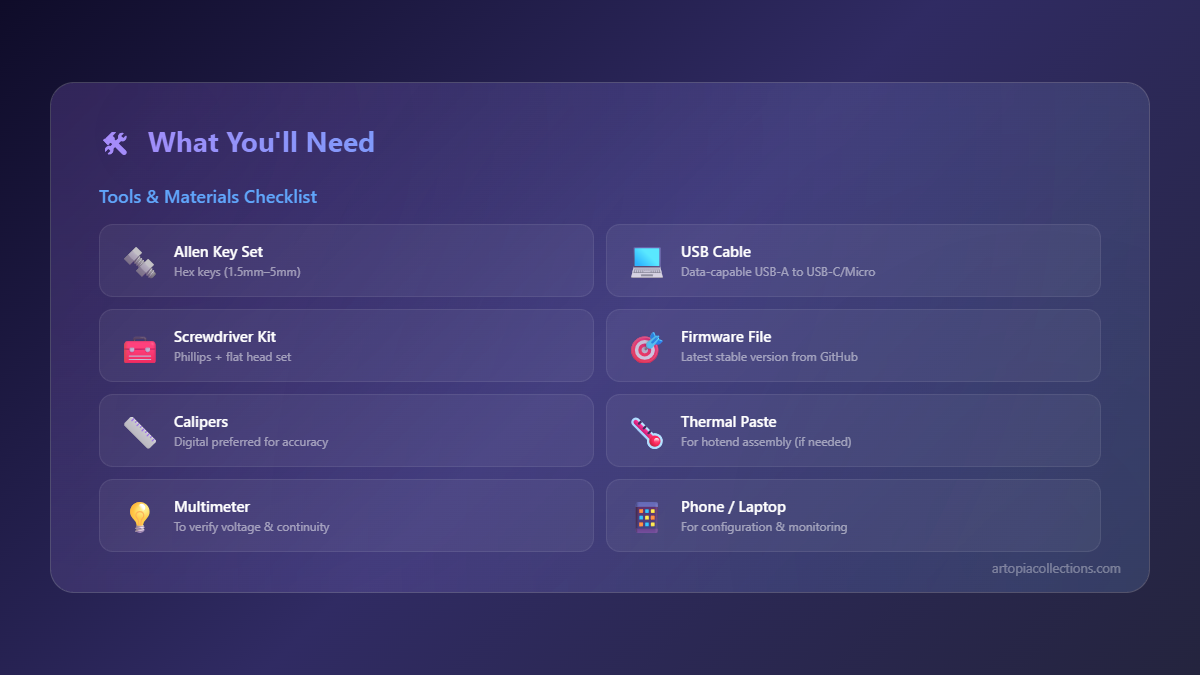
One of the beauties of the Bambu Lab X1 Carbon is how easy they've made hotend swaps. It's literally a few screws and a connector. You don't need to be a rocket scientist to do it, which is a huge plus for small business owners who don't have hours to tinker. I'd say give yourself 15-20 minutes, maximum, for your first time.
After you swap to a new hardened nozzle (or any nozzle, for that matter), there are a couple of things you absolutely, positively MUST do:
- Flow Calibration: This is critical. Even if the nominal diameter is the same (e.g., 0.4mm), the actual flow characteristics can be slightly different with a new nozzle material or type. Bambu Studio has fantastic calibration tools, use them! Run the flow rate and pressure advance calibrations for your specific filament and nozzle combo. Trust me, it makes a world of difference.
- Temperature Adjustments: Sometimes, hardened steel nozzles can have slightly different thermal characteristics compared to brass or stainless steel. You might need to slightly increase your printing temperature (by 5-10°C) for certain filaments to achieve optimal flow, especially since steel conducts heat less efficiently than brass.
- Z-Offset/First Layer Calibration: Always do this. A new hotend assembly, even if it's the same brand, might have tiny manufacturing tolerances that shift your Z-offset slightly. A perfect first layer is the foundation of a successful print.
The Cost-Benefit Analysis (in INR!)
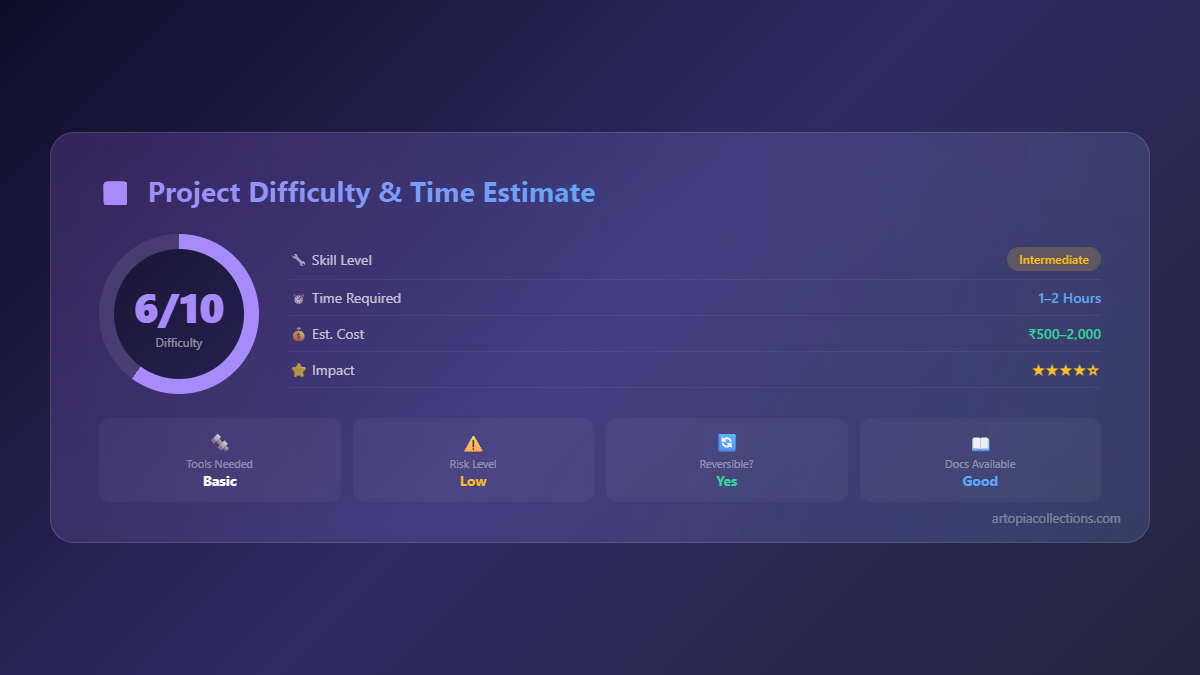
Okay, let's talk numbers, because for a small business, every rupee counts. A standard Bambu Lab stainless steel hotend assembly (0.4mm) might set you back around ₹2,000 - ₹2,500. A hardened steel hotend assembly (0.4mm) from Bambu Lab usually costs a bit more, maybe in the range of ₹2,500 - ₹3,500, depending on where you source it and if it's part of a bundle. Sometimes you can find third-party alternatives, but I personally stick with Bambu's own for critical components like the hotend. You can also explore options like hardened steel nozzles on Amazon.in to get a general idea of pricing for various printer types.
Now, consider the cost of filament. A good spool of carbon fiber nylon, say eSun ePA-CF, can easily cost you ₹4,000 - ₹6,000 for 1kg here in India. If a worn-out stainless steel nozzle causes even one or two significant print failures, that’s hundreds, maybe even thousands of rupees, wasted. Not to mention the lost time and opportunity cost. A hardened nozzle, which might be just ₹500 - ₹1,000 more upfront, can literally save you thousands in wasted filament and countless hours in troubleshooting and reprinting. For me, that’s a no-brainer. The return on investment is almost immediate when you’re dealing with premium abrasive filaments.
My Takeaway: Don't Wait Until It's Too Late
Honestly, if you're seriously considering printing with abrasive filaments on your Bambu Lab X1 Carbon, don't wait for your prints to start looking terrible. Make the switch to a hardened nozzle proactively. It's a relatively small investment that yields massive benefits in terms of print quality, consistency, and the longevity of your printer. For a small business like mine, it's not just an upgrade; it's an enablement. It allows me to take on more challenging projects, deliver better results to my clients, and ultimately, grow ArtOPIA Collections.
So, there you have it. My two cents on why and when you should upgrade to a hardened nozzle for your Bambu Lab X1 Carbon. If you've made the switch, or have any questions, I'd love to hear your experiences in the comments below! Happy printing, everyone!


