Best Marketplace Platforms for Selling 3D Printed Products in India 2026
Looking to sell your 3D printed creations in India? This guide explores the best marketplace platforms to help you maximize your sales and reach a broad customer base by 2026.
Chasing the Dream: Unlocking the Best Marketplaces for Your 3D Printed Creations in India (2026 Edition!)
You know that feeling, right? That intoxicating smell of fresh PLA wafting through your workshop, the late-night hum of your printer laying down perfect layers, the pure, unadulterated joy of pulling a flawless print off the build plate. It’s magic, isn’t it? But then, the real question hits you like a cold bucket of water: “Okay, this is amazing, but how do I actually sell this stuff and make a living?” Trust me, I’ve been there. Staring at a pile of beautifully printed phone stands, custom keychains, and intricate miniatures, wondering where on earth the customers were. It’s a journey, my friends, a rollercoaster of filament changes, failed prints, and endless cups of chai. And as we barrel towards 2026, the landscape for selling 3D printed goods in India is shifting, growing, and getting even more exciting!
Look, I’m Vidyut, and for the past few years, my little business, ArtOpia Collections, has been all about bringing unique 3D printed ideas to life for folks across India. From a humble Creality Ender 3 back in the day to a small farm of more advanced machines now, I’ve learned a thing or two about what works and what… well, let’s just say what eats your profits and leaves you pulling your hair out. So, grab a coffee (or another chai), because I’m gonna lay out my honest thoughts on the best marketplace platforms for selling your 3D printed products right here in India for 2026.
The OG Move: Your Own Digital Shopfront – ArtOpia Collections Style!
Honestly, if you're serious about this, the first thing you absolutely have to consider is building your own online store. I know, I know, it sounds daunting, like another mountain to climb while you're already wrangling G-code and supports. But hear me out. This is where you have complete control. No platform fees eating into your margins, no weird algorithm changes messing with your visibility, no restrictions on how you brand yourself. It’s your space!
I started with a simple Shopify store for ArtOpia Collections, and it's been a game-changer. The initial setup might cost you a bit – maybe ₹2,000 to ₹5,000 a month for the basic plan, plus domain fees and perhaps a theme – but the long-term benefits are incredible. You build your own brand, your own customer list, and you dictate the entire customer experience. Plus, you can integrate directly with Indian payment gateways like Razorpay or Cashfree, which is super smooth for customers here. And shipping? You can link up with Shiprocket or even just use India Post Speed Post for smaller items, keeping costs reasonable. I've sent out everything from delicate lithophanes to chunky cosplay props, and having my own site means I can tailor shipping options exactly how I want them.
Want to see what I mean? Take a peek at some of my creations right here. That’s the kind of freedom and branding you get. It’s not just about selling; it’s about creating a destination for your unique art. It’s an investment, yes, but one that pays off in spades for brand loyalty and higher profit margins in the long run.
The Global Player with Local Flavor: Etsy
 Okay, so your own website is foundational, but you also need reach. And for 3D printed unique items, Etsy is still a powerhouse, even in India. While it’s traditionally seen as a global marketplace, its presence in India has grown significantly. Many buyers, both locally and internationally, specifically seek out handmade, artisanal, and custom items there. And let’s be real, a custom-designed, 3D printed desk organizer or a unique piece of tabletop gaming terrain definitely falls into that category.
The pros? Massive audience. People go to Etsy specifically to find things they can't get on Amazon. The fees aren't too bad initially – a listing fee of about $0.20 (roughly ₹17) per item, and then a 6.5% transaction fee plus payment processing fees. For an item selling for ₹1000, you're looking at maybe ₹100-₹150 in total fees, which is manageable. It’s great for testing the waters with new products too, because you get instant visibility. I've sold quite a few custom planters and cosplay accessories there, mostly to international buyers, but the Indian market is slowly catching up.
The cons? Competition is fierce, my friend. You'll be alongside thousands of other talented makers. Standing out requires incredible product photography (seriously, don’t skimp on this!), strong SEO in your listings, and unique designs. Also, managing international shipping can be a bit of a headache with customs forms and varying costs, but for local sales, it's pretty straightforward. Just remember, your pricing needs to factor in those fees. Don't undersell your craft!
The Giant: Amazon India (Seller Central)
Ah, Amazon. The behemoth. The marketplace everyone loves to hate but can’t live without. For 3D printed products, Amazon India is a bit of a double-edged sword, but one you absolutely cannot ignore, especially heading into 2026. Why? Because everyone and their grandma shops on Amazon. The sheer volume of traffic is unmatched.
If you're selling more standardized 3D printed items – think popular lithophanes, simple gaming accessories, functional prints like cable organizers, or even custom cookie cutters – Amazon can be incredibly lucrative. People trust Amazon, they expect fast delivery, and they don’t mind paying a little extra for convenience. Setting up a seller account is free for individuals, though if you're serious, you'll want the Professional plan (around ₹400-₹500 a month, if I recall correctly) to unlock more features and better commission rates. Commissions vary wildly by category, anywhere from 5% to 15% or even more. So, you need to be super careful with your pricing here.
My advice? Use Fulfillment by Amazon (FBA) if you can. It means you print in bulk, send it to an Amazon warehouse, and they handle the storage, packing, and shipping. It’s a lifesaver, honestly, but it adds to your costs. For smaller, custom-on-demand items, Seller Fulfilled Prime is an option if you can guarantee super-fast shipping. The biggest challenge? Standing out in a sea of mass-produced items and dealing with Amazon's sometimes rigid policies. Reviews are king here, so customer service has to be top-notch.
And speaking of Amazon, for us makers, it's also where we get a lot of our supplies! If you're looking to stock up on some quality PLA filament, or maybe a handy 3D printing toolkit to keep your machines running smoothly, check out these links. Good tools and materials make all the difference, trust me!
The Homegrown Heroes: Flipkart, Meesho, JioMart
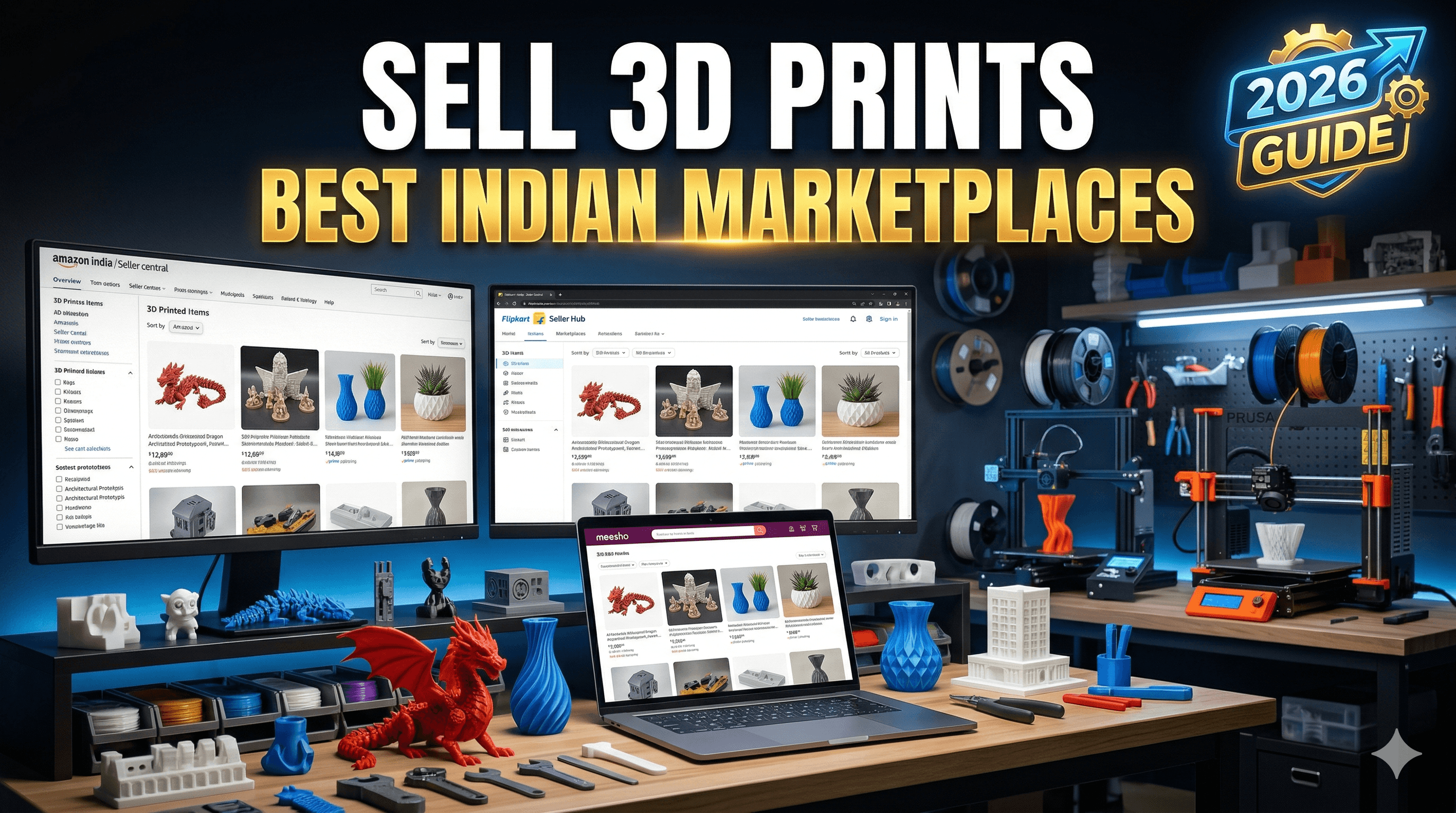
 Now, let’s talk about the local players. Flipkart has been around forever, and Meesho and JioMart are rapidly gaining traction, especially in tier-2 and tier-3 cities. These platforms cater primarily to the Indian audience, often with a focus on affordability and wider reach into less metro-centric areas. Can you sell 3D printed products there?
Yes, absolutely, but with a few caveats. Flipkart is a strong competitor to Amazon, with a similar marketplace model. Commission structures are comparable, and their reach is massive. If you're selling functional prints or popular cultural items, it could be a good fit. I've experimented a bit with Flipkart, mostly for simpler utility prints, and found the sales cycle can be a bit slower than Amazon for niche products, but volume can pick up for high-demand items.
Meesho, on the other hand, operates more on a reseller model, where individuals promote your products through their social networks. It’s fantastic for reaching a diverse, price-sensitive audience, and it has a strong community vibe. For unique, quirky, or decorative 3D prints that make great gifts, Meesho could be a goldmine. The commissions are generally lower, which is a big plus. The challenge is that branding your unique 3D prints can be harder when they're being resold by others.
JioMart is still evolving, but with the backing of Reliance, it’s going to be a force. They’re pushing hard into local retail and groceries, but their marketplace for other goods is growing. I’d keep a very close eye on JioMart for 2026. They might just carve out a fantastic niche for Indian makers.
The thing is with these local giants, while they offer immense reach within India, they generally aren't as specialized for 'handmade' or 'custom' items as Etsy. You might need to adapt your product line to fit a broader consumer market rather than a niche enthusiast market. Think practical, everyday use items rather than highly artistic pieces. Pricing also needs to be competitive, often lower than what you might charge on your own site or Etsy, so you need to be super efficient with your material costs – buying those big spools of Overture or eSun PLA+ really helps!
The Social Game: Instagram & Facebook Shops
Don't underestimate the power of social media, especially Instagram, for selling your 3D prints! It's not a "marketplace" in the traditional sense, but it functions as one, especially with Instagram Shops and Facebook Marketplace integrated. This is where you can truly connect with your audience, show off your printing process (people LOVE watching prints happen!), and tell the story behind your creations.
I mean, who doesn't love a good coffee mug holder, right? (Okay, maybe just me.) But seriously, high-quality photos and videos are key here. Show off the detail on your 0.4mm nozzle prints, the smooth finish from that freshly calibrated Anycubic Kobra, or the vibrant colours of that new OSO filament. Use relevant hashtags, engage with your followers, run contests, and collaborate with other creators. You can drive traffic directly to your own website (which is why having one is so important!) or use Instagram/Facebook's integrated shop features.
The biggest advantage? Low costs initially. You're already probably on these platforms. The challenge? Building an audience takes time and consistent effort. It's a marathon, not a sprint. But once you have that engaged community, these platforms offer some of the most direct and profitable sales channels, often without huge commission fees beyond payment processing.
Niche & B2B: IndiaMart & Specialized Forums
Beyond the mainstream, there are always niche opportunities. For B2B (Business-to-Business) sales, IndiaMart is a huge platform. If you're thinking about offering 3D printing services for prototyping, custom parts for local manufacturers, or even producing small batches of specialized components, IndiaMart is where you connect with businesses looking for suppliers. It's a different beast altogether, focused on inquiries and bulk orders, but the margins can be very good.
Then there are specialized forums, Facebook groups, and Discord servers dedicated to hobbies like tabletop gaming, cosplay, model building, or even robotics in India. These aren't direct marketplaces, but they are fantastic for community building and direct sales via DMs. Often, these groups have their own 'buy/sell' sections. The trust factor is high here, as you're dealing with fellow enthusiasts. I've found some fantastic custom work opportunities through these channels, from printing custom D&D miniatures to bespoke drone parts.
My Two Paisa (Cents) on What Matters Most for 2026
No matter which platform you choose, a few things will remain absolutely critical:
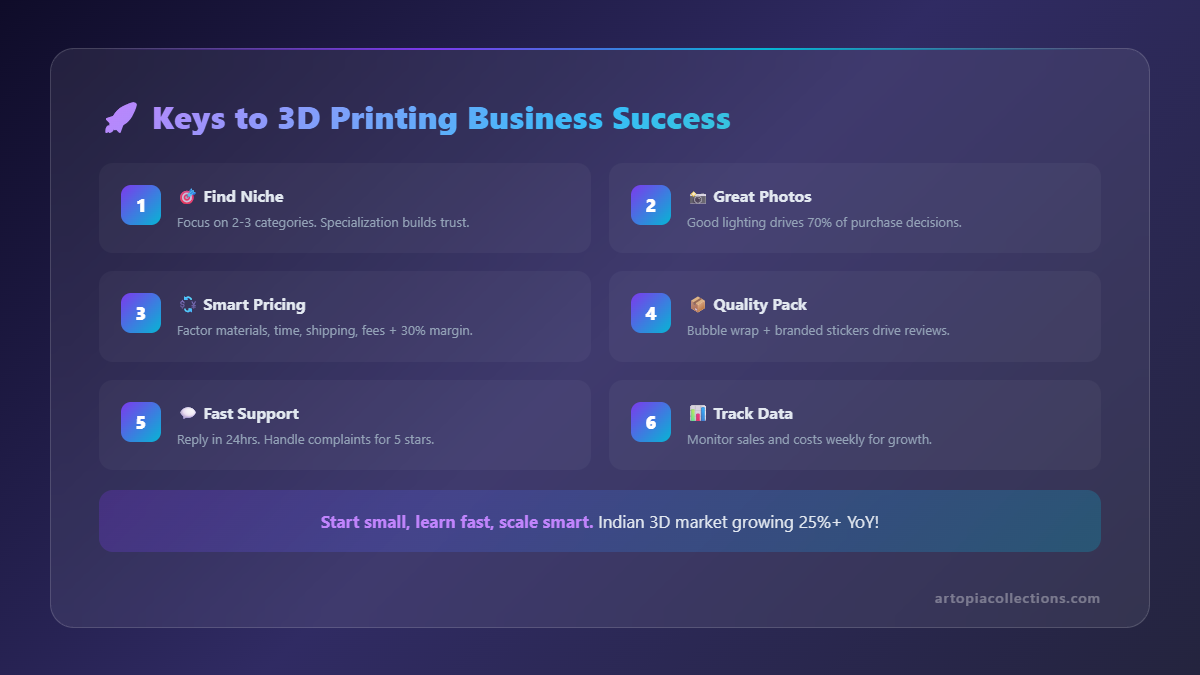
- Quality, Quality, Quality: Your prints need to be flawless. Invest in good filaments (eSun, Overture, Indian brands like OSO – they're getting good!), dial in your printer settings (PID tuning, E-steps, all that fun stuff), and check every single print before it goes out. A bad print is a wasted print and a potential bad review.
- Stunning Photography: This is non-negotiable. Whether it’s your own website, Etsy, or Instagram, your product photos are your storefront. Good lighting, clean backgrounds, and showing your product from multiple angles will make all the difference.
- Customer Service: Be responsive. Be polite. Be helpful. A happy customer will come back and tell their friends. A frustrated one will tell everyone they know and leave a one-star review. It's a pain, honestly, but hey, that's business.
- Niche Down: The 3D printing world is vast. Find your corner. Are you going to be the go-to person for custom lithophanes? Or highly detailed scale models? Or functional prints for homes and offices? Don't try to do everything.
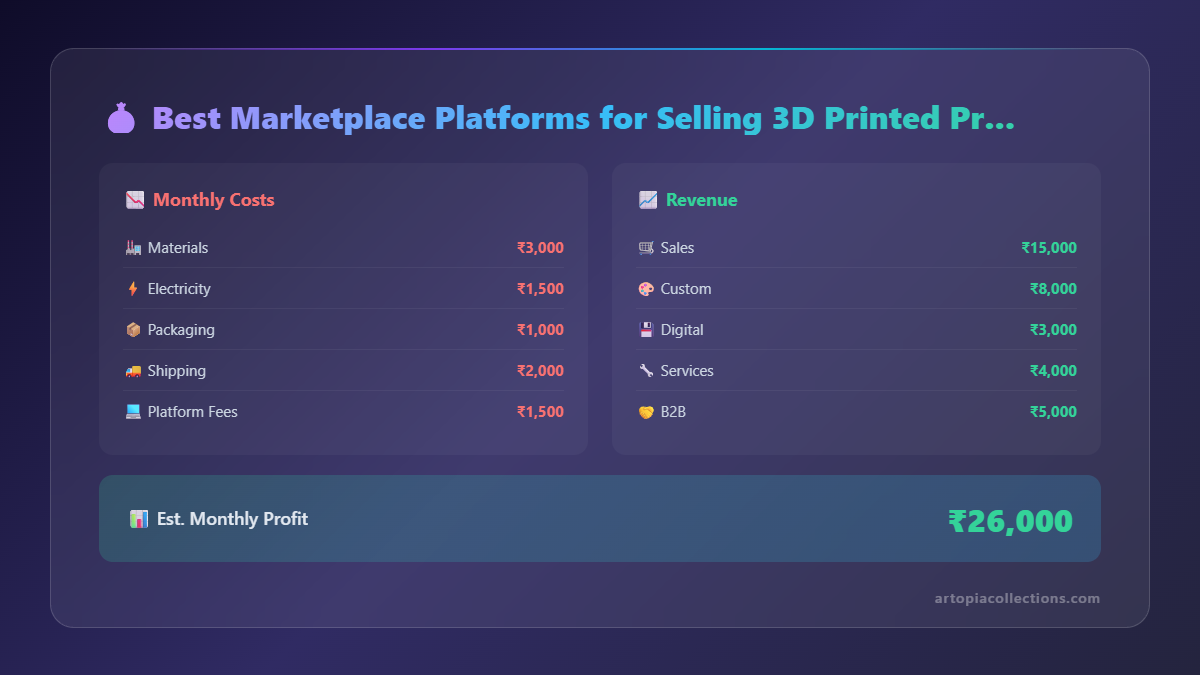
- Pricing Strategy: Don't just pick a random number. Factor in your filament cost (a 1kg spool can run ₹1500-₹2500 depending on brand and type), electricity, printer depreciation, your time, packaging, shipping materials, and platform fees. Your craft is valuable, don’t undersell it!
So, What's My Recommendation for 2026?
For me, the strongest strategy for any 3D printing business in India will be a hybrid one. Invest in your own platform first – it’s your anchor, your home base, your brand identity. Then, expand your reach strategically. Use Etsy for reaching niche global and local buyers, leverage Amazon India for high-volume functional items, and don't forget the power of social media to build your community and drive traffic back to your main site. Explore the potential of Flipkart, Meesho, and JioMart as they mature for different product types and customer demographics.
The world of 3D printing in India is only just beginning to truly bloom. More people are getting access to printers, more folks are understanding what this technology can do, and the demand for unique, customized, and locally-made products is soaring. It’s an exciting time to be a maker here, and with the right strategy and a whole lot of passion, your 3D printing business can absolutely thrive. Now, if you'll excuse me, I hear the sweet sound of an enclosure fan and I think my next batch of keychains is ready!