Best Shipping Partners in India for Fragile 3D Printed Items
Shipping fragile 3D printed items safely in India can be a challenge. This post helps you find the most reliable logistics partners to ensure your delicate creations reach their destination intact.
When Your Art Arrives Broken: Navigating Fragile 3D Print Shipping in India
Oh, the heartbreak, right? You’ve spent hours designing, days printing, and what feels like a lifetime post-processing that intricate, multi-part 3D print. It’s perfect. It’s a masterpiece. You carefully pack it, bubble wrap it like it’s made of spun sugar, seal the box with prayers and extra tape, and send it off to a eagerly waiting customer hundreds of kilometers away. And then… the dreaded message. “It arrived broken.” Ugh. It’s a gut punch, isn't it? As someone who lives and breathes 3D printing here in India and runs a small business, ArtOPIA Collections, I’ve been there, more times than I’d like to admit.
The thing is, shipping fragile 3D printed items in India isn't just a logistical challenge; it's an art form in itself. Our prints, especially FDM ones made from PLA (which, let's be honest, is practically sugar glass when dropped), are notoriously delicate. Those finely tuned layers, the intricate details, the support structures you meticulously removed – they all become weak points when subjected to the tender mercies of courier handling. I remember one time, I’d printed a really detailed figurine, a custom order for a client in Chennai, on my trusted Creality Ender 3 S1 Pro. It took almost 30 hours! I used e-Sun PLA+, thought I’d over-packaged it, and yet, one of the outstretched arms snapped clean off. My heart sank. And that’s when I really buckled down to figure out the best way to get our creations from my workbench to your doorstep, intact and beautiful.
Why Our Creations Are Such a Challenge to Ship
Before we dive into partners, let’s quickly acknowledge *why* this is such a headache. Basically, most 3D prints, especially those from FDM printers like my Anycubic Kobra 2 or the ubiquitous Creality Ender series, are not solid blocks. They’re built layer by layer. This layered structure, while strong in compression, can be quite brittle under shear stress or impact. PLA, our beloved workhorse filament, is particularly susceptible to breaking rather than bending. PETG is a bit more forgiving, offering some flexibility, but it can still snap if a thin part gets a direct hit. And don't even get me started on delicate support structures or tiny overhangs! The sheer variety of shapes, sizes, and internal infills means no two prints behave exactly the same way when jostled.
So, our mission isn't just to find a courier; it's to find a courier that treats our packages like they're carrying priceless artifacts. Which, to us, they are!
The Unsung Hero: Packaging, Packaging, Packaging!
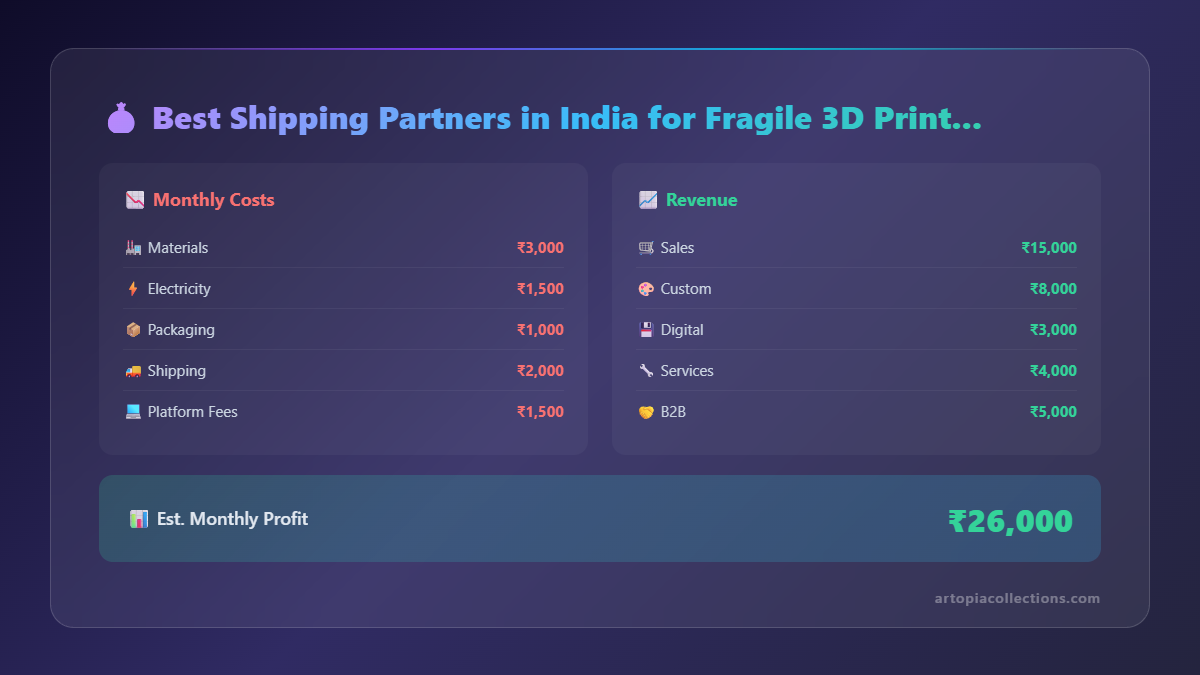 Honestly, before you even think about the courier, you need to think about your packaging. This is non-negotiable. It doesn't matter if you choose the most premium service; if your item isn’t packed right, it’s going to break. Trust me on this. I've learned the hard way.
- Internal Bracing: For hollow or intricate items, consider filling voids with crumpled paper or even custom-printed infill structures if the design allows. This prevents crushing.
- Bubble Wrap is Your Best Friend: And I mean *lots* of it. Don't be stingy. Wrap your item multiple times. Think of it as creating a soft, protective cocoon. I usually go for at least 2-3 layers of large-bubble wrap, securing each layer with tape. You can find good quality bubble wrap easily on Amazon.in (search for packaging materials) or at local stationery shops.
- The Double Box Method: This is a lifesaver for truly fragile pieces. Place your bubble-wrapped item in a snug inner box. Then, put that inner box into a slightly larger outer box, filling the space between the two with packing peanuts, crumpled newspaper, or even shredded cardboard. This creates an extra layer of shock absorption. It adds to the volumetric weight, sure, but the peace of mind? Priceless.
- Filling Voids: Once your item is inside its box (or inner box), make sure there’s no empty space left for it to move around. Packing peanuts, air pillows, crumpled paper – anything to keep it immobile. I often reuse discarded filament spools' boxes, stuffing them full of shredded paper from my office, just to save a few rupees and be a bit more eco-friendly.
- Strong Outer Box: Don't skimp on the quality of your cardboard box. A flimsy box is an invitation for disaster. Look for double-wall corrugated boxes for anything over a certain size or value.
- "FRAGILE" Stickers: Use them liberally. On every side. While they don't guarantee gentle handling, they serve as a visual cue. I’ve heard anecdotal evidence (and personally observed) that they do help *some* of the time.
I usually spend anywhere from ₹30 to ₹100 on packaging materials per order, depending on the size and fragility. It might seem like an extra cost, but it’s an investment in customer satisfaction and avoiding returns or reprints. And honestly, it’s cheaper than reprinting a 20-hour print!
Navigating the Indian Courier Landscape: Who to Trust with Your Precious Prints
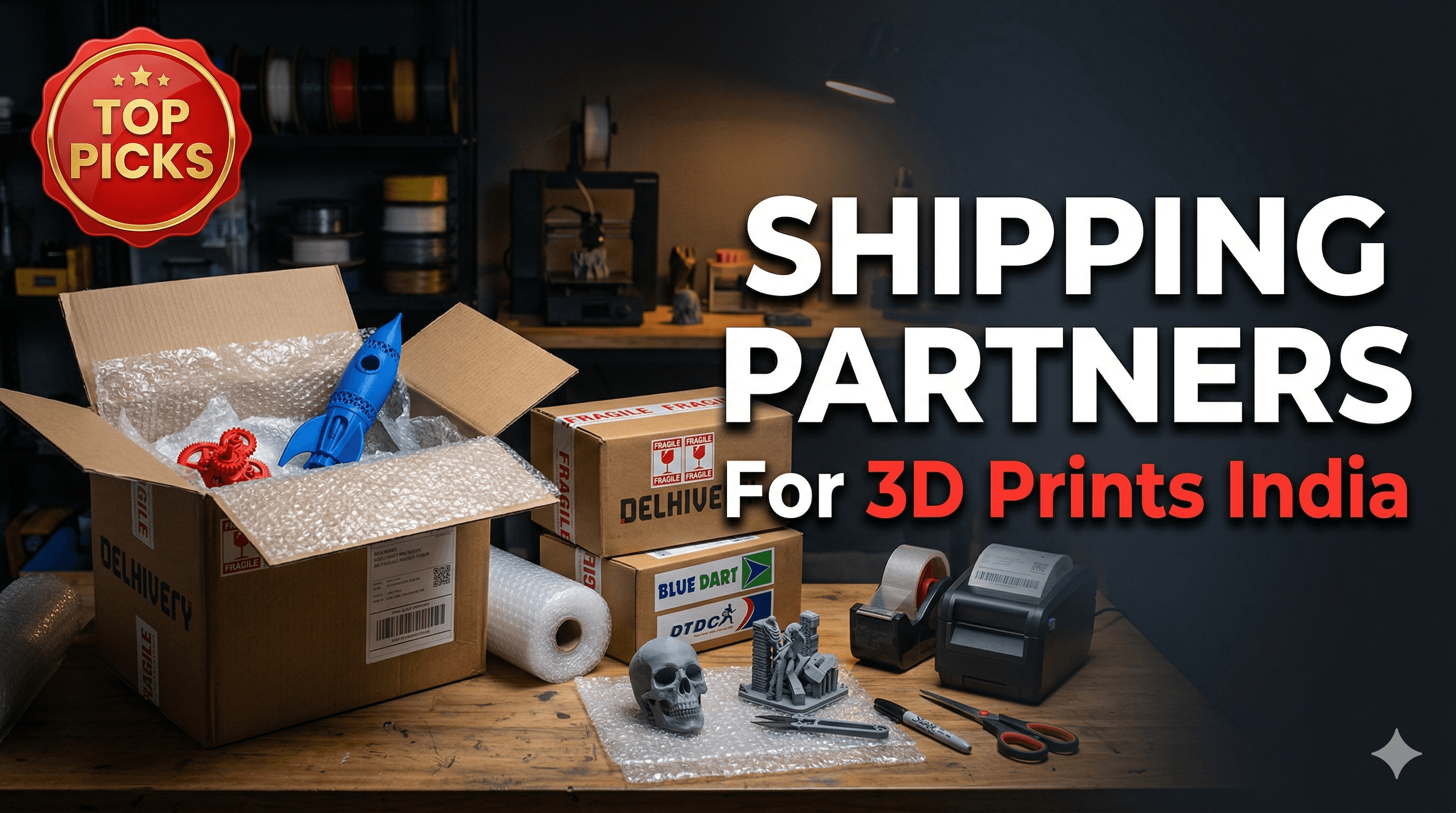
Alright, so you've packed it like a pro. Now, who do you hand it over to? This is where it gets tricky, because what works brilliantly for one person might be a nightmare for another, depending on their location and the specific hub's efficiency. But based on my two years of running ArtOPIA Collections, here are my thoughts on the major players in India:
1. Delhivery: The Workhorse with Quirks
Delhivery is probably my most-used partner. Why? They have a pretty extensive network across India, their pickup service is generally reliable, and their tracking system is quite decent. For a small business like mine, being able to schedule a pickup from my home office is a huge time-saver. Their rates are competitive too; for a package weighing under 500g, shipping within a state might cost around ₹70-₹90, while inter-state can be anywhere from ₹120-₹200 depending on distance and volumetric weight. I often print larger items, like these geometric animal busts, which naturally have more volumetric weight. For those, a 1kg-2kg package might push costs to ₹200-₹350 inter-state.
But, and it’s a big but, their handling can be a bit… enthusiastic. I've had more issues with Delhivery handling than any other courier, especially for packages going through their major sorting hubs. It's almost like they play football with some boxes. The trick with Delhivery is *always* to over-package. If you don't, you're rolling the dice. I personally think they're great for non-fragile items, or if you've really, really fortified your fragile item.
2. Blue Dart: The Premium, Reliable (But Pricey) Choice
When I absolutely, positively need something to arrive safely and on time, and the customer is willing to pay a premium (or the item is high-value), I lean towards Blue Dart. They are part of the DHL family, and that global standard of logistics really shows. Their handling is generally much better, their delivery speed is impressive, and their customer service is more responsive if something goes awry. I've sent some of my more delicate, hand-painted prints through them, and touch wood, they've always arrived in perfect condition.
However, Blue Dart comes with a significantly higher price tag. A small, 500g package that might cost ₹120 with Delhivery could easily be ₹200-₹250 with Blue Dart for the same distance. For bulkier items, the price difference becomes even more substantial. For a small business, this often means the customer has to bear the extra cost, which isn't always feasible. So, it's a careful balancing act between cost and peace of mind. For very high-value, bespoke commissions, though, it's a no-brainer.
3. DTDC: The Budget-Friendly Option with Variable Results
DTDC is another popular choice, particularly for those looking to save a few rupees. Their rates are often slightly lower than Delhivery, making them attractive for smaller, less expensive prints. Their network is also quite vast, reaching many Tier 2 and Tier 3 cities. I’ve used them for some smaller, less critical orders, and they’ve been generally okay.
The downside? Their tracking isn't always as real-time or detailed as Delhivery's or Blue Dart's. And their handling can be a mixed bag; sometimes it's fine, sometimes you get a package that looks like it's been through a washing machine. I wouldn't trust them with anything super delicate unless I've essentially built a tank around it with packaging. For a simple print, say a small keychain or a sturdy phone stand, they can be a good economical choice, especially if you're trying to keep the overall cost down for the customer.
4. India Post (Speed Post): The Unsung Hero for Remote Areas
Ah, India Post. The government-run service. Now, traditionally, you might think of them as slow and cumbersome. And yes, sometimes they are! But here’s the deal: their reach is unparalleled. If you have a customer in a really remote village where commercial couriers don't go, or charge exorbitant amounts for "out of delivery area" surcharges, India Post's Speed Post service is your best bet. Their rates are also incredibly affordable. A 500g package could be as low as ₹40-₹60 for local delivery and ₹80-₹150 for inter-state, depending on distance.
The caveats? Tracking can be rudimentary, and delivery times can vary wildly. Sometimes it’s surprisingly fast, other times it takes a week or more for a relatively short distance. Handling, like DTDC, is hit or miss. I’ve had perfectly delivered packages and ones that looked like they were drop-tested from a skyscraper. So, again, extreme packaging is key. But for that remote customer who really wants one of your awesome PLA prints and can wait a bit, Speed Post is a lifesaver.
What About Courier Aggregators?
 You know, services like Shiprocket or Pickrr? They promise to give you access to multiple couriers at discounted rates. I’ve experimented with them a bit. For small businesses that do high volumes, they can be great. They simplify the booking process, generate labels, and offer a single dashboard for tracking. However, for a small outfit like mine, where I might ship 5-10 orders a week, I often find their customer service a bit impersonal when issues arise, and sometimes the individual courier direct booking feels more transparent on pricing (or maybe I just haven’t cracked the code to truly leverage their bulk discounts yet). But it's definitely something to look into if your volume starts picking up!
A Few More Nuggets of Wisdom
- Declare Value: Always declare the correct value of your item. In case of damage or loss, this is what the courier will base their compensation on. It's often a percentage of the declared value, so don't undervalue it to save a few rupees on insurance.
- Consider Insurance: Most couriers offer insurance. For high-value prints, it's worth considering, though the claims process can sometimes be tedious. Read the fine print! What they cover and what they don't can be a maze.
- Customer Communication is Key: Always, always, always communicate clearly with your customer about the shipping method, expected delivery time, and what to do if the item arrives damaged. A quick photo of the damaged package/item upon arrival is crucial for any claims. Managing expectations upfront saves a lot of headaches later.
- Invest in Good Tools: Not directly shipping-related, but crucial for print quality that can withstand shipping. A good set of 3D printing tools (calipers, deburring tools, proper snippers) ensures your prints are top-notch from the start, minimizing weak points.
My Personal Workflow (Mostly)
For most of my orders at ArtOPIA, I've settled into a routine. If it’s a standard, non-super-fragile item, and the customer isn’t asking for express delivery, I go with Delhivery, but with a *lot* of bubble wrap and double boxing for anything over ₹500. For very delicate, high-value, or time-sensitive prints, Blue Dart is my go-to, and I bake the slightly higher shipping cost into the product or offer it as a premium shipping option. For the deepest corners of India, it's India Post with prayers and even more packaging. It’s not perfect, but it’s the system that has given me the fewest headaches and the happiest customers over time.
Look, shipping fragile 3D printed items in India is a journey, not a destination. You'll have good days and bad days. But with proper packaging, a clear understanding of your courier options, and proactive communication with your customers, you can drastically reduce those heartbreaking "it arrived broken" messages. Keep printing, keep creating, and may your packages always arrive safely!