Best PEI Build Plates for Bambu Lab Printers: Textured vs Smooth
Elevate your Bambu Lab 3D printing with the perfect PEI build plate. This guide helps you navigate the choice between textured and smooth PEI, ensuring optimal adhesion and print results.
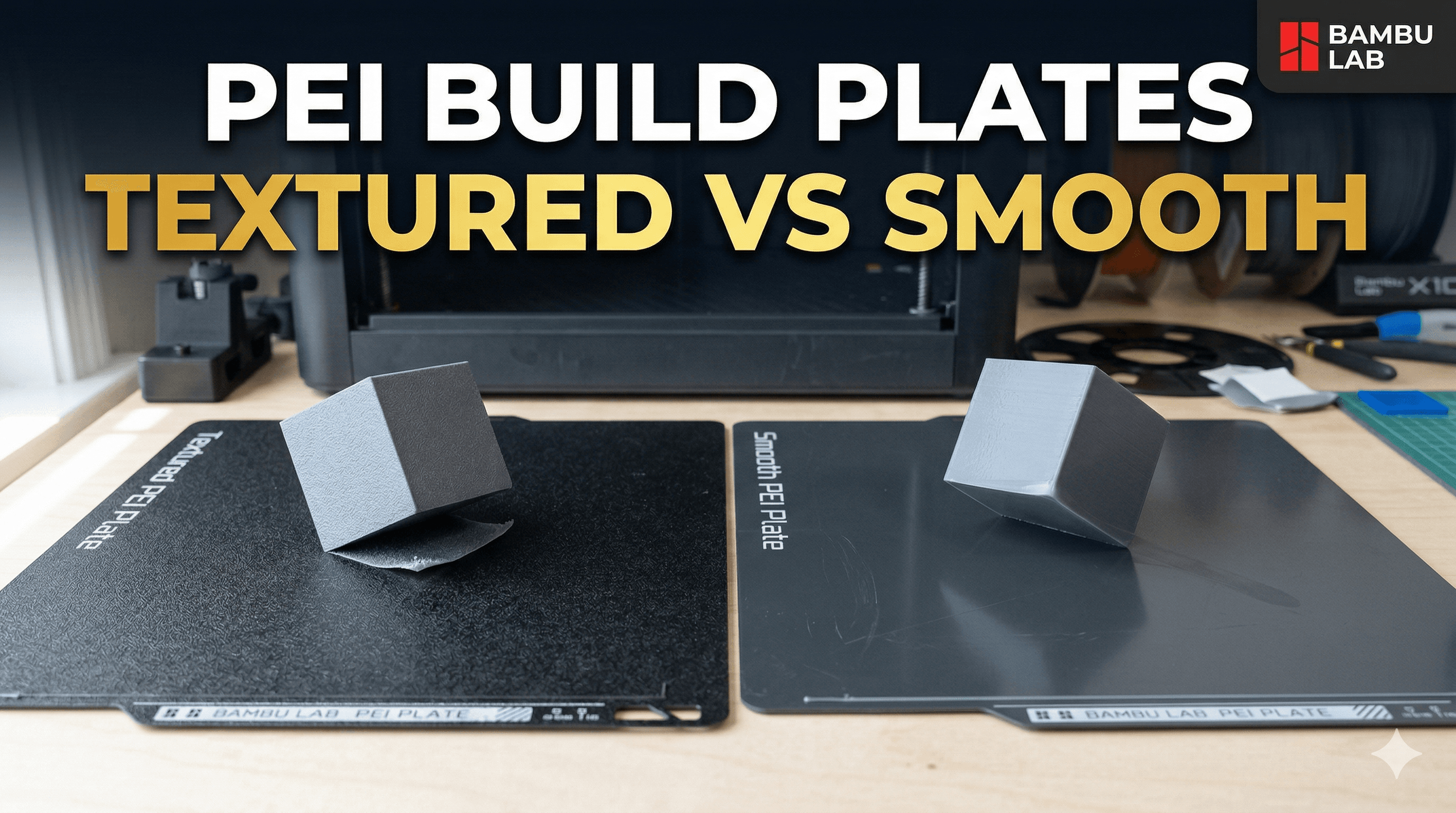
Man, sometimes I look at a perfectly smooth, glassy first layer and just think, "Yeah, this is why I do what I do." But then, just as often, I pull a print off a textured plate with that gorgeous matte finish, and it's a whole different kind of satisfaction. The thing is, when you're running a small 3D printing business like mine here in Bengaluru, every little detail matters. And believe me, the build plate? It’s not a little detail. It's the foundation of everything we print, literally.
Especially with the Bambu Lab printers – those beasts have really changed the game for speed and reliability, haven't they? I've got a couple of P1S machines humming along most days, sometimes an X1C if a client needs something super specific, and honestly, their quick-swap plate system is a godsend. But it also means we've got options, and sometimes, too many options can be confusing. The biggest debate I see online, and one I grapple with myself pretty regularly, is the classic textured PEI versus smooth PEI build plate for our Bambu Lab machines. Which one's better? Well, like most things in 3D printing, it's not a simple answer, but let's dive deep into what I've learned from countless hours of printing here at ArtOpia Collections.
The Mighty Textured PEI Plate: My Go-To Workhorse
Let's kick things off with the textured PEI plate. This is, hands down, the plate I use for probably 70-80% of my prints. Why? Because it’s a friggin' workhorse! The Bambu Lab Textured PEI Plate (you can find similar ones here on Amazon.in, though I usually buy Bambu's originals) gives you this beautiful, slightly rough, matte finish on the bottom of your print. It's fantastic for hiding any minor imperfections in the very first layer, and it just looks professional, you know? Like it was made for the job.
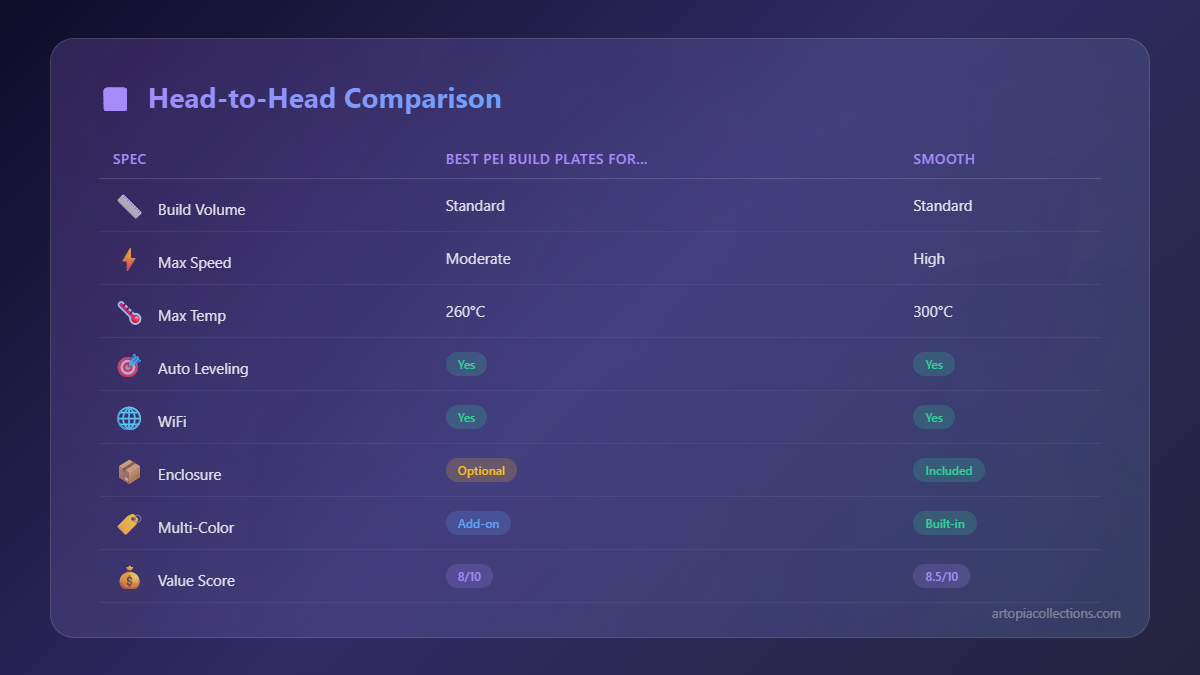
What I love about it:
- Adhesion, glorious adhesion: For PLA, ABS, ASA, and even some tough polycarbonates, this plate just grips. I rarely have issues with warping or first-layer failures with these materials, provided my bed is clean (more on that later!).
- That signature matte finish: Oh man, it just elevates the look of so many prints. For functional parts, prototypes, even decorative items that don't need a super glossy look, it’s perfect.
- Release once cool: This is a huge one. With most materials, once the plate cools down to room temperature, prints just *pop* right off. Sometimes you hear that satisfying little crack as the adhesion breaks. It’s glorious.
- Durability: These plates can take a beating. Minor scratches aren't nearly as noticeable as they would be on a smooth surface.
But, it's not all rainbows and sunshine. There are a few quirks:
- PETG can be a nightmare: Here's the deal, PETG *loves* textured PEI a little too much. I've had situations where it welded itself so strongly that I ended up tearing bits of the PEI coating off the plate when trying to remove the print. Not fun. So, for PETG, I almost always use a separation layer like glue stick (the purple UHU stick works wonders, usually about ₹100-₹150 for a good sized one) or Windex.
- Detail visibility: If you need super fine, crisp details on your first layer, like tiny embossed text or a logo, the texture can obscure it slightly. It’s not terrible, but it’s something to be aware of.
- Cleaning: Sometimes that texture can trap tiny bits of filament or dust, making it a bit harder to get perfectly clean than a smooth plate.
Honestly, for general printing, prototypes for clients, and functional parts, the Bambu Lab Textured PEI Plate is my number one choice. I've seen it available for around ₹1800-₹2500 depending on where you get it, and it's a solid investment.
The Sleek Smooth PEI Plate: For That Glossy Perfection
Now, let's talk about the smooth PEI plate. This one, often referred to as the "Engineering Plate" on Bambu Lab printers (though they also have a High-Temp plate that's smooth, and third-party smooth PEI options exist), is all about aesthetics and precision. When a client needs something with a mirror-like finish on the bottom, or if I'm printing something like a small, intricate part where every micron of the first layer matters, this is what I reach for.
What makes it shine (literally):
- Glass-smooth finish: This is its superpower. You get a perfect, almost reflective bottom layer that looks absolutely stunning. For show pieces, display models, or anything that needs to look high-end, it's unbeatable.
- Excellent first-layer detail: Remember how textured plates slightly obscure fine details? Not an issue here. Every tiny detail, every sharp edge, comes through perfectly.
- Fantastic adhesion for PLA (with caution): For PLA, especially, this plate offers incredible adhesion. Sometimes it's almost *too* good.
- Easy to clean: A quick wipe with isopropyl alcohol (IPA, the good 99% stuff) and it's usually spotless.
But, like anything, it has its particularities:
- Scratches! Oh, the scratches: This is probably the biggest drawback. Smooth PEI is much more susceptible to scratches, especially if you're not careful with your scraper, or if a print warps and you have to really wrench it off. One bad scrape and that perfect mirror finish is gone forever in that spot. So, treat it gently.
- PETG is still problematic (even more so!): If PETG bonded too well to textured PEI, it becomes an abusive relationship with smooth PEI. It *will* rip chunks out of your plate if you don't use a separation layer like glue stick. Seriously, for PETG on smooth PEI, glue stick is non-negotiable. Don't even think about it.
- Can be *too* sticky: For some prints, especially larger ones with a lot of surface area, the adhesion can be so strong that it’s actually difficult to remove the print without potentially damaging it or the plate. Cooling the plate down completely is essential, and sometimes a gentle flex just isn't enough.
- Fingerprints and oils: Every little smudge shows up like a spotlight. Regular cleaning with IPA is critical.
I find myself reaching for the smooth PEI plate for things like miniatures, precise engineering parts that need a super flat bottom, or client prints where the visual quality of the first layer is paramount. For example, if I'm printing some of my ArtOpia Collections display models, the smooth plate is often the way to go to get that premium look. It usually costs about the same as the textured plate, around ₹1800-₹2500.
My Real-World Advice: Which One for Which Filament?
Alright, so we've talked about the plates individually. Let's get practical with specific filaments, because this is where the rubber meets the road, or rather, where the filament meets the PEI!
PLA (Polylactic Acid)
- Textured PEI: Works great. Good adhesion, easy release once cool, nice matte finish. My everyday choice for PLA.
- Smooth PEI: Also works great, probably even better adhesion. Gives that fantastic glossy bottom. *Just be mindful of potential over-adhesion on larger prints.* Let it cool completely!
PETG (Polyethylene Terephthalate Glycol)
- Textured PEI: Generally my preferred option, but I *always* use a glue stick. Seriously, don't skip it. Just a thin layer, spread evenly. It acts as a sacrificial layer and prevents permanent bonding.
- Smooth PEI: A definite NO without a separation layer. If you insist on using smooth PEI for PETG (maybe you need that shiny bottom), you absolutely, positively need a thick layer of glue stick, or even some blue painter's tape (though that defeats the purpose of the smooth finish a bit).
ABS/ASA (Acrylonitrile Butadiene Styrene / Acrylonitrile Styrene Acrylate)
- Textured PEI: This is generally the safer bet for these warpy materials. The texture helps grip, and the Bambu Lab's enclosed chambers (on the X1C and P1S) really help prevent curling. I usually pre-heat the bed for a bit longer with these.
- Smooth PEI: Can work, but you'll definitely want to use glue stick or a slurry. The enclosure is a must. If you're printing something critical, I'd lean towards textured for these, just for peace of mind.
TPU (Thermoplastic Polyurethane)
- Textured PEI: Works pretty well. TPU isn't usually super sticky, but the texture gives it enough grip. Prints peel off relatively easily.
- Smooth PEI: This is actually my preferred for TPU if I need maximum adhesion and a smooth finish. TPU sticks really well to smooth PEI without being *overly* aggressive like PETG. A quick flex and it usually comes right off.
And when it comes to specific filament brands here in India, I've had good luck with e-SUN, 3DM, and even some of the local brands you find on Amazon.in. Just grab some good quality PLA filament here, and you're good to start experimenting!
Bambu Lab's Ecosystem and Your Plates
One of the cool things about Bambu Lab is how well everything integrates. Their plates have QR codes on the back, right? So, when you pop a plate onto your printer, it automatically detects what kind of plate it is (textured, smooth, high-temp, cool plate, etc.). This tells the printer to adjust its temperature settings and even some of its leveling routines accordingly. It’s pretty slick, honestly. This feature really helps when you're swapping between textured and smooth for different projects, minimizing user error. That said, I still always do a quick manual check of the bed adhesion by watching the first layer – old habits die hard, especially when a print is going to take hours!
The Verdict: Which Plate Should You Get?
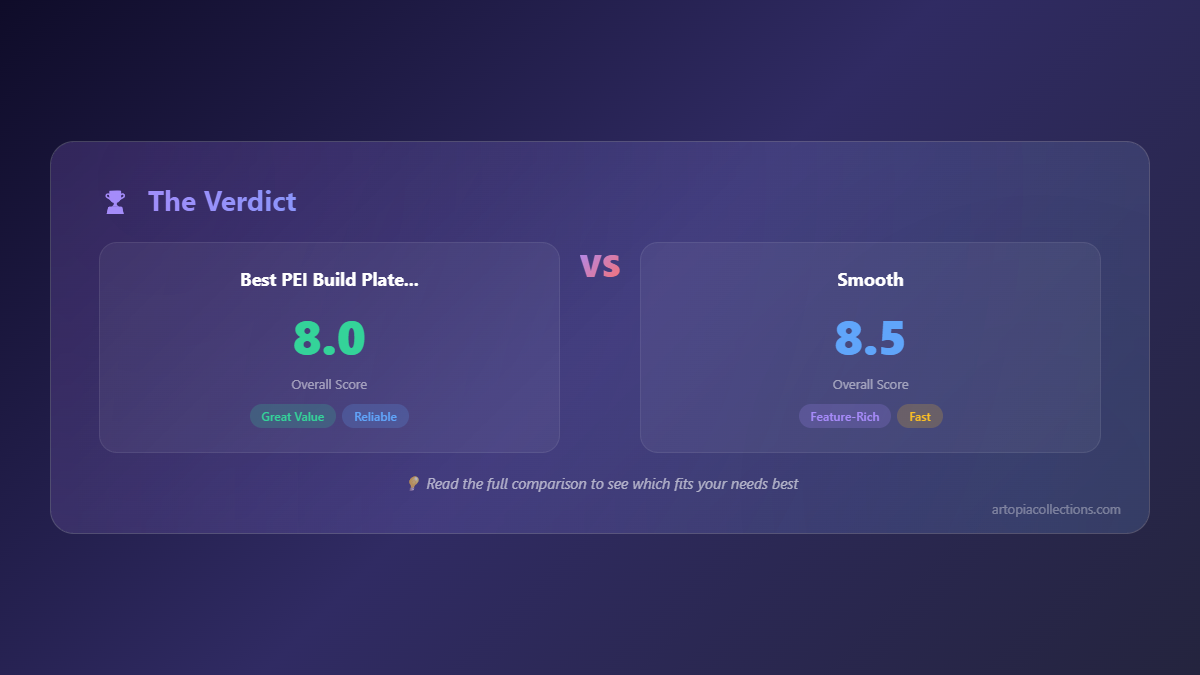
Look, if you're serious about 3D printing, especially with a Bambu Lab machine, you're eventually going to want both. Seriously. They each have their strengths, and having the right tool for the job makes a world of difference.
- If you're just starting out or primarily print functional parts, prototypes, or everyday items with PLA/ABS/ASA: Get the Textured PEI Plate first. It's more forgiving, offers great adhesion, and that matte finish is very versatile.
- If you're into visual prints, models that need a super smooth bottom, or tiny intricate parts, and you're comfortable with careful handling: The Smooth PEI Plate is going to be your best friend. Just remember the glue stick for PETG!
In my experience, having both is essential for a business like ArtOpia Collections, where we tackle a wide variety of client projects. One day it's a structural bracket requiring a robust textured finish, the next it's a display piece that absolutely needs that glossy bottom. Investing in both (each costing roughly ₹1800-₹2500, so maybe a total of ₹3600-₹5000 for the pair) is a small price to pay for the versatility and quality they offer.
Ultimately, the "best" plate is the one that works best for *your* specific needs and the materials you're using. Don't be afraid to experiment a little, clean your plates often (IPA for most, soap and water for really greasy bits), and always respect the power of glue stick! Happy printing, my friends! And hey, if you've got a killer tip for getting PETG off smooth PEI without glue stick, drop a comment below – I'm always learning!


