How to Sell 3D Printed Products on Etsy: From Store Setup to First Sale
Ready to turn your 3D printing hobby into a business? This guide walks you through every step of setting up an Etsy shop and making your first sale of 3D printed products.
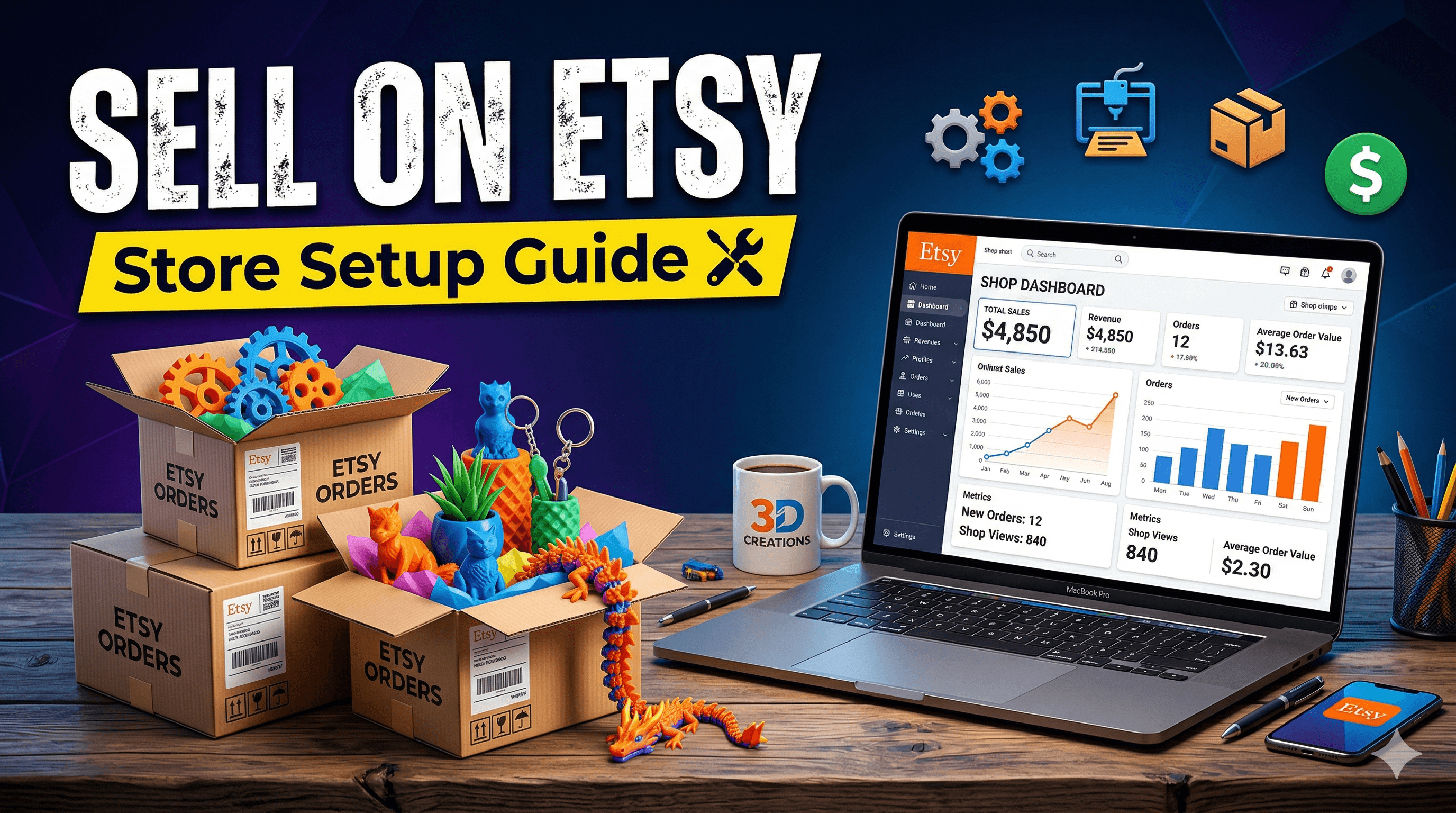
From Hobby to Huddle: Selling Your 3D Prints on Etsy (The Indian Way!)
Man, remember that feeling? That first successful print, hot off the bed, smelling faintly of warm plastic? For me, it was a little keychain I designed myself – simple, blocky, but oh-so-satisfying. And then, the thought hits you: "Could I *actually* sell this?" That's the spark, isn't it? The one that turns a fascinating hobby into a potential side hustle, or even a full-blown small business like mine, ArtOpia Collections. Trust me, I've been there, staring at a pile of perfectly printed fidget toys and thinking, "Okay, now what?" If you're an Indian maker with a passion for 3D printing and a dream of turning those digital designs into real-world rupees, then you're in the right place. We're talking about Etsy today, and how to get your amazing creations from your print farm to a customer's doorstep, all while navigating the unique quirks of selling online from Bharat.Why Etsy, Yaar? Choosing Your Digital Dukaan
So, you've got the prints. Why Etsy? Honestly, when I first started exploring online marketplaces, Etsy just *felt* right. It's not just a shopping site; it's a community for handmade, vintage, and craft supplies. People go to Etsy *specifically* looking for unique, often custom, items. And that's exactly what our 3D prints are, right? They're not mass-produced, off-the-shelf stuff. They carry a bit of our personality, our hours of tuning print settings, our frustration with stringing, and ultimately, our triumph.Sure, there are other platforms. You could try your own website (which I also recommend eventually, like my own ArtOpia Collections store), or even local craft fairs. But Etsy gives you access to a global audience ready to appreciate unique craftsmanship. It's got built-in trust and a pretty straightforward system. Yeah, there are fees, but we'll get to that. The thing is, it's a fantastic starting point for small businesses like ours. Think of it as your virtual stall in a huge, global market.
Setting Up Shop: Your Etsy Storefront
Alright, let's get down to brass tacks. Setting up your Etsy shop isn't rocket science, but there are a few things you need to nail down from the get-go.1. The Basics: Account Creation & Shop Name
First, just sign up with your email. Easy peasy. The slightly trickier bit is choosing your shop name. This is your brand, your identity! Try to pick something memorable, relevant to what you sell, and available. I personally think short and catchy is better. Maybe something that hints at your Indian heritage or your love for 3D printing. Avoid anything super generic. Once you've got your name, you'll pick your shop language (English is best for reaching a global audience), country (India, obviously!), and currency (INR). Etsy handles the currency conversion for international buyers, so don't sweat that.2. Shop Policies: Your Rulebook
This part might sound boring, but it's crucial for trust and transparency. You need to clearly state your policies on:- Shipping: How long does it take you to dispatch? What carriers do you use? Do you ship internationally? (Yes, you should!)
- Returns & Exchanges: Are you accepting returns? Under what conditions? For custom items, you might want to state no returns unless damaged.
- Privacy Policy: Etsy helps you with a template for this, don't worry too much here.
- Payment Options: Etsy manages this, so you don't need to do much.
Being clear about these things upfront saves a *lot* of headaches later. Trust me, a confused customer is often an unhappy one.
What to Print & How to Price: Finding Your Niche
Here's where the fun really begins – deciding what to sell! The world of 3D printing is vast, my friends.1. Finding Your Product Sweet Spot
Don't just print random stuff. Think about what people actually *want* to buy. In my experience, some popular categories for 3D printed items include:
- Pop Culture & Fan Art: Think gaming characters, movie props, intricate keychains. (Just be mindful of copyright!)
- Home Decor & Organizers: Planters, pen holders, unique vases, spice racks. Functional and beautiful.
- Custom & Personalized Items: Lithophanes, custom nameplates, personalized keychains. These sell really well because they're unique to the buyer.
- Tools & Gadgets: Jigs, camera accessories, small prototypes.
- Figurines & Miniatures: For tabletop gamers or collectors.
I personally started with a mix of decorative pieces and functional items. My current collection has evolved quite a bit, but the core idea of offering unique items remains.
And here's a crucial tip: focus on *quality*. No one wants a print with horrible layer lines, stringing, or poor adhesion. Dial in your printer settings. Whether you're running a trusty Creality Ender 3 V2 or a fancy Prusa MK3S+, spend time on calibration. Use good filament too – I've had great results with e.Sun and Overture PLA, readily available in India. Even some local brands like ThinkerTech or Protoprint are decent.
2. Pricing Your Prints: More Than Just Material Cost
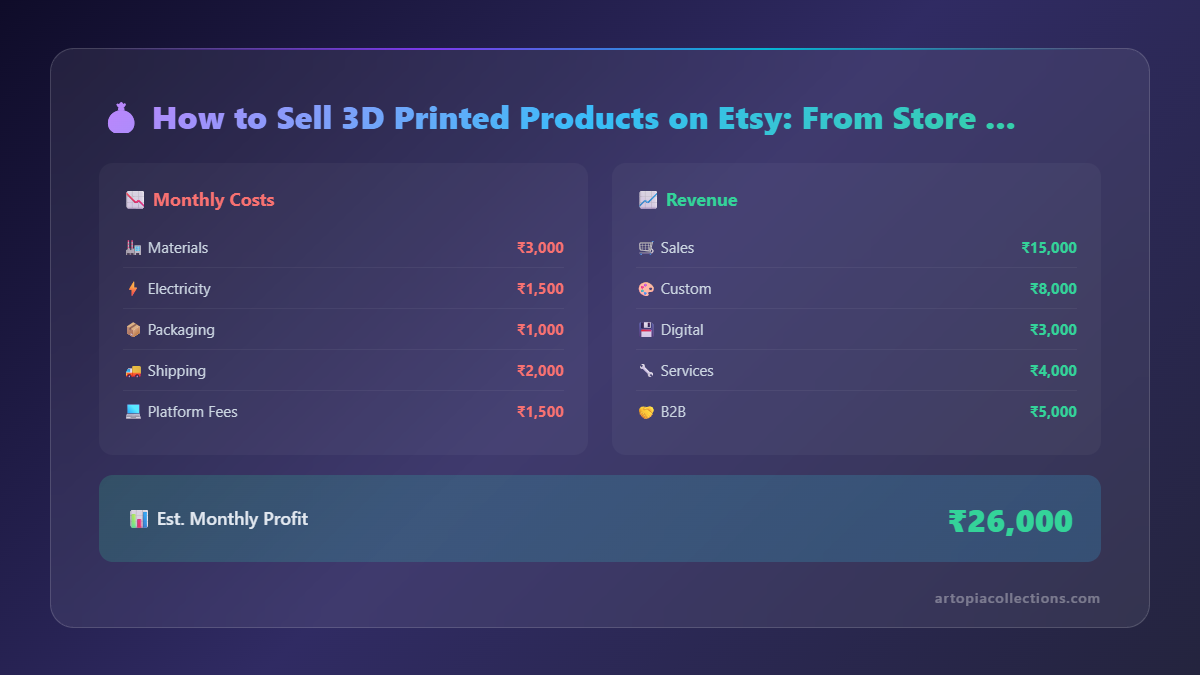
This is probably the most asked question. How much should I charge? It's not just the cost of filament, boss. You need to factor in:- Material Cost: How much filament (in grams) did you use? A 1kg spool of good PLA might cost you anywhere from ₹1200-₹2000. Do the math per gram.
- Time: Your design time, print time (electricity!), post-processing time (sanding, painting, assembly). Your time is valuable!
- Printer Depreciation: Your printer won't last forever. Factor in a little bit for maintenance and future upgrades.
- Etsy Fees: This is important!
- Listing Fee: Around $0.20 USD (about ₹16-17) per listing, renewed every 4 months or after a sale.
- Transaction Fee: 6.5% of the item price + shipping.
- Payment Processing Fee: Varies, typically 3% + ₹20-25 per transaction.
- Advertising Fee (Optional): Etsy will sometimes run ads for you and charge you for it if it results in a sale (Offsite Ads). You can opt out of this if your annual sales are below a certain threshold.
- Profit Margin: You're running a business, not a charity! You need to make money.
My advice? Start a little higher than you think, then you can always offer sales or discounts later. Don't undersell your hard work. For example, a medium-sized articulated dragon that takes 8 hours to print and uses 100g of filament (₹150-₹200) could easily sell for ₹800-₹1500, depending on complexity and finish. Think about perceived value, too. Is it unique? Is it custom? People will pay more for that.
Picture Perfect: Your Listings Are Your Storefront
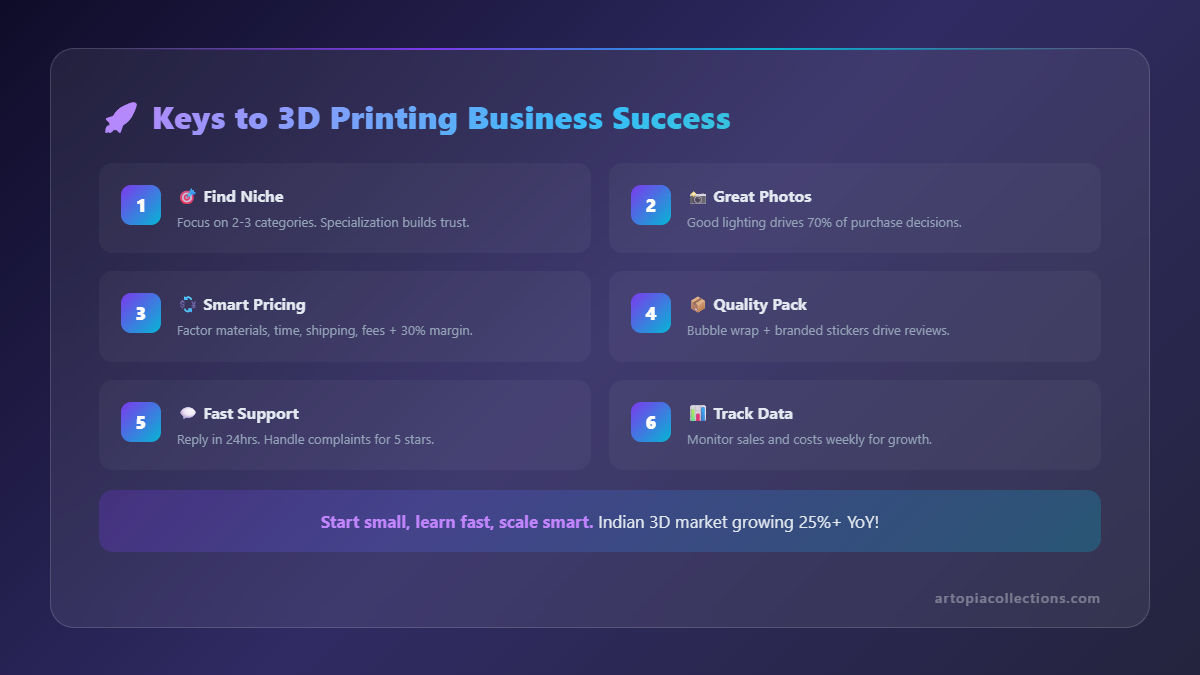
This is probably the single most important factor after the product itself. Great photos sell! Bad photos hide even the most amazing print.1. Lighting is Everything
You don't need fancy studio lights. Natural daylight is your best friend. Take your photos near a window, ideally on a slightly overcast day for soft, even light. Avoid harsh shadows or direct sunlight that washes out details.
2. Background Matters
Keep it clean and uncluttered. A plain white, grey, or light wooden background works wonders. You want the focus to be entirely on your print. No messy print beds, no tools, no random objects in the background. If you're selling a decorative item, you can use subtle props that enhance the item, like a small plant or a book, but don't overdo it.
3. Multiple Angles & Details
Etsy allows up to 10 photos. Use them all!
- Front, back, sides.
- A close-up of intricate details (show off those clean layers!).
- A "lifestyle" shot: show the item in use or in its intended environment (e.g., a planter with a small succulent, an organizer on a desk).
- A scale shot: place a common object next to it (a coin, a pen) so buyers can understand its size.
- Different colour options, if applicable.
And hey, consider adding a short video! Etsy supports it, and it really helps buyers visualize the product.
Crafting Your Listing: Words That Sell
You've got great photos, now let's write compelling descriptions.1. Titles: Keywords are King
Your title needs to be descriptive and include keywords that potential buyers might search for. Don't just say "Dragon." Say "Articulated Dragon Toy | Fidget Desk Toy | 3D Printed Dragon | Fantasy Gift | Unique Decor." Think like a buyer. What would *you* type into the search bar?
2. Descriptions: Tell a Story, Answer Questions
This is your chance to really sell it.
- Start with a captivating hook.
- Describe the item in detail: What is it? What's it made of (PLA, PETG, ABS)? What are its dimensions?
- Highlight its unique features and benefits. Is it functional? Decorative? A great gift?
- Mention any customization options (e.g., "Available in 10 colours! Message me for custom requests.")
- Care instructions (e.g., "Not dishwasher safe," "Avoid prolonged direct sunlight").
- Be authentic. Write in your own voice.
And for heaven's sake, double-check your spelling and grammar! It makes a huge difference to professionalism.
3. Tags: Your Secret Weapon
Etsy gives you 13 tags per listing. Use all of them! These are like mini-keywords that help Etsy's search algorithm find your product. Think broad and specific. If you're selling a "3D Printed Ganesh Idol," your tags could include: Ganesh, Ganesha, Hindu God, India Decor, Deity Statue, Elephant God, Religious Gift, Desktop Decor, Pooja Room, Mandir Idol, Spiritual Art, Home Temple, Indian Culture. Mix long-tail keywords with single words. And yeah, for items like Ganesh idols, there's actually a decent market, you'd be surprised!
Shipping & Packaging: The Journey from India to the World
This is often where Indian sellers get a bit hesitant, especially with international shipping. But don't be! It's totally doable.1. Domestic vs. International
Start with domestic shipping if you're nervous, but quickly expand to international. A huge chunk of Etsy's market is outside India. Services like India Post (EMS Speed Post International) or private couriers like DHL/FedEx (though these can be pricier for small items) are your friends. For parcels under 2kg, India Post's international services are quite competitive.
2. Packaging: Protect Your Precious Prints
Your prints might be sturdy, but shipping can be brutal.
- Use sturdy cardboard boxes.
- Bubble wrap everything generously.
- Fill empty spaces with packing peanuts or crumpled paper to prevent movement.
- Consider adding a small "thank you" note. It adds a personal touch.
For something delicate, I might even double-box it. Imagine your customer opening a broken print – not a good look, right? The cost of good packaging is always less than the cost of a refund and a bad review.
3. Tracking & Customs
Always, always provide tracking. Customers expect it. For international orders, you'll need to fill out customs declarations. Be honest about the item's value and description. Sometimes, buyers outside India might have to pay customs duties in their own country. Make sure your shop policies state that buyers are responsible for any import taxes or duties, as you can't control those.
Your First Sale & Beyond: The Thrill and the Grind
Getting that first "Cha-ching!" notification on the Etsy app is an incredible feeling. It validates all your hard work. But it's just the beginning.1. Marketing & Social Media
Don't just list and forget. Promote your shop! Instagram, Pinterest, and even Facebook groups are great for showcasing your prints. Use relevant hashtags. Engage with other makers and potential customers. Share your process, your print fails (we all have them!), and your successes. Show off your colorful PLA filaments and your cool printer setup. People love seeing the behind-the-scenes.
2. Customer Service is King
Respond to messages promptly. Be polite, helpful, and understanding. If there's an issue, try to resolve it fairly. Good communication leads to happy customers, repeat business, and positive reviews – which are GOLD on Etsy.
3. Patience & Persistence
Sales might not come immediately. It's a marathon, not a sprint. Keep optimizing your listings, adding new products, and promoting your shop. In my experience, it took a few weeks, maybe a month, to get my first international sale. But once the ball starts rolling, it gets easier.
My Journey with ArtOpia Collections & What I've Learned
Starting ArtOpia Collections was a leap of faith. From that first keychain to now selling unique, often personalized, 3D printed items worldwide, it's been a journey of learning. I've upgraded printers (from an Ender 3 to more robust machines), experimented with countless filaments, and spent hours refining designs.One of the biggest lessons? Don't be afraid to experiment. If something isn't selling, try a different angle, a different colour, or even a different product category. And really, listen to your customers. Their feedback is invaluable. They might suggest a customization or an item you hadn't even considered. That's how my personalized lithophane sales really took off, simply because a customer asked if I could do it.
And remember, you're not just selling a piece of plastic. You're selling a bit of your creativity, your passion, and your skill. So be proud of what you make!


