What Is Resin 3D Printing and Is It Worth It for Hobbyists?
Discover the ins and outs of resin 3D printing, a popular choice for highly detailed models. We'll explore the technology, its benefits for hobbyists, and whether the investment and workflow are right for you.
Alright, so you've dipped your toes into the amazing world of 3D printing, right? Maybe you've got an Ender 3 or a Prusa Mini humming away in your corner, spitting out fidget toys, functional prints, or even some cool cosplay props with that familiar layer-line texture. It's a blast, isn't it? But then, you start scrolling through Instagram or YouTube, and you see these mind-blowing prints â miniatures with details so sharp you could cut yourself, tiny intricate jewelry prototypes, super smooth busts that look like they came from a factory. And you think, "Wait, is *that* 3D printing too? How do they get it so perfect?"
That, my friend, is where resin 3D printing steps in, and oh boy, is it a game-changer for certain things. For us hobbyists, especially here in India where FDM has really taken off, resin printing feels like a whole new beast. I remember when I first got my hands on a resin printer for my business, Artopia Collections, I was absolutely blown away by the possibilities. But then, the reality hit â it's not quite the same plug-and-play experience as FDM. So, let's break it down, shall we? What exactly is resin 3D printing, and more importantly, is it actually worth your hard-earned rupees and precious time as a hobbyist?
So, What Even IS Resin 3D Printing? (And How's It Different?)
Basically, when you're talking about FDM (Fused Deposition Modeling), your printer melts a plastic filament and squirts it out layer by microscopic layer to build your object from the bottom up. Think of it like a very precise hot glue gun. Simple, right?
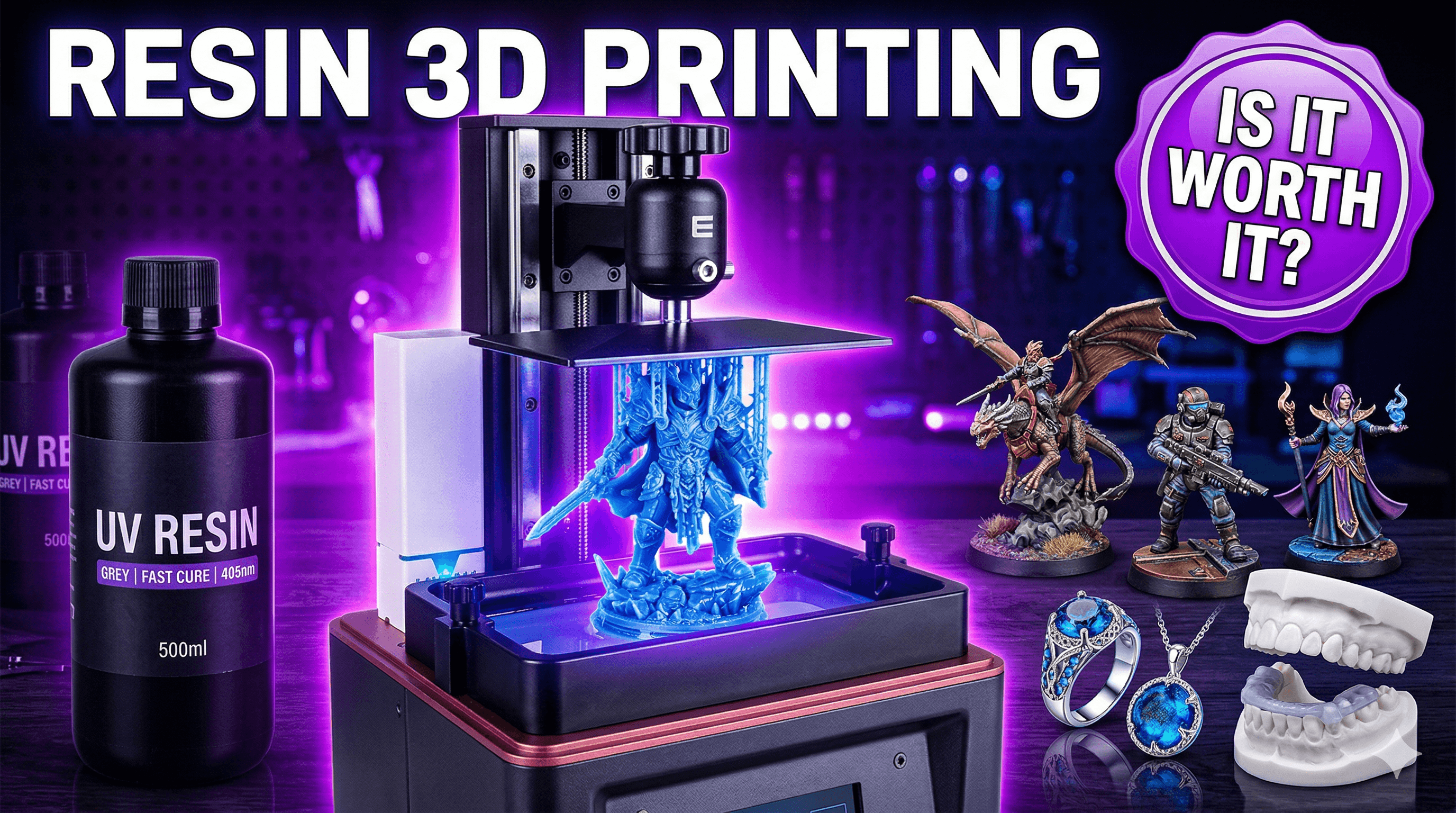
Resin 3D printing, on the other hand, is a whole different ballgame. The most common type for hobbyists, what you'll usually find on an Elegoo Mars or Anycubic Photon, uses a liquid resin. This isn't just any liquid, though; it's a special photopolymer resin that cures (hardens) when exposed to ultraviolet (UV) light. Instead of a hot nozzle, you've got a screen â typically an LCD screen â at the bottom of a vat full of this liquid resin. This screen shows a 'slice' of your 3D model, illuminated by a powerful UV light source underneath.
The build plate slowly dips into the resin, and then the UV light shines through the screen, curing just that specific layer onto the build plate (or the previous cured layer). The build plate then lifts up slightly, the resin flows underneath, and the next layer is projected and cured. It does this over and over, thousands of times, until your model is completely formed. It's truly fascinating to watch, honestly, especially for us tech enthusiasts. And the cool thing is, because you're curing an entire layer at once (or almost an entire layer with LCD), it can sometimes be surprisingly fast for printing multiple small, detailed objects.
Why Everyone's Talking About It: The Big Advantages
Okay, so why bother with this liquid mess, right? Well, here's the deal:
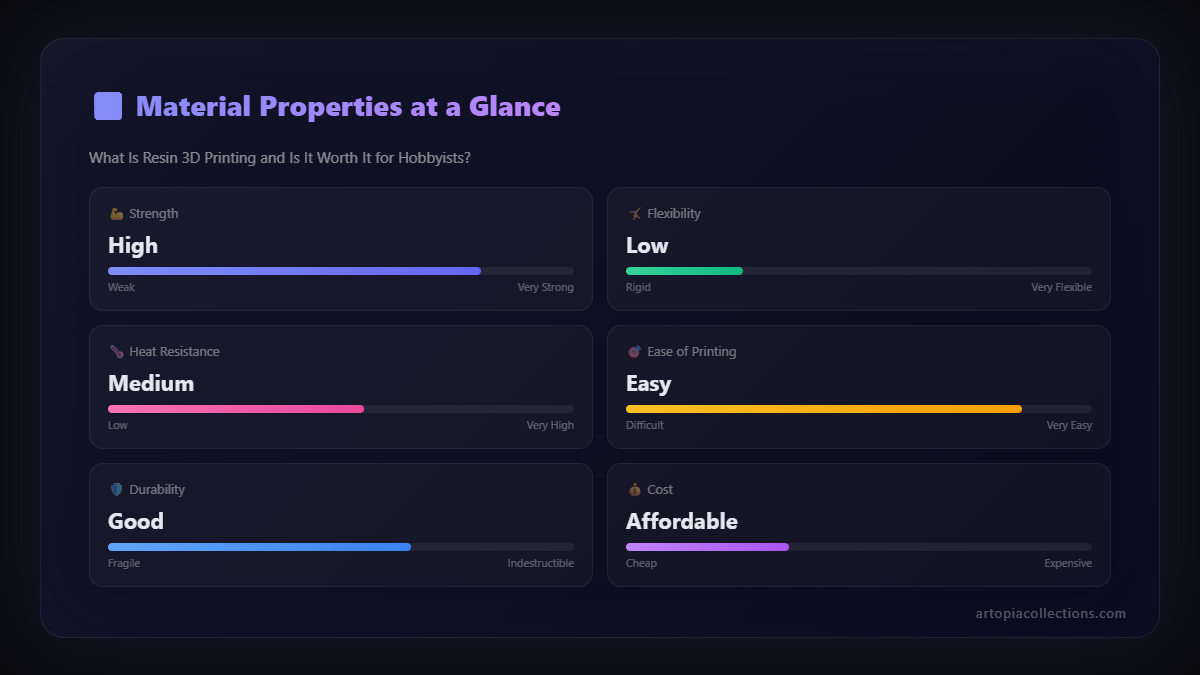
- Unbelievable Detail: This is the absolute undisputed champion reason to get into resin. Because you're curing tiny pixels of light, not extruding a molten plastic line, the resolution you can achieve is insane. We're talking details down to 0.05mm or even finer. Miniatures, jewelry prototypes, dental models â anything where super smooth surfaces and intricate features are paramount, resin absolutely crushes FDM. You won't see layer lines unless you're really, really looking under a microscope.
- Smooth Surfaces: Following on from detail, the surface finish is just buttery smooth. No sanding required to get rid of layer lines, which is a HUGE time saver for certain projects. My customers for custom figurines, for instance, are always amazed at how production-ready the prints feel right off the machine.
- Precision: Resin printers are incredibly precise. If your model has a tiny hole that needs to fit a specific pin, chances are a resin print will nail it much more consistently than an FDM printer, especially on smaller scales.
- Material Variety (and it's growing!): While FDM has a huge range of filaments, resin isn't far behind. You can get standard grey resin, of course, but also transparent resin, flexible resin, tough resin (for more durable parts), even castable resin for jewelry making. It opens up so many possibilities for niche applications that FDM just can't touch.
I personally think that for artists, sculptors, and anyone who's obsessed with the aesthetic quality of their prints, resin is almost non-negotiable. For my own business, making highly detailed statues and props, it was a game-changer. You can check out some of the intricate stuff we do over at Artopia Collections to see what I mean.
But Hold On: The Not-So-Glamorous Side (The Cons)
Now, before you go rushing to Amazon.in to pick up a shiny new resin printer, let's talk about the downsides. And trust me, there are a few that are pretty significant, especially for a casual hobbyist setting.
- It's MESSY. Oh god, it's messy: This is probably the biggest hurdle for most. You're dealing with liquid resin, which is sticky, viscous, and will get everywhere if you're not careful. Then, after printing, your model comes out covered in uncured resin, requiring a wash in isopropyl alcohol (IPA) or a specialized resin cleaner. And the IPA itself gets dirty. Plus, you need to filter and dispose of it responsibly. My workspace usually looks like a mad scientist's lab after a big resin print batch, complete with gloves, paper towels, and strategically placed drip trays.
- Safety First (Seriously): Uncured resin is toxic. It can irritate your skin, cause allergic reactions, and the fumes aren't great for your lungs. This means you absolutely NEED to wear nitrile gloves, safety glasses, and ideally a respirator or at least work in a very well-ventilated area. A window fan exhausting air out is a minimum. This isn't like FDM where you can just print in your living room (though ventilation is good there too!).
- Post-Processing is a "Process": FDM? Pull the print off, maybe snap off some supports, and you're mostly done. Resin?
- Remove print from build plate (can be tricky).
- Wash it thoroughly in IPA (often two baths â one dirty, one cleaner).
- Remove supports (they're usually easier to remove cleanly than FDM supports, but still takes time).
- Cure it under UV light (a dedicated curing station is best, or sunlight if you're patient and have a sunny spot).
- And then you have the waste resin and IPA to deal with.
It adds a significant chunk of time to every print, and it's definitely more involved than FDM.
- Cost of Consumables: While resin printers themselves have become very affordable, the running costs can add up. A 1kg bottle of standard resin typically costs around â¹2,000 - â¹3,500 (depending on brand like Anycubic, Elegoo, Esun). Compare that to 1kg of good quality PLA filament for â¹1,200 - â¹2,000. Then factor in IPA, which can be â¹1,000 - â¹2,000 for a 5-liter can, plus gloves, paper towels, funnels, filters, and sometimes even replacement FEP film for your resin vat. ItâÂÂs not astronomical, but it's something to budget for.
- Smaller Build Volumes: For the same price point, resin printers typically have much smaller build volumes than FDM printers. An Elegoo Mars 3 Pro might give you a build area of about 143mm x 89mm x 175mm, whereas an Ender 3 S1 can give you 220mm x 220mm x 270mm. If you're looking to print large props or functional parts, FDM is almost always the better choice.
- Brittleness: Standard resin prints can be quite brittle. Drop a thin, delicate part, and it might shatter. While "tough" or "ABS-like" resins exist to mitigate this, they are often more expensive. This means resin isn't ideal for parts that need to withstand a lot of stress or impacts.
The Initial Investment: What You'll Need (and at What Cost in India)
Alright, let's talk numbers, because that's often the deciding factor for hobbyists. Here's a rough breakdown of what you're looking at to get started with resin printing in India:
- The Resin Printer:
For beginners, I highly recommend something like the Elegoo Mars series (Mars 3 Pro, Mars 4) or the Anycubic Photon Mono series (Mono 2, Mono X). These are reliable, have great community support, and produce fantastic results. You can find them on Amazon.in typically in the range of â¹20,000 to â¹40,000. They've become incredibly affordable over the last few years.
For example, you might find a good deal on something like the Elegoo Mars 3 Pro on Amazon.in which is a fantastic starter machine.
- Wash & Cure Station:
This is, in my opinion, almost non-negotiable for a hassle-free experience. Trying to wash prints by hand in tubs of IPA is tedious and even messier. These stations automatically wash your prints and then cure them with built-in UV lights. An Anycubic Wash & Cure 2.0 or an Elegoo Mercury X Bundle will set you back around â¹10,000 to â¹20,000. It's a significant extra cost, but it saves so much time and effort.
Seriously, get one. It's worth every rupee. Here's a link to look for resin wash and cure stations on Amazon.in.
- Resin:
Start with a standard grey or white resin. A 1kg bottle usually costs â¹2,000 - â¹3,500. Buy a good quality one from a reputable brand like Elegoo, Anycubic, or Esun. Avoid super cheap, unknown brands, especially when starting out, as print failures can be frustrating.
- Isopropyl Alcohol (IPA):
You'll need a good stock of 99% IPA for washing. A 5-liter can usually runs for â¹1,000 - â¹2,000. This will last you a while, but it's a recurring cost.
- Safety Gear:
Don't skimp here! Nitrile gloves (a box of 100 will cost around â¹500), safety glasses (â¹100-â¹200), and a good respirator with organic vapor cartridges (â¹1,000 - â¹3,000) are essential. Good ventilation for your workspace is critical too.
- Miscellaneous Supplies:
Paper towels, funnels with filters, plastic containers for dirty IPA, a silicone mat for your workspace, and maybe a spatula or scraper for removing prints. This might add another â¹1,000 - â¹2,000.
So, all in all, you're looking at an initial outlay of roughly â¹35,000 to â¹65,000 to get started comfortably with resin printing, including the printer, wash & cure station, and basic consumables/safety gear. That's a decent chunk of change, often more than a good entry-level FDM setup, but the results are undeniably different.
So, Is It Worth It For Hobbyists? My Honest Opinion.
This is the million-rupee question, isn't it? After all this, with the mess, the safety precautions, and the extra steps, is resin printing worth it for you as a hobbyist?
My answer, unequivocally, is: IT DEPENDS ENTIRELY ON WHAT YOU WANT TO PRINT AND YOUR TOLERANCE FOR POST-PROCESSING.
If your passion is:
- Printing highly detailed miniatures for tabletop gaming (Warhammer, D&D).
- Creating intricate jewelry prototypes or small sculptures.
- Producing incredibly smooth, aesthetic display pieces.
- Experimenting with specialized resins (e.g., clear parts, flexible components where surface finish is critical).
Then absolutely, YES, it's worth it. The level of detail and finish you can achieve with a modern resin printer at home is nothing short of astounding. You will open up a whole new realm of possibilities that FDM simply cannot touch. For my business, Artropia Collections, it was a necessary investment because our focus is on high-detail collectibles.
However, if you mainly print:
- Large functional parts or mechanical components.
- Quick prototypes where surface finish isn't paramount.
- Objects that need to be durable and withstand stress.
- You want a "set it and forget it" kind of printing experience.
- You have limited space, poor ventilation, or don't want to deal with messy liquids and chemicals.
Then, honestly, probably NOT worth it. Stick with your FDM printer. It's more forgiving, generally less messy, often faster for larger prints, and the materials are usually more robust for functional applications. Plus, the print volume-to-price ratio is much better for FDM.
For me, personally, I see resin printing not as a replacement for FDM, but as a complementary tool. They excel at different things. ItâÂÂs like having both a chisel and a hammer in your toolbox; you wouldnâÂÂt use a hammer for delicate carving, would you? And you wouldn't carve a foundation out with a chisel. Resin is your super-fine chisel.
A Few Tips for Aspiring Resin Hobbyists:
If you're leaning towards "worth it," here are a few things I've learned from my own journey:
- Ventilation, Ventilation, VENTILATION: I cannot stress this enough. Get an exhaust fan, put your printer near a window, or invest in an enclosure with air purification. Your health is more important than a cool print.
- Don't Skimp on Safety Gear: Always wear gloves and safety glasses. A mask is a good idea.
- Start Simple: Don't try to print an impossibly complex model as your first print. Stick to well-supported pre-made models or simple designs to get the hang of the workflow.
- Watch Tutorials: YouTube is your best friend. There are tons of amazing creators out there (like 3DPrintingPro for supports!) who can guide you.
- Join Communities: Indian 3D printing groups on Facebook or Telegram are great for local tips, troubleshooting, and finding deals on resin and IPA.
- Be Patient: There will be failed prints. The resin might spill. You might forget your gloves once. It's all part of the learning curve. Don't get discouraged!
So, there you have it. Resin 3D printing is a fantastic technology that can produce truly stunning results, especially for specific types of models. It demands a bit more respect, more care, and a slightly higher initial investment and running cost than FDM, but the payoff in detail and surface quality can be immense. For me, running Artopia Collections, it's an indispensable part of what we do. For a hobbyist, itâÂÂs a journey that could either be incredibly rewarding or a frustrating mess, depending entirely on your goals and preparedness.
Think about what you truly want to make. If it's those super-detailed, smooth, art-gallery-worthy pieces, then absolutely, dive in! The water (or rather, the resin) is fine! If you have any questions, feel free to drop them below. Happy printing, everyone!