Wood, Marble, and Carbon Fiber Filaments: Are Specialty PLAs Worth It?
Are specialty PLA filaments worth the hype and cost? We explore the unique properties of wood, marble, and carbon fiber PLAs to help you decide for your 3D prints.
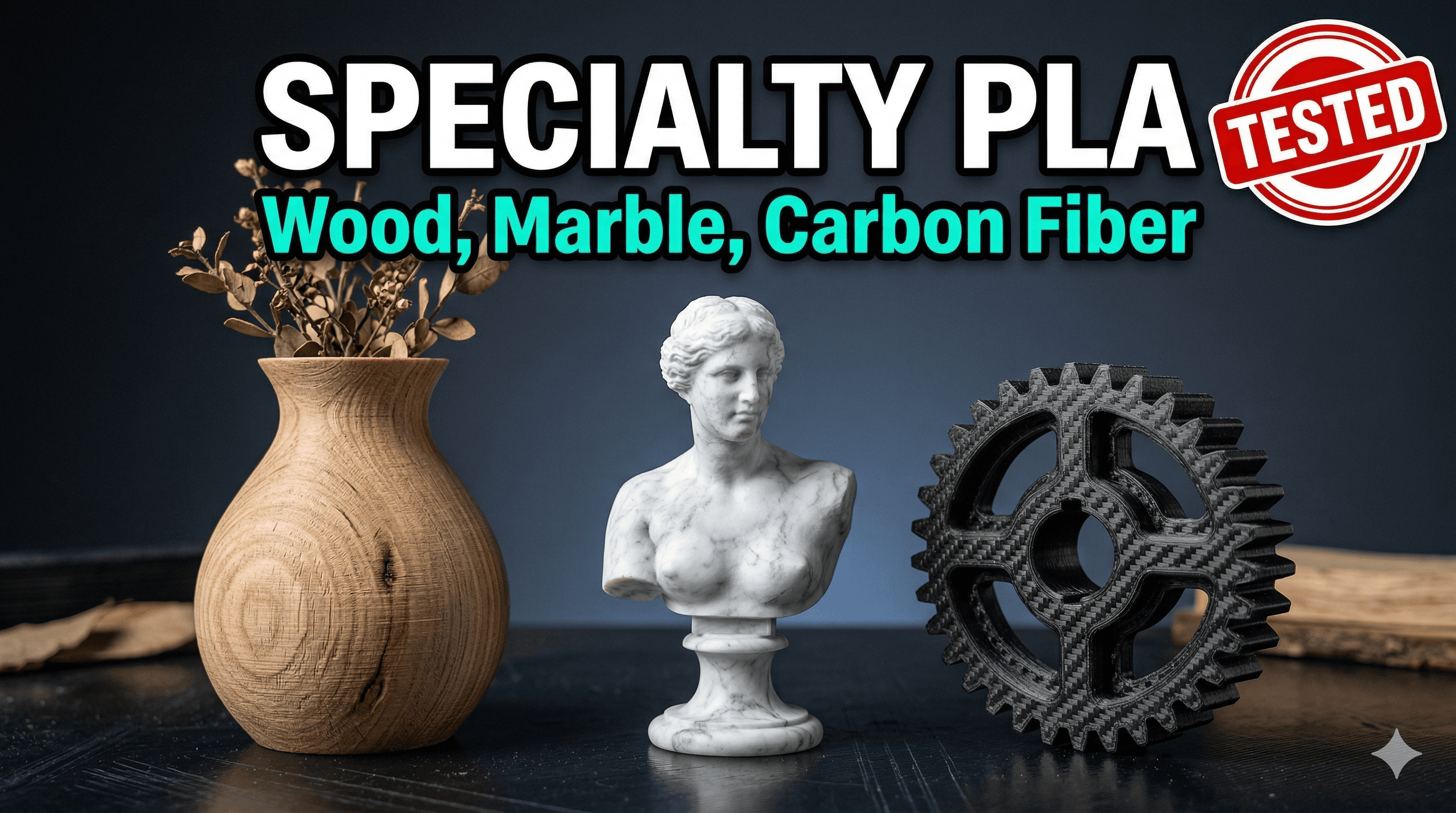
Wood, Marble, and Carbon Fiber Filaments: Are Specialty PLAs Worth It? My Honest Take from India!
Ever found yourself scrolling through Amazon.in, eyes glazing over with all the different filament options, and then BAM! You see a spool of "Wood PLA" or "Marble PLA" and your mind just explodes with possibilities? Or maybe a slick "Carbon Fiber PLA" promising super strength? Yeah, I've been there. Probably still am, honestly, a few times a week. It's like a kid in a candy store, but for us 3D printing enthusiasts, it's a filament store!
Here at ArtOPIA Collections, my little corner of the 3D printing world here in India, we're always experimenting. We started with basic PLA, then moved to PETG for stronger functional prints, and dabbled in TPU for flexible stuff. But the specialty PLAs? They hold a special, sometimes frustrating, sometimes absolutely delightful, place in my heart (and my print farm). Today, I want to talk about three specific types that get a lot of buzz: Wood, Marble, and Carbon Fiber PLA. The big question, the one everyone asks me, is always: are they really worth the extra cost?
Let's dive in, yaar. Because the thing is, "worth it" isn't a simple yes or no. It depends on what you're trying to achieve, your budget, and how much patience you've got for some potential quirks.
Wood PLA: The Smell of Success (and Sometimes Burnt Sugar)
First up, the OG of aesthetic specialty PLAs: Wood PLA. When this stuff first came out, I was absolutely blown away. Imagine, printing something that not only looks like wood but also feels like it and, more importantly, smells like it when it's printing! It's basically PLA mixed with wood fibers â usually sawdust or other wood particulate. Brands like eSun, Eryone, or even some local Indian suppliers now offer it. A good quality 1kg spool can run you anywhere from â¹1800 to â¹2500, significantly more than your standard PLA which typically sits around â¹1200-â¹1800.
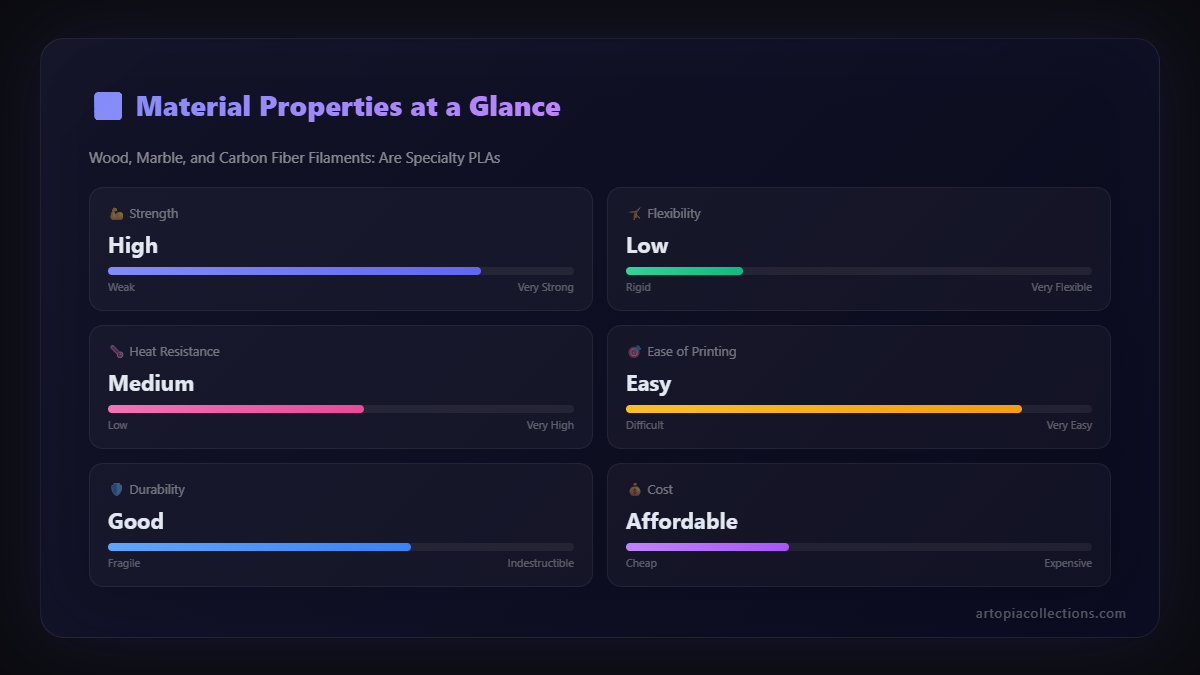
The Good Stuff:
- Aesthetics: This is where it shines. You can get prints that look incredibly realistic, especially after a little post-processing. Sanding, staining, even painting â it takes to these treatments beautifully. Different brands offer different "wood" types, like pine, birch, or even bamboo.
- Texture: It feels like natural wood, not smooth plastic. This adds so much to decorative pieces, architectural models, or even intricate busts.
- The Smell: Oh man, the smell. Your print room will smell like a carpenter's workshop. Itâs oddly satisfying.
- Eco-friendly vibes: It's got actual wood in it, which makes it feel a bit more natural and less like pure plastic.
The Not-So-Good Stuff (and where "worth it" gets tricky):
- Printability: Okay, this is the main challenge. Those lovely wood particles? They can be a pain. I personally recommend using a larger nozzle, like 0.6mm, because a standard 0.4mm nozzle is just asking for clogs. I've had many a print fail halfway because a tiny wood fiber decided to get stuck. And it's not just clogs; stringing can be a nightmare too, demanding meticulous retraction tuning.
- Nozzle Wear: While not as abrasive as carbon fiber, the wood particles can still wear down brass nozzles faster than regular PLA. Itâs something to keep in mind, especially if youâre doing a lot of printing with it.
- Strength: It's generally weaker and more brittle than standard PLA. Don't expect to print functional, load-bearing parts with this. It's for aesthetics, purely.
- Cost: As I mentioned, itâs pricier. So, you really need a compelling reason for that wood look.
My Verdict on Wood PLA: Is it worth it? Absolutely, for specific projects. If you're printing decorative items, display pieces, props, or models where the wood aesthetic is paramount, then yes, itâs fantastic. For example, Iâve used it for crafting intricate statues that look hand-carved, and the feedback has been amazing. But for general prototypes or functional parts, stick to regular PLA. If you're considering trying it out, make sure to get a hardened steel nozzle ready. You can find a good selection of nozzles and other printer accessories on Amazon.in: Check out hardened steel nozzles here!
Marble PLA: The Elegance of Stone Without the Weight
Next on the list, Marble PLA. This one caught my eye because of its ability to mimic stone, particularly marble, without the immense weight or the difficulty of carving. It's basically standard PLA with very fine, light-colored specks â sometimes grey, sometimes black â mixed in. These specks create a beautiful, subtle speckled pattern that really does give the illusion of carved stone. A 1kg spool typically falls in a similar price range to Wood PLA, around â¹1800-â¹2500.
The Good Stuff:
- Stunning Visuals: The speckled effect is incredibly effective. Itâs perfect for busts, architectural models, statues, or even custom coasters. It adds an immediate touch of sophistication.
- Relatively Easy to Print: Unlike Wood PLA, Marble PLA is generally much easier to print. The particles are usually finer and less prone to clogging a standard 0.4mm nozzle. I've had great success with it on my Creality Ender 3 Pro and my Anycubic Kobra, using standard PLA settings.
- Weight: Itâs light! You get the look of heavy stone without needing reinforced shelves to display your prints.
- Post-processing potential: While beautiful as is, you can lightly sand and even use specific stone-effect paints to enhance the illusion.
The Not-So-Good Stuff:
- Brittleness: Some brands of Marble PLA can be a bit more brittle than plain PLA. This isn't usually an issue for display pieces but something to consider if you're printing something that might get handled roughly.
- Consistency: The marble effect can sometimes vary slightly between batches or even within the same spool. Itâs usually minor, but if you're looking for absolute uniformity across multiple prints, itâs worth noting.
- Cost: Again, it's more expensive than plain PLA. So, it's a specialty item for a specific aesthetic need.
My Verdict on Marble PLA: Worth it? Definitely, for decorative and artistic prints. If youâre into creating busts, intricate statues, or detailed architectural miniatures, Marble PLA is a fantastic choice. It delivers a high-end look with minimal fuss during printing. For ArtOPIA, itâs one of our go-to filaments for custom awards and display models. It just elevates the print so much without making printing a headache. Seriously, if you want something to look classy, this is your friend. You can see some of our creations made with this kind of filament over on our products page!
Carbon Fiber PLA: Strength Without the Extreme Price Tag?
And now, the one that excites the engineers and functional print enthusiasts: Carbon Fiber PLA (CF-PLA). This filament is PLA infused with short carbon fiber strands. The idea here isn't just aesthetics (though it does have a cool, matte, slightly textured finish), but improved mechanical properties. We're talking increased stiffness, strength, and sometimes even lighter weight compared to regular PLA. For a 1kg spool, you're looking at a serious price jump, often â¹2500 all the way up to â¹4000 or even more, depending on the brand and carbon fiber content.
The Good Stuff:
- Strength and Stiffness: This is the main draw. Parts printed with CF-PLA are noticeably stiffer and stronger than standard PLA. This makes it suitable for functional prototypes, drone parts, jigs, fixtures, or any application where rigidity is important.
- Lightweight: The carbon fibers help reduce the overall weight of the print, which is a huge bonus for things like RC parts or anything where weight is critical.
- Dimensional Stability: It tends to warp less than standard PLA due to the carbon fibers providing structural integrity during cooling. This can lead to more accurate parts.
- Matte Finish: The aesthetic isn't flashy like shiny plastic; it's a sophisticated, matte black (or dark grey) finish that looks very professional and high-tech.
The Not-So-Good Stuff (the deal-breakers for some):
- Extreme Abrasiveness: This is the biggest warning. Carbon fiber is incredibly abrasive. Printing CF-PLA with a standard brass nozzle is like sanding it down from the inside. You'll destroy a brass nozzle very quickly, sometimes in just a few hours of printing. You absolutely, positively need a hardened steel nozzle, or even better, a ruby-tipped nozzle if you're serious about this filament.
- Cost: Itâs significantly more expensive than other PLAs. You really need the enhanced mechanical properties to justify this cost.
- Brittleness (sometimes): While stronger in terms of stiffness, some CF-PLA formulations can be a bit more brittle than plain PLA in terms of impact resistance. Itâs a trade-off.
- Stringing: Just like Wood PLA, those fibers can sometimes make retraction tuning a bit more challenging, leading to more stringing than you might expect with plain PLA.
My Verdict on Carbon Fiber PLA: Worth it? Yes, for functional parts where strength and stiffness are critical, and you have the right equipment. If youâre making functional prototypes, drone frames, robot parts, or any mechanical component that needs to be tough, lightweight, and dimensionally stable, then CF-PLA is fantastic. But do NOT even think about touching it without a hardened steel nozzle. Seriously. It'll save you a lot of headache and replacement costs. It's not for every print, but when you need its specific properties, it's a game-changer. For many of my custom jig and fixture orders, CF-PLA is often the material of choice now, particularly from brands like Esun or even sometimes a good quality Overture spool I manage to grab.
General Thoughts on Specialty PLAs & My Business
So, we've gone through them, one by one. And you know, the common thread is that "worth it" is all about application. Here's a quick summary from my perspective running ArtOPIA:
- Wood PLA: For show-stopping, tactile decorative pieces. Think unique gifts or intricate models. Prepare for some print challenges.
- Marble PLA: For elegant, sophisticated display items that need a stone-like appearance. Relatively easy to print, looks premium.
- Carbon Fiber PLA: For strong, stiff, functional parts where plain PLA just won't cut it. Essential to have the right nozzle.
I find myself reaching for these specialty PLAs specifically when a client asks for something with a particular look or feel that regular PLA just canât deliver. Or when Iâm designing something for my own collection that demands that extra touch of realism or strength. They aren't my daily drivers, because honestly, the cost adds up, and standard PLA is still incredibly versatile. But when the occasion calls for it, they are absolutely invaluable.
Think about it: for a special anniversary gift, would a plain grey PLA bust be as impactful as one that looks like it's carved from marble? No way! For a custom camera mount on a drone, would plain PLA hold up as well as CF-PLA? Not a chance. That's where their true value lies.
Also, don't forget good filament storage! These specialty filaments, especially Wood PLA, can absorb moisture faster than regular PLA due to their unique composition. So, dry boxes and silica gel are your best friends. Nothing's worse than spending extra on a specialty filament just to have it print terribly because it's damp. You can find some great filament dry boxes or dehumidifiers on Amazon.in if youâre looking to protect your investment: Browse filament dry boxes here!
The Final Word
Ultimately, specialty PLAs are fantastic tools to have in your 3D printing arsenal, especially if you're looking to push the boundaries of aesthetics or functionality without diving into the complexities (or expense) of entirely different material types like nylon or polycarbonate just yet. Theyâre an investment, sure, but one that can yield truly impressive results.
So, are they worth it? My answer is a resounding, "It depends, but often, yes!" They open up a whole new world of possibilities for what you can create with your 3D printer. Just make sure you understand their quirks, have the right equipment, and pick the right filament for the right job. Experiment, have fun, and keep on printing, my friends!
What are your experiences with specialty PLAs? Any favourites or horror stories? Drop a comment below! I'd love to hear what you guys in India and beyond are printing with these cool materials.